
Issue 101 / 27 March 2026
The essential DIY electronic music lowdown: Track Of The Week: The Holy Sun Opera House + Album Of The Week: Hawksmoor + worriedaboutsatan + The Mistys + Haiku Salut & Meg Morley + more...


Happy to report that our Moonbuilding Sessions series, which we launched last week for paid subscribers, seems to be going well. It’s heartening that people think it’s something worth paying for. The session is the showstopping 40-minute ‘Live From Moonbuilding HQ’ by the brilliant Field Lines Cartographer.
It’s yours today, right now, for £3.50, the price of a monthly subscription. Don’t hang about though as this session will only be available until the end of April. There will be a new session each month and we’re working on other tempting audio delights too. Subscribe now and your welcome email will contain instructions on nabbing that Moonbuilding Session download.
Finlay Milligan is in the house this week and on Album Of The Week duty, reviewing the drug-fuelled new album from the brilliant Hawksmoor.
Righto, that’s all. Won’t keep you any longer. Happy reading.
Neil Mason, editor
moonbuildingmag@gmail.com
Issue 101 Playlist: Listen
Your ad here: Advertise


***ADVERTISE HERE***
email moonbuildingmag@gmail.com

THE HOLY SUN OPERA HOUSE ‘Voice Of Gob’ (Hologram Opera)
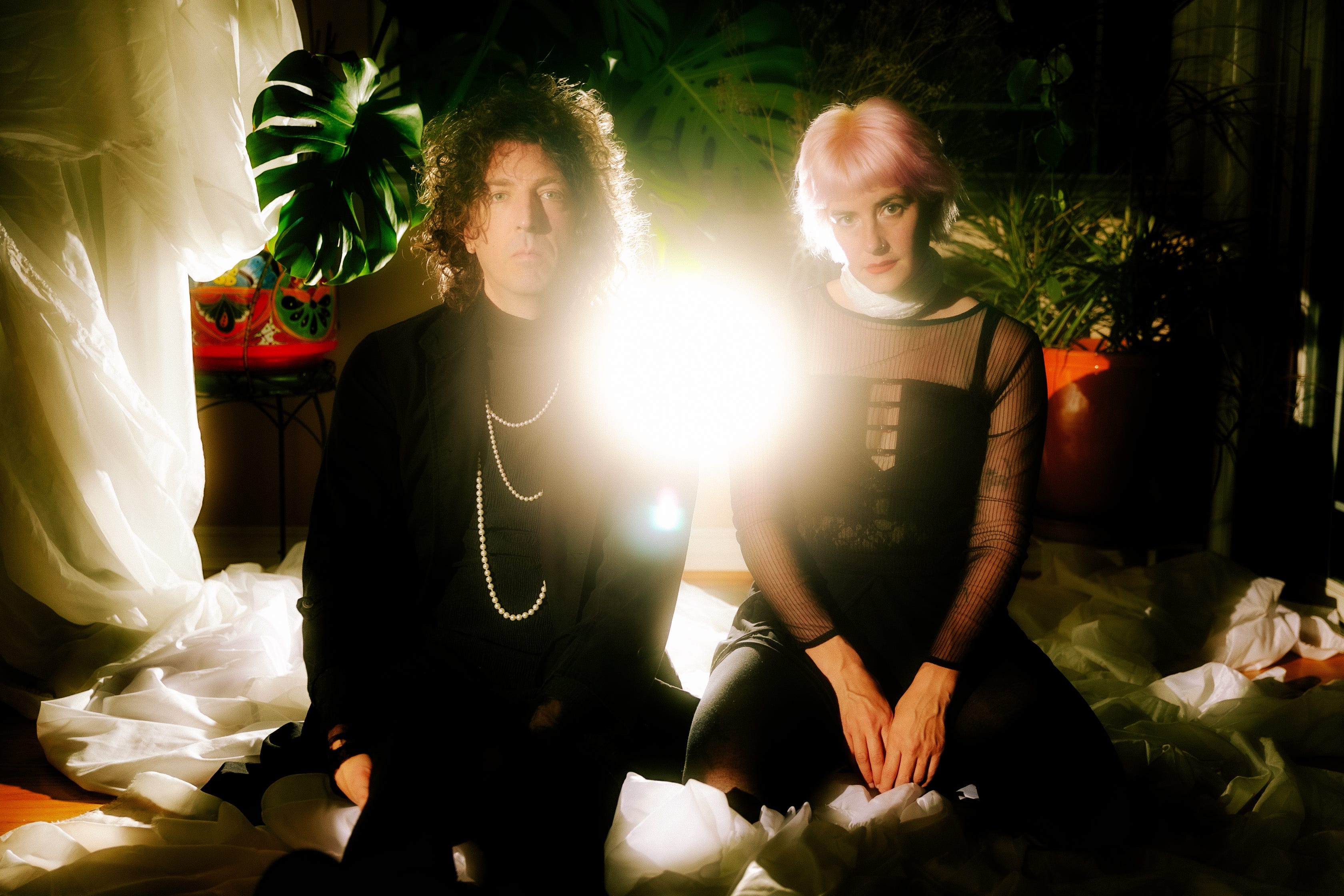
Photo: Elizabeth Weinberg
Blooming heck, this is a big track. BIG. Operatic big, hence the name.
The Holy Sun Opera House are an LA-based duo, opera singer and drummer Krissy Barker and composer dl Salo. They had me at opera singer and drummer. There’s something in the LA water, musically, that just brings out huge pieces like this. I’ve got a pal lives over there, he’s composers for film and his solo work is epically large, grand in scale and admirably ambitious. It’s the film industry’s fault I guess, but that said, I mean why not?
So ‘Voice Of Gob’ is the first offering from a forthcoming self-titled album, which is due with is in May. MAY! Soon be Xmas, right? I need to say that The Holy Sun Opera House are the other half of the Hologram Opera label along with the brilliant Morgane Lhote from Hologram Teen.
It says in the notes that The Holy Sun Opera House has been described as a band that would play The Roadhouse in Twin Peaks. They list influences such as Dead Can Dance, Fever Ray and Klaus Nom and I’d add that it would nestle very comfortably in the Library Of The Occult catalogue or sat alongside someone like Penelope Trappes.
I’ve had the album a little while and it’s wild, the sort of thing you probably want to tie to something to stop it being buffered around in the squall of sound it produces. It’s kind of a concept album inspired by Krissy’s recurring dreams. More about all that nearer the time of release.
Which brings us to this first single. It features a six-piece choir, which perhaps hints at the ambition, and they talk about how the “ritualistic passages of the choir are reminiscent of ‘Wicker Man and’ 1970’s mystic cults”. The heavy synths, all huge swathes of rich, deep sound only add to that mystic vibe.
What is not to like? This is very high quality work. Looking forward to hearing this on vinyl I have to say. Think Pete Murphy/Maxell tape ad. The album, ‘The Holy Sun Opera House’, will be with you via Hologram Opera on 15 May.
HAWKSMOOR ‘Am I Conscious Now?’ (Before I Die)
Words: FINLAY MILLIGAN
There’s a reason why certain long-standing pairings just work. Cheech and Chong, chips and gravy, and drugs and music. Getting loaded and messing around in a studio (home or otherwise) has been a tried and tested method for creating tunes since God’s dog was a puppy. Songs on drugs, songs about drugs, songs about being addicted to drugs. ‘Lucy In The Sky With Diamonds’, ‘Brown Sugar’, ‘Comfortably Numb’, I don’t have enough words to go through them all but you get the idea. Hallucinogenics in particular are a recurring theme in the world of music. And that continues with this latest Hawksmoor record.
Regular readers of this newsletter, and those who are au fait with the DIY electronic scene, will have already come across Hawksmoor. The man who on the electoral register is James McKeown has been pretty prolific since his debut self-titled release back in 2018. It says here that he has “13 significant and substantial records made in less than a decade”, but by my count that’s underselling him somewhat. There’s numerous singles and EPs that have appeared on labels like Castles In Space, Soul Jazz, and Library Of The Occult. As well as a string of solo albums, he has also joined forces with the likes of The Heartwood Institute for 2020’s ‘Concrete Island’ on boutique tape imprint Spun Out Of Control, as well as last year’s ‘Atoms In The Void’ with Ivan The Tolerable on the aforementioned Library Of The Occult. But with what he’s cataloguing as his 14th LP, he’s going it alone and armed with a sack-load of hallucinogenics. In particualr, experimenting with some DMT before knob-twiddling.
DMT, or more specifically, 5-MeO-DMT is a naturally occurring psychedelic that is found in a number of plant species, as well as the glands of the Colorado River toad. It’s considered one of the strongest drugs of its type, even being described by journalist Michael Pollan as the “Mount Everest of psychedelics”. I haven’t personally taken any psychedelics (promise, Mum!), so while I can’t comment on the effects first-hand, it says in the accompanying press blurb that “it doesn’t flood the mind, but rather, it empties it”. A quick glance at Wikipedia tells me that a session of toad-licking can result in “altered body perception, feeling like one was not there in one’s body or in time, feeling like all the blood in one’s body had turned to concrete, and not being able to tell if eyes were closed or open”.
And in McKeown’s own words? “Language doesn’t really work to explain it. It’s everything and nothing. Some experience a state of pure bliss. I experienced a terrifying feeling of dying, and then a sense of unity, like I was connected to everything. I hesitate to use the term, but I’d describe it as being reborn”. Not for the faint-hearted (or faint-headed for that matter), the artist stresses that this wasn’t just a spur of the moment “get off your face and get the synth out”. There was method to his madness, with McKeown approaching the album with “near academic rigour” as a kind of research project. God, I wish I’d thought of that one as a teenager. But about that album.
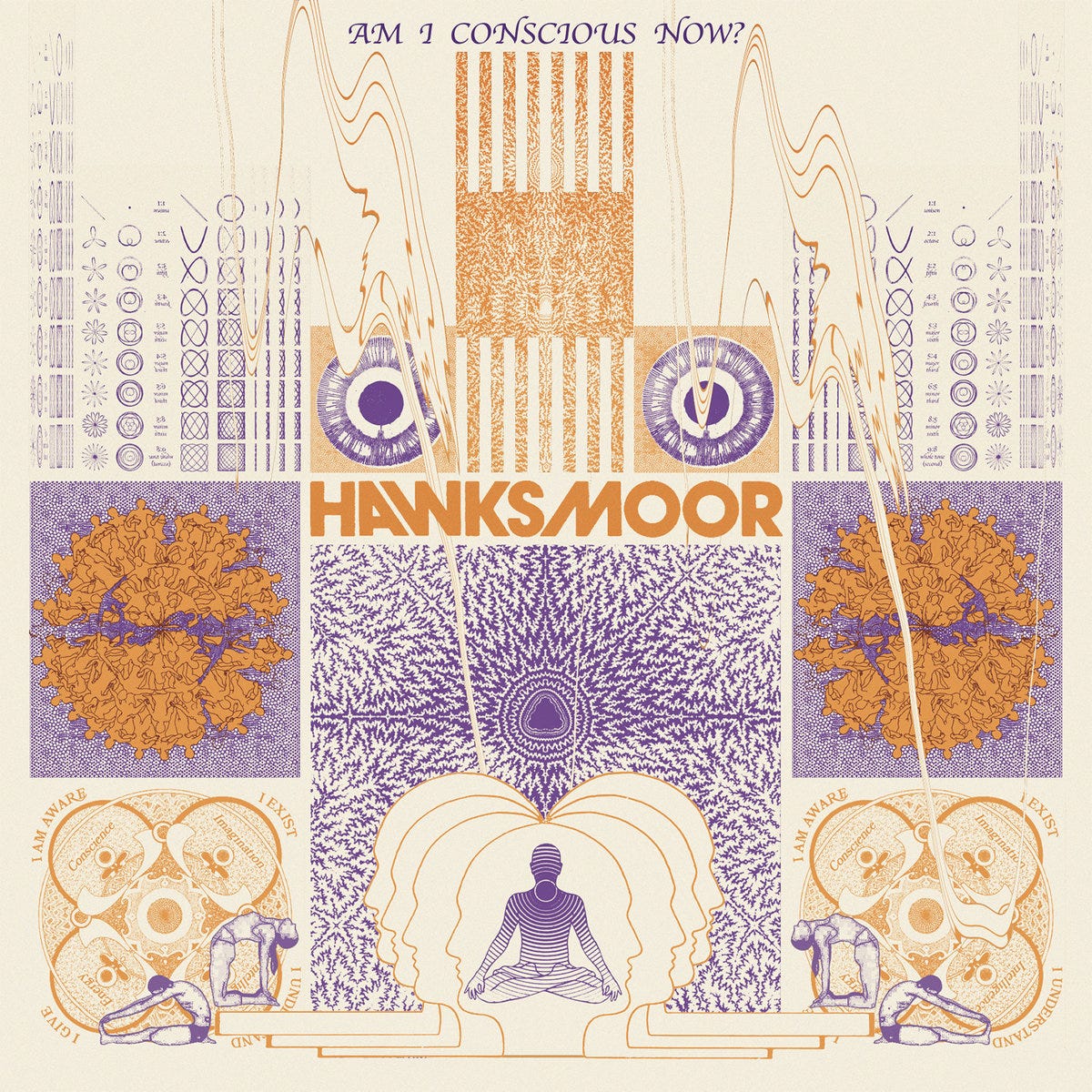
‘Am I Conscious Now?’ functions both as a document and a response to McKeown’s own experience and research into DMT. To call Hawksmoor’s music “ambient” doesn’t really do it justice. He’s straddled a number of genres throughout the years, from krautrock to electronica, hauntology to experimental, and while ambient might be the beating heart of the album, it bleeds new age, drone, and even neoclassical at points.
Sonorous opener ‘Amygdala Opening’ feels like having your third eye awakened, a swelling, cavernous drone that slowly builds with quivering anticipation, before slowly dissipating into a crackle of static. It sets the tone for the rest of the album. The trip has started and you’re locked in. There’s no going back now.
It all starts to properly kick-in with ‘Golden Dolphins’, a kaleidoscope of psychedelic whirs that spiral around a string melody, as soft vocal interjections echo in and our of focus. You can imagine that McKeown really did think he was riding on a golden dolphin, cresting over a wave and rising into the air and floating on these rippled textures. ‘Urdhva Hastasna’ screams 1960s psychedelia. Close your eyes and reality melts away. Suddenly you’re in a studio with Lennon and McCartney, recording their hit from a parallel universe ‘Lucy In The Sky With Diamonds, And Also A Toad’. It would be very easy for the rest of the album to continue as such. Stretch out a few electronic keys, layer some psychedelic textures on top, maybe add the odd Pink Floyd-adjacent string chord for good measure. Voilà, here’s your drugs album. No such case with Hawksmoor.
On ‘Am I Conscious Now?’, McKeown succeeds in not only taking you with him on his aural trip, but vividly painting a picture. Take ‘Infinite Tapestry’, its sharp, propulsive sitar-like melody gives it a medieval quality, strings wrapping around strings like threads, weaving this track into infinity. I love ‘Ti Kallisti’, a reference I believe to the golden apple that appears in both Greek and European mythology. It’s a welcome change of pace, a downtempo piano number backed by spacey synths that fade into muted dark churns. There’s an edge of sci-fi here, that rears its head once again on ‘Into The White Sun’. Star-sailing electronics whirring like an engine fly in tandem with looping bass strings. The ship is flying towards that white sun, and your future is uncertain, the track beginning to crackle and glitch before dissolving into nothing.
For an album that was made with the help of mind-altering drugs, ‘Am I Conscious Now?’ is a remarkably focussed record. While you absolutely could smoke a joint and shove this on in the background, you get far more out of it through active listening. Each track has a point of view and a concept behind it. But we shouldn’t be surprised by this. Another banging entry in the Hawksmoor catalogue, and another positive argument for the immortal drugs and music pairing. See, there’s a reason why some things just work. And on that note, chips and gravy anyone?
There’s more from Finlay at his Happening Again Substack, which this week has featured his unpublished ‘False Prophets’ short story
Got something you need to tell us about? email moonbuildingmag@gmail.com
Words: Neil Mason
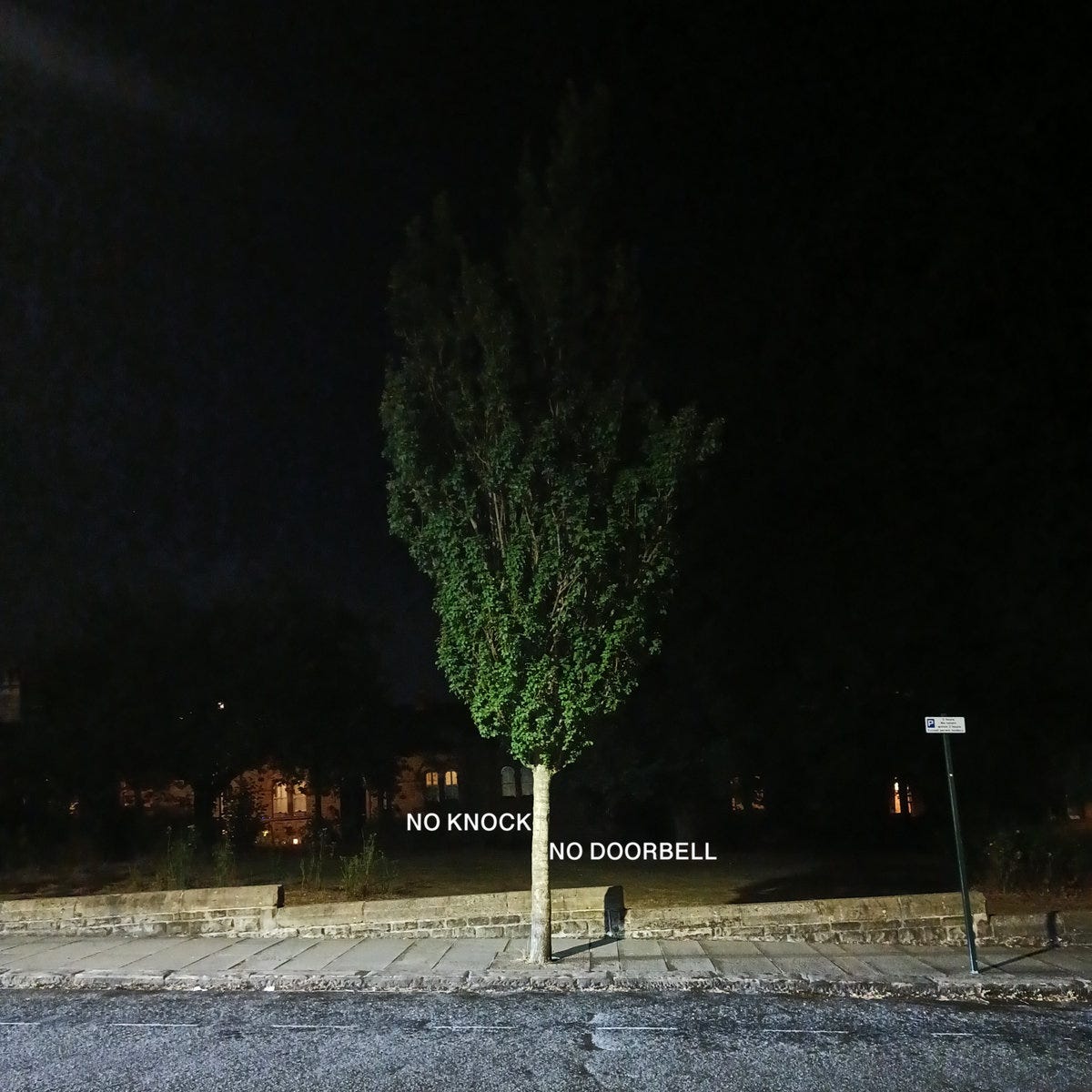
WORRIEDABOUTSATAN ‘No Knock No Doorbell’ (This Is It Forever)
I really love how thinky many of the artists we feature here are. worriedaboutsatan’s Gavin Miller has really put the time in on this, his umpteenth long-player… the suggestion seems to be it’s his 19th long one as he is in his 20th year of sataning and, the notes say, the 20th album is “just around the corner”.
Anyway, ‘No Knock No Doorbell’ feels like a traditional album and it even came with an upfront single. Yes, I know people do lead tracks, but it’s not the same. Gavin says when he was younger he was obsessed with singles. It was that first taste of new music from your favourite band. That little snippet of what was awaiting on the upcoming LP. With Gavin’s single he went for the holy trinity – the LP track in the shape of ‘The Dream Is Over’, the b-side is non-LP track ‘Stress Test’ and a remix of the A-side, the lengthily titled ‘The Dream Is Over (Good Weather For An Airstrike’s Worried About The Weather Remix) by his old pal Tom Honey. He also wanted to up the ante and release it on CD in a slim jewel case (he’d even thought about having a bastardised Virgin Megastore price sticker that said “Satan Megastore”. Love it), but that didn’t come to pass. That well thought through teaser was back in Feb though and now here we are with the full LP.
And it’s pop songs. Not actual Top 40 pops songs, but pop songs in Gavin’s world. His recent work, we’re talking last year’s ‘Subtle Manoeuvres’ and ‘The Future Can Wait’, were kind of ambient jams. The former was lengthy one-takes full of atmosphere, the latter, three whopping 15-minute-ish cuts that, as Gavin himself succinctly puts it, saw him take “cosmic, Arp-heavy electronica as pioneered by the likes of Tangerine Dream and warp it with a particular northern English eccentricity”.
Here he flips all that on its head. There’s 10 tracks, admittedly the longest is 9.49, but otherwise ‘No Knock No Doorbell’ covers all bases timewise right down 1.27. It sounds different too. Gavin has always employed live instruments, here we get guitar, drums and bass, a kind of band set, which he describes as being “a bit more direct this time”. Boy is it. He did after all take his name from a song by wonky Belgian art-rockers dEUS, who I was only listening to the other day. Love a bit of dEUS.
We’re not talking about Gavin going completely crazy. This is still very much a satan album, but it feels composerly, constructed. The opener ‘A Looming Spectre’ really sets the scene. It’s beat-driven, very atmospheric. The long track we were talking about, ‘Before Your Eyes (We Are Your Ancestors)’, is excellent. The swirl of a bright repeating guitar lick is joined by a brisk beat and thrumming bassline that gives it a dancefloor edge… and then it heads off in a different direction with live bass and rattlingly good drums. Very reverby, more proggy than dancefloor. Sounds great. Quite Cure-y almost. Stretched out over 10 minutes never hurts.
And then there’s the more song-like outings. ‘We Talk About It Often’, which is cracking, with its lovely deep rumbling arpeggio and ‘Piece by Miserable Piece’ that sounds like a 21st century Joy Division, that bass!
Gavin points out it the album has a much more organic feel. Even though it’s just him on “computers and guitars” it feels alive, organic, real, something you could touch and, well, see live. It could’ve been made in a room with a band. Now that would be good. The worriedaboutsatan live band campaign starts here. Hands up who’d pay to see this live?
worriedaboutsatan.bandcamp.com
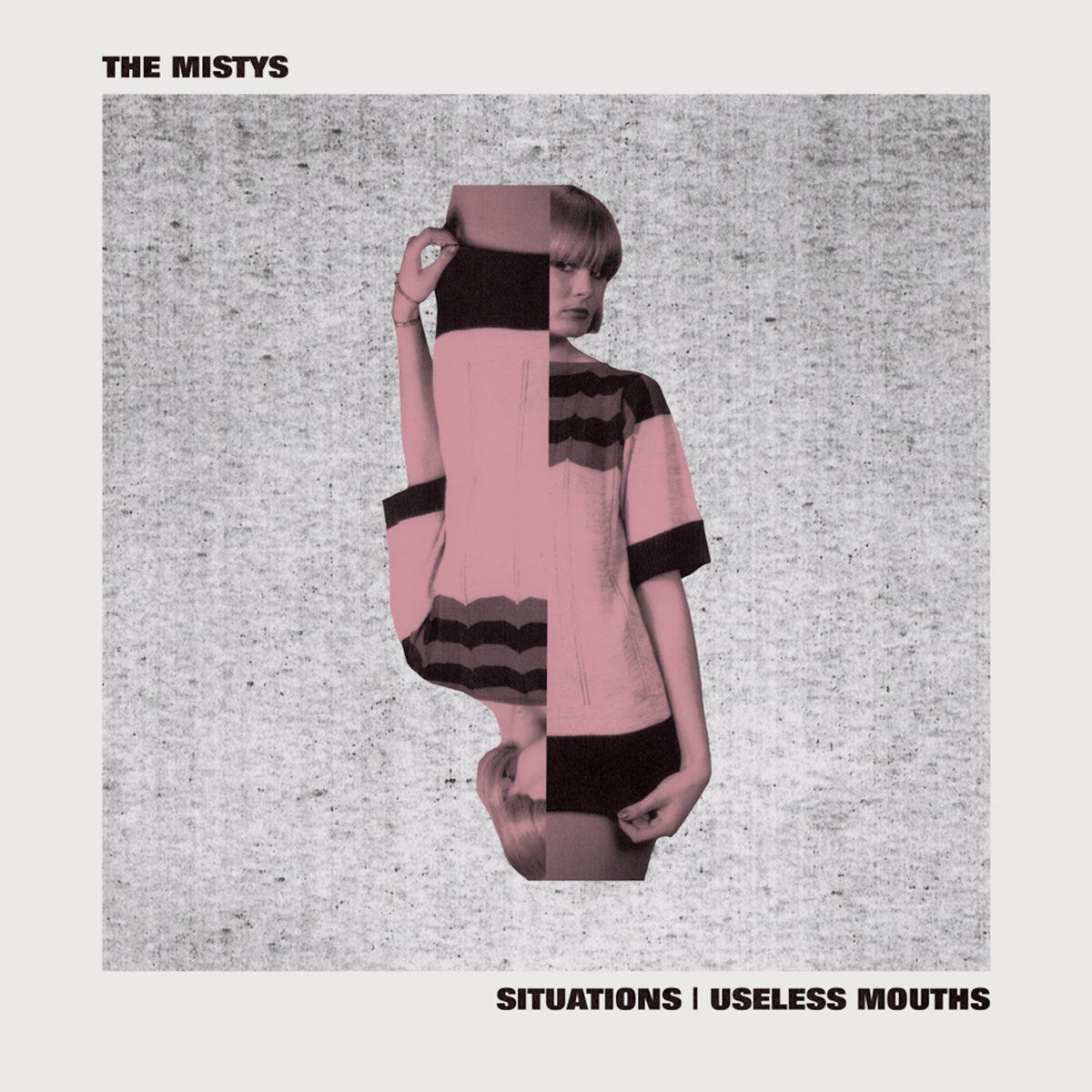
THE MISTYS ‘Situations | Useless Mouths’ (Castles In Space)
It has been a while since we’ve heard from Manchester’s The Mistys (that “ys” at the end really makes the editor in me twitch). It was in fact September 2023 when we last had recorded contact with Beth Roberts and Andrew Hargreaves. Where that record, ‘Detached Engagement’, was introspective, here we find The Mistys shapeshifting into… what’s the word? What’s the opposite of introspective? Extraspective? Need to look that up… oh, it is a word. So that’s what they are here. The label in their notes say they “boldly aim their sights at the hedonistic dancefloor”. They go on to say that “pop, in their hands, is transformational. It can make the world feel better... at least until the record ends”.
It’s funny, we’ve kind of got used to artists cranking out the releases, an album a year minimum, so when someone take their time you don’t half notice. Or completely forget about them. And that won’t do where The Mistys are concerned. They are back with something of bang. The opener here, ‘Double Body’ is something of a showstopper. Those rich warm synths, Beth’s cute twang of a voice. It’s one of those tracks you’d like to hear spinning out at the end, could easily listen to it instrumentally if it stretched itself out for several more minutes. And that’s just the first four minutes. We’ve got nine tracks to go.
‘Intelligent Fashion’ is a proper stalker of a track, it prowls, feels quite nighttime, almost something you’d hear on a Billie Eilish album if she did uptempo or maybe it’s something you’d catch on a lost version of the ‘Drive’ soundtrack. I love the breakdowns and the way a track like ‘Promises Made’ drops away at the halfway mark and builds back up so quickly. It is quite the skill is that.
The sound here is really great. It is still very Mistys, that “dreamlike haze” as the notes say, but it feels richer, warmer. “Their music remains as enigmatic and art-driven as ever but here, the pulse is brighter, the invitation clearer” continue the notes. It’s almost like a cocoon (my spellchecker wanted to change that to “racoon”, which would have made for an interesting diversion). It’s a sound that does make things feel better. It’s snug, cosy. ‘Fist Of Bees’ is glorious, a real slow-mo lovely with a melody that’ll get stuck in your ears for a while. Beth’s voice is extraordinary, she sounds Nordic, like early Lykke Li or with the sort of twang someone like Emiliana Torrini has. It all adds to the charm. And this is an utterly charming record.
We were only just talking about worriedaboutsatan going pop and here we have another record where nothing is over four and half minutes. Looks like we might have a trend, or at least we do this week.
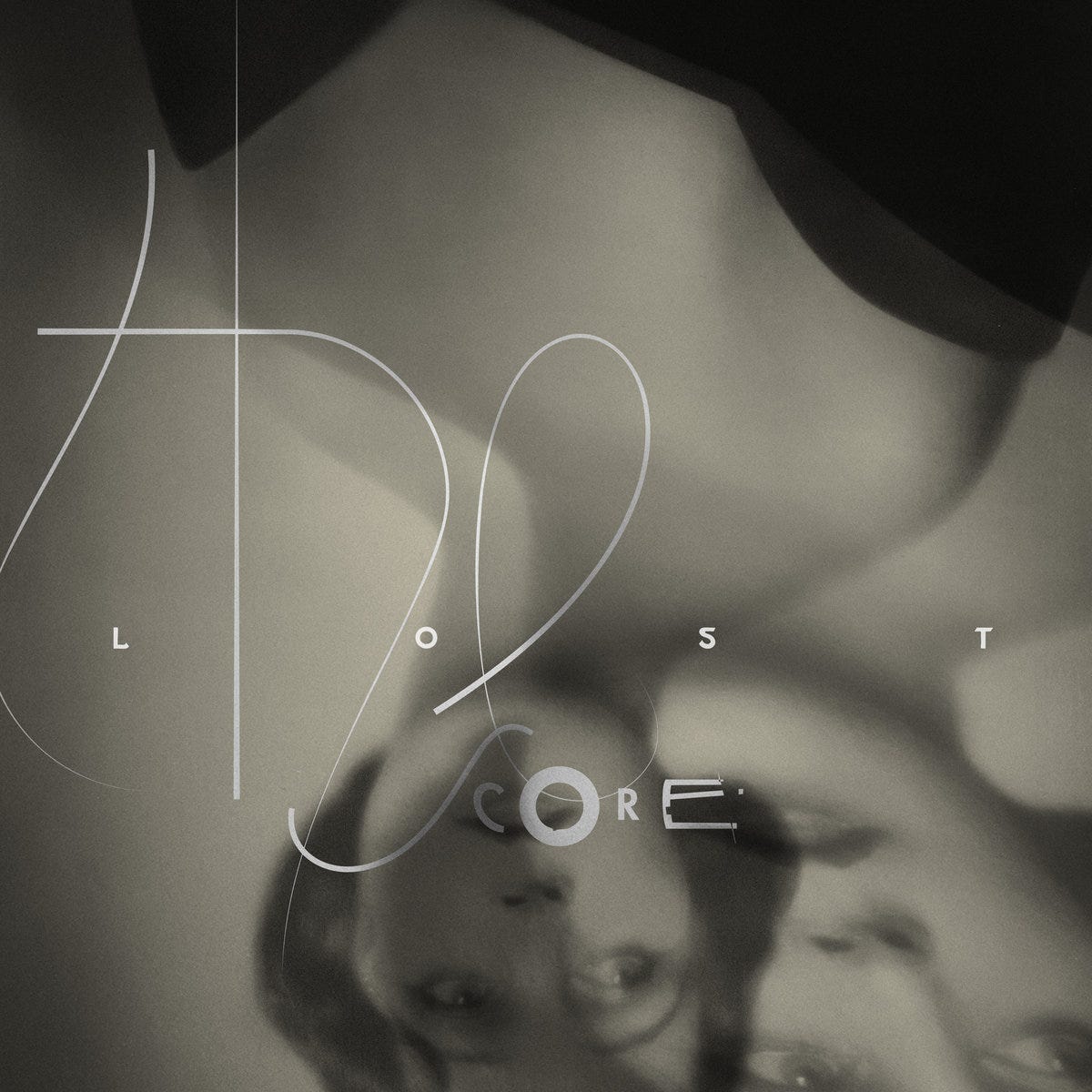
HAIKU SALUT & MEG MORLEY ‘The Lost Score’ (Lo Recordings)
We’ve featured a track from this LP as our Track Of The Week recently, which hopefully you’ll recall. Quick recap? Sure thing. In the before times, 2019, Birmingham’s Flatpack Film Festival invited Haiku and jazz pianist Meg Morley to collaborate on a new live score for radical 1930’s silent German film ‘People On Sunday’. The film was an early work by Austrian-born Hollywood writer/director Billy Wilder before he moved to Paris and then to the US to escape Hitler’s Germany. The film portrays the lives of five ordinary Berliners over a weekend and was filmed on Sundays during the summer of 1929 using amateur actors who portrayed their real jobs. It’s power comes from it living in the shadow of what was to follow in Germany.
This new soundtrack was five years in the making as the quartet set out to capture the recordings in the studio while, like the characters in the film, they underwent the ebb and flow of life “marked by personal and global upheaval… ideas were passed back and forth in evolving documents, assembled, dismantled and reshaped as the score gradually found its voice”.
And find its voice it indeed has. The opening track ‘What About Tomorrow’ sets the scene. A beautiful rich synth arpeggio opens up and after a while it’s joined, and echoed, by Meg’s piano, which continues to unfurl as the track progresses. There’s a very equal weighting at work here, not just in this track but across the piece. It would’ve been easy for the synths of Haiku to take the backseat and allow Meg’s piano to do the heavy lifting, but there is an even billing with both working together for the sake of the bigger picture, if you’ll excuse the pun. The synths drop out entirely here and let the piano to the work for a while before rejoining the party for the run to the conclusion.
It is of course just the soundtrack so it’s hard to know without the original accompanying pictures why the music does certain things. There will have been a logic at work. Indeed, Haiku and Meg felt strongly that the gender politics in the film needed to be highlighted and undermined by their music. “The way the men treated the women felt uncomfortable viewing it through a modern lens and we used the score to communicate some of the more sinister elements,” explains Haiku Salut’s Sophie Barkerwood. Of course, with just the soundtrack on its own we will never know what these moments were, but you can listen out for the “darker undercurrents” that they employed as pointers.
That said, it does work very well as a standalone soundtrack. Meg’s playing is beautiful and feels like it was made to both sit with and spiral away from the synths. ‘What Happened Next’ is rather wonderful, mournful string sounds alternate with gentle piano, while the electronics give proceedings a weirdy-woo feeling with some delightful slurs and pulses.
There are many great upbeat moments too. With its blips and bleeps, a track like ‘Needle Drop’ feels very dancefloor, or it starts out that way before gently becoming more and more chilled, while ‘Faces’ comes out of the traps like a full-blown rave tune, both synths and piano aligning to the repeated motif with great effect.
I should also say that Haiku Salut and Meg Morley will be performing the score, sans film, tomorrow (28 March) at St John’s Leytonstone as part of the church’s “Daylight Music” series of Saturday lunchtime concerts. It starts at midday and is a pay what you can event (suggested £10). Support comes from the brilliant Jilk and there’s tea and cake. £10 seems cheap. The church is on High Road Leytonstone E1 1HH, a two-minute stroll from Leytonstone tube. Tickets are here.


***ADVERTISE HERE***
email moonbuildingmag@gmail.com
THE ROUND UP’S ROUND UP


The final part of the first season of Castles In Space’s Lunar Module CD series has arrived. This project was years in the making, 10 albums by 10 different artists, one released a month and here we are in month 10 with album 10. Twilight Sequence’s ‘Stars Of The Wayside’ is a fitting and rather stirring conclusion. Matthew J Saunders is someone who has been around since the very beginning of my adventure into independent DIY artists. Matt had a label called Patterned Air, which was one of the very first labels I began to notice doing fine work when it came to this DIY lark. It didn’t last long, Discogs says four releases between 2016-17 by The Assembled Minds, CukOo, Runningonair and Lo Five, all of which I have and love. The Assembled Minds album, their second, ‘Creaking Haze And Other Rave Ghosts, is especially good. It’s Matt’s post-rave phase, “a cloud of old memories, a collective remembrance-pool of distant Saturday nights out, rave-fields, night-clubs, dancing, feeling the love of the tribe, but always looking over our shoulders for some dark threat or other”. There’s a NM version on Discogs, £6. I mean…
So what I’m saying is Matt is rather good.
‘Stars Of The Wayside’ is a live recording made at The Beat And Track record shop in Sherborne, Dorset on 23 April 2022 “using synths, a sampler, loopers and effects”. I mean he is underselling this quite considerably. There’s a track called ‘We All Felt It Get Colder When The Storm Came’, which is such a showstopper. Nine minutes long, it is about as perfect an example of why Matt is so brilliant. The whole release is over and hour and it’s hour you’ll be playing over and over. When you hear this you’ll be asking where you can hear more. One of the scene’s unsung heroes, make no mistake. Lovely Zeke Clough artwork on this too.
Ben McElroy’s ‘We Are All Visitors Here’ (Allotment Tapes) is the third part of his visits to St Ann’s Allotments in Nottingham. St Ann’s, you will may know a little about from David Boulter’s Clay Pipe-released ‘St Ann’s’ album, his tribute to the council estate he grew up on.
Ben writes brilliantly about his project over on his website (here), explaining that what he loves about allotments is “the real DIY, non-conformist vibe that purveys them”. Which is probably why he likes Moonbuilding too and dropped us a line. Ha. “All higgledy-piggledy, sheds made from old doors, nature reclaiming an old watering can,” he writes. “I think there’s something really positive and nourishing about this”. I’ve always thought there’s some quite magical about allotments. All those small spaces serving different purposes for different people. A book or even a film that takes a plot at a time and tells the story of the owner would be amazing. Why people have them, what they’re doing with them, what the space gives them, it’s fascinating.
So ‘We Are All Visitors Here’ visits Rachel Brooke who runs the community orchard and through a combination of folk-driven acoustic music, spoken word and field recordings a tale is told. “It was great to hear Rachel’s passioned talk about the importance of green spaces and accessibility in urban spaces, and to hear her stories,” he says. Ben describes his musical work as “folk-based experiments” and “drone-based droning” and they sit as a delightful backing to the chat along with the various field recordings. I’d recommend headphones.
Really love this, it’s so lovely. Such a good idea and created with such charm. Do check out the first two instalments while you’re at it.
One I missed last week and it’s a goodie. Isa Gordon’s ‘8 Men’ (Lost Map) finds the Glasgow-based electronic producer reimagining the folk songs of her formative years growing up in rural Scotland. It’s folk music Jim, but not as we know it. Alongside her takes on four traditional numbers that resonate with her there’s also four cover versions of songs that are deeply embedded. She took in a really diverse range of musical influences growing up, shared through singing at folk clubs or with friends, or via home-made cassette compilations passed around family and friends. Not to mention the tapes her family listened to in the car - Kraftwerk, Tom Waits, The Human League, Bowie… and you can hear it all in her work. She’s an electronic producer whose work skirts the dancefloor and it’s those skills she applies to these tracks. AutoTuned folk? You got it. The four cover versions are almighty choices. There’s Richard Thompson’s ‘Wheely Down’, Lou Reed’s ‘Street Hassle’, Robert Wyatt’s ‘Sea Song’ and Black Sabbath’s ‘War Pigs’. I know, right. I interviewed her in this month’s Electronic Sound if you want to know more. Her version of ‘Street Hassle’ is exceptionally good.
Wil Bolton’s ‘Barbican’ (The Home Normal) is packed with the good stuff. I’m not much of a synth nerd, but I know my numbers when I see them. This features and EMS Synthi 100, Buchla 100 and 200 and a Serge modular among others. You don’t really go owning stuff like that, so being able to visit and use them is a treat. You see, ‘Barbican’ was recorded during artist residences in a couple of Europe’s famous electronic music studios - Electronic Studio Radio Belgrade and Stockholm’s legendary Elektronmusikstudion. What’s more the album draws inspiration from the Brutalist architecture of London’s Barbican and is built round field recordings captured on site. Old synths, famous studios, brutalist architecture, it all seems like a lot going on and then you get to the work itself. You can see why he went down this route, makes sense, as he says in the notes, to use the “expressive potential of vintage electronic instruments”. Another one for headphones, this. You can feel the place in the sounds, the location recordings help obviously, but the old synths seem to make noises that are totally in keeping with the Brutalist buildings. Which is a very neat trick.
MOONBUILDING ISSUE 6 … SOLD OUT

Holy cow. MOONBUILDING Issue 6 is completely sold out, so it isn’t available from moonbuilding.bandcamp.com Sure someone will try cash in via Discogs soon.
Let’s look at what you missed, although it is still available digitally of course. Our cover star, illustrated by the peerless Nick Taylor, is the unstoppable force that is LOULA YORKE. In our bumper interview we talk about how she got here and where she’s going. As usual, it is an in-depth piece that lifts the lid on the brilliant mind behind the excellent music.
We meet Loula at her home in Suffolk where we have a proper rummage around in her world, musically, humanly, psychologically, probably even a bit metaphysically. It is a cracking read and really opens the doors on what makes this most remarkable artist tick.
As always the issue comes with an accompanying CD. This one is a Loula Yorke collection called ‘How Did We Get Here’, which is compiled by artist herself and charts her rise and rise. The resulting 11-tracker will take you on a journey through her career to this point and it is utterly, totally, absolutely, exclusive to Moonbuilding.
Elsewhere, there’s a great chat with Clay Pipe Music supremo Frances Castle as we profile her wonderful label, A’Bear gets in on the There’s A First Time For Everything act, we round up an absolute mountain of recent releases and serve up our thoughts on the best albums from the last few months, which feature Loula Yorke, Warrington-Runcorn New Town Development Plan’s Gordon Chapman-Fox, Cate Brooks, 30 Door Key and Sarno Ultra.
We talk to ‘This Is Memorial Device’ author David Keenan about ‘Volcanic Tongue’, his debut collection of music writing. He is one of the last generation of music writers who could actually call themselves journalists. He talks a lot of sense and his work is a shining example of what music writing should be. It’s an unmissable interview.
Elsewhere, we round up an absolute mountain of recent releases and point you in the right direction of some mighty fine independent magazines and books. The Orb’s Alex Paterson tells us about his ‘Top Of The Pops’ experience when he appeared on the legendary show performing ‘Blue Room’ in 1993. I say performing… There’s a new Captain Star cartoon strip from the brilliant Steven Appleby. I constantly have to pinch myself that this strip, that I first read in the NME in the early 1980s, is now in my little magazine.
Find us at moonbuilding.bandcamp.com.
Moonbuilding Weekly is a Castles In Space publication.
Copyright © 2026 Moonbuilding
Another cracking issue Neil. The new Hawksmoor is a stunning record.