
Issue 107 / 8 May 2026
The essential DIY electronic music lowdown: Track Of The Week: Mitra Mitra + Album Of The Week: Sulk Rooms + Euan Alexander Millar-McMeeken + Eric Random + Daniel Dylan Wray's Sheffield book + more



If you’re in London this weekend, the Independent Label Market is at Coal Drops Yard in glittering King’s Cross tomorrow (9 May). Looks like I’ll be there for a wander round and a bit of catch up with people in real life. I do love a label market. Interestingly, we might have some news along those very lines soon. Stay tuned.
Don’t forget there’s a new live Moonbuilding Session for download, which is exclusively for our brilliant paying subscribers. It’s a live recording made at the launch of Paul Cousins’ ‘Vanishing Artefacts’ album in 2023. Paul is wildly talented, he works with reel-to-reel tape machines and prepared tape loops that he transforms on the fly into breathtakingly beautiful music. It’s incredible stuff. Subscribe now for instant access.
Righto, the weekend starts here. Happy reading.
Neil Mason, editor
moonbuildingmag@gmail.com
Issue 107 Playlist: Listen
Your ad here: Advertise


***ADVERTISE HERE***
email moonbuildingmag@gmail.com

MITRA MITRA ‘Collide’ (Feral Child)

The countdown to Dom Martin’s impending retirement from running record labels continues with this first taste of a new Mitra Mitra LP.
One of my absolute favourite albums Dom has ever released, and that is a statement that goes some, is Mitra Mitra’s ‘Marionettes’ on Polytechnic Youth waaaay back in 2018. It’s making me all sad (again) that come the end of this year Dom is stepping back entirely. I will try and remember to do a tribute rundown post of his finest moments in December. I also wonder what he thinks his finest releases are… I’ll make a note for a proper send off.
So anyway, the Vienna-based duo of Mark Crumby and Violet Candide return here for the first time since 2022 and the ‘Hands Remain’ LP, again on Poly Youth, with a new long one called ‘Glassy Tears’ on Feral Child and their own Micromort label.
While ‘Marionettes’ felt very minimal, coming on like The Normal, here they’ve upped it the ante several notches. “Mutant dancefloor synthpop” they call it. “The backbone is still there,” writes Dom in his notes, “skeletal, obsessive rhythms and corroded melodies, cycling with machine precision, humming like circuitry pushed too far. Violet’s voice cuts through in that signature near-spoken monotone - detached, intimate, and faintly unreal.”
Yeah.
‘Collide’ gives you a great taste of the album. It’s got that proper 80s synth warmth and sounds like Chris & Cosey covering early Depeche. Love it. The album is a peach too, of course it is. We’ll have a review of that for you next week.
To grab ‘Glassy Tears’ direct from Dom if you’re UK or US based email thegreatpopsupplement@hotmail.com or you should be able to find it in the better record shops next week.


SULK ROOMS ‘Songs Of Soil’ (quiet details)
Words: ROB FITZPATRICK
A little over five years ago – during the “glory” days of COVID, when, at least in my memory, the sun shone every day for, like, eight months and I didn’t have to go to work once – I split my time between mucking about on Logic and flicking through Twitter. One afternoon I was fed a video of a guy messing about with the tape in an old Space Echo machine, stretching and pulling it, slowing it down, pushing the repeats higher, building this incredible soundworld. I DM’d him and we got talking. A few months later he remixed a track my “band” (two old farts who ought to know better) had recorded called ‘The Last Retention’ [The band, if you’re wondering, is Ronnie & Clyde, they are actually quite good. Ed]. As I write, that remix has had almost half a million streams on Spotify and so, in the pursuit of transparency, that’s how I first knew about Thomas Ragsdale, the man behind the moniker Sulk Rooms among others.
West Yorkshire-based Ragsdale is one of those infuriating people who seems to exist in a space of almost constant creativity. I mean, he’s no Michiru Aoyama, but he’s never not doing something, being it play live with Pijn, DJing, being in a ska-tribute band, releasing things under his own name, appearing as Bluematter with Jozef K, writing as Winter Sun, or Ffion, or Two Way Mirrors, putting out music on Waxing Crescent, or Subexotic, or his own imprint, Frosti. You get the idea. His Bandcamp page has enough stuff on it to keep you happy for about a year. And now here’s some more, this time on Alex Gold’s beautifully discrete quiet details label.
If a musician with such a breadth of catalogue can be said to have “a thing”, in Ragsdale’s case it’s what he calls “luminescent electronica”. From the very start of ‘Songs Of Soil’, we are knee-deep in crispy ambience. While album opener ‘The Losing Grip’ leans into a classical stridency, ‘A Hidden Life’ is a deathly freezer-burn of a kiss, a place where some achingly sad synth figures howl and moan like wispy ghosts over shifting, shuddering bass growls. If I had any idea what I was doing, this is precisely the sort of music I’d make – it’s hauntingly bleak, yet you feel better just being in its presence. What evil fucking sorcery is this?
‘Open Up To Their Will’ is built around an ascending and repeating five-note figure that’s laced and bejewelled with a gurgling, tapping arpeggio, while ‘Homespun Black Gold’ is so majestic and uplifting it sounds like it ought to be on the soundtrack of some fabulously obscure early 80s new age self-improvement laser disc. I can easily imagine some arcane life-enriching techniques being whispered over library footage of humpbacks breaching in Alaska, or a Keel-billed Toucan soaring over Belize.
Now I’ve actually read the press release (I’m nothing if not a storied pro), this ecological vibration (sort of) makes sense as ‘Songs Of Soil’ is “a reflection on rural Yorkshire and Ragsdale’s own connection to nature”. Moreover, it’s “an album dedicated to the majesty of worms”. Well, aren’t they all, dear? With that in mind, I point you towards the truly spectacular ‘When I Am Earth Again They Will Be Here’, which, as a neat way of saying we’re all going to die and be eaten by, if not worms, then the larger necrobiome, is unbeatable. Although Shakespeare’s line about how existence is sort of pointless as ultimately “we fat ourselves for maggots” was pretty good too. And yet, again, while this lambent, solo piano piece is as close to a true, sorrow-filled threnody as we’re likely to get this side of the summer holidays (especially as the master of this game, Harold Budd, is five and a half years gone), it is, as ever with this album, entirely uplifting.
Strictly enforced Moonbuilding rules mean I need to shut up in a minute, but let me just mention ‘Clew’, the collective noun for a group of worms, which, like ‘Flattered By Burial’ (incredible title, btw) and ‘Thrashers’ (jumping worms) is a wonderfully succinct wash of ballooning atmospherics, a cloudy maelstrom of dark intent where Ragsdale’s innate sense of drama teases you with an august immensity, then simply dissolves into mist.
‘Songs Of The Soil’ is an album, perhaps like the man who made it, that has made its peace with the dirt we shall all return to. Make the most of it while you can.
Got something you need to tell us about? email moonbuildingmag@gmail.com
Words: Neil Mason
GOOD STUFF #1
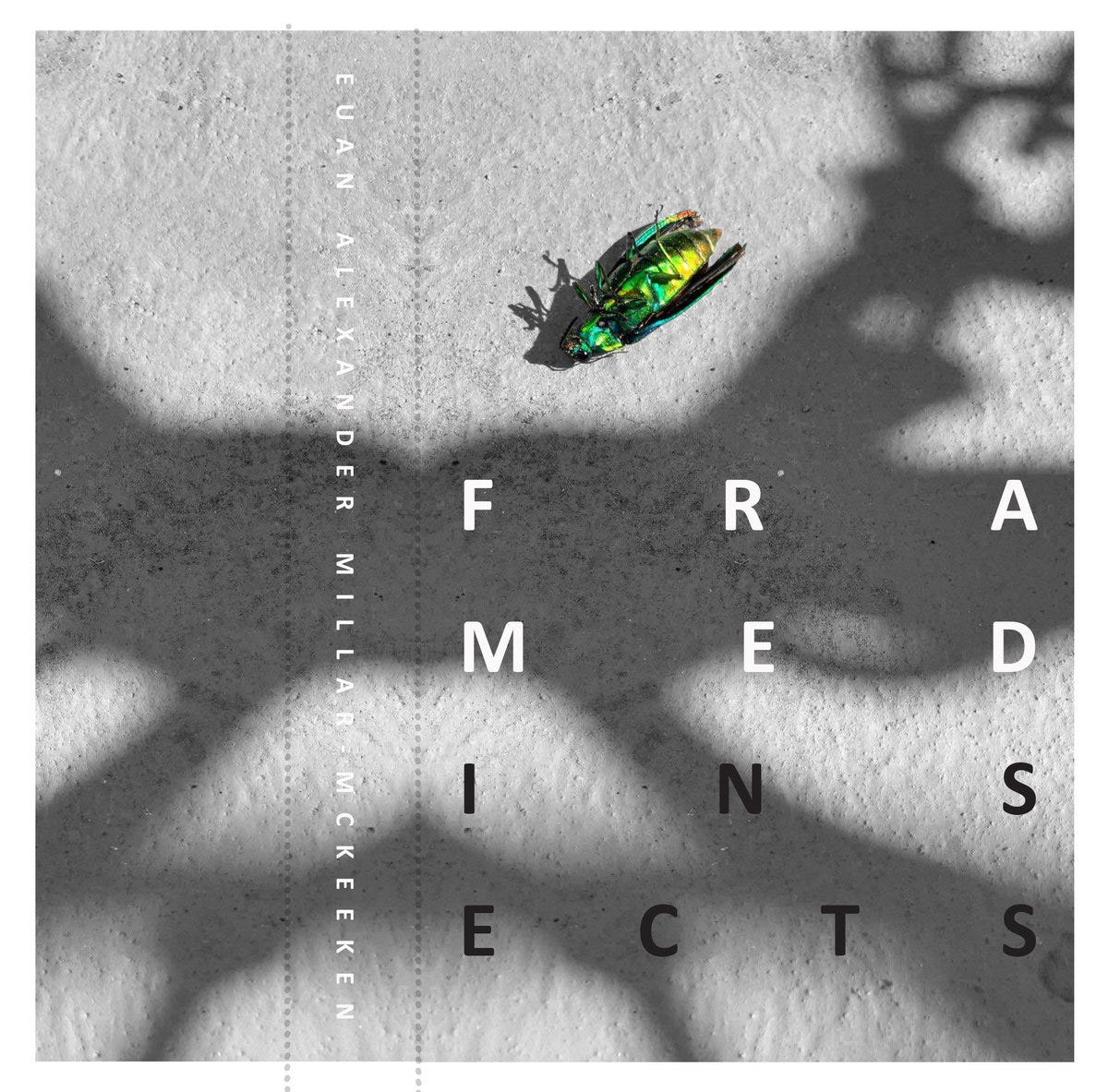
EUAN ALEXANDER MILLAR-MCMEEKEN ‘Framed Insects’ (Sleep In The Fire)
Despite having a name that uses far too many vowels, we’re big fans of Euan Alexander Millar-McMeeken here at Moonbuilding HQ. There’s much to like about this Scottish composer. We covered his debut solo outing ‘All Weather Of The Human Heart’ and ‘Into The Unknown Twilight’, his collaboration as Bird Battles with US-based multi-disciplinary artist Jesse Narens, which we described as being like quiet noise, saying that “Euan’s voice is so frail you’d need tweezers to pick it up”. That’s a good line, right? Where this stuff come from I don’t know. Put a keyboard under my fingers and out it comes like magic.
So here we have Euan’s second long-player. There is another collaboration, Yoal’s ‘Gloaming’ (Lost Tribe Sound) with Japanese artist Satomimagae, but I’ll get to that another time. I already have too much to say about this.
There’s this underlying noise to ‘Framed Insects’ that I adore. The songs sit on top, but underneath there’s pops and crackles like you’re playing it on over-loved vinyl. There’s electrical buzzes everywhere, and fizzes and hums. I have a lovely pair of Bose desk monitors, but they are old. Loose wires means I’m often twiddling when a speaker goes down. This is such a crackly record I had to first move my phone out the way to make sure it wasn’t interference, and then move to headphones just to be double sure all that noise wasn’t my old speakers.
And my word, on headphones it gets even better.
Opener ‘Nevertheless’ is soaked in a warm drone, piano notes picking their way delicately while Euan’s voice comes on like Thom Yorke at a distance. There’s a constant vinyl crackle, a haunting cello strikes up, Morse code pings away in the background, there’s like a radio tuning in with foreign language voices, and then it all disappears into static… we’re five minutes into the second track, ‘Nothing More Is Needed’, before anything happens. I mean it’s all going on – there’s a drone, a heartbeat thud, it cycles through chords, there’s that voice, and another, a backing vocal, female, the thud gets frantic. Well, not frantic, but Euan frantic. It increases in volume, slightly, and then a banjo pluck appears, and a piano and all of a sudden a band strikes up, a full drum kit, guitars, melodies burst like flowers blooming, we get radio chatter again. Goodness me, this is brilliant and we’re only two tracks in.
‘The Wolves Will Leave’ is glorious, a female vocal joins the party, which is probably the wrong term. Is it a party when it’s this gentle? The interference here is great, there’s crackles and bleeps, the scanning of empty radio waves and a whole minute at the end of the tiniest electrical flickers. There’s another huge fade out on ‘Sunshine’ that lets the music drift off slowly, so slowly, and then it just sits reverberating for 30 seconds or so. No hurry. This really is not a record in a hurry.
I think the joy of ‘Framed Insects’ is that it exists as a whole piece, it’s not broken down into who did what. It just is. There’s a list of contributors – multidisciplinary artist and right-hand woman Vanessa Farinha, Bird Battles’ Jesse Narens, percussionist Katharina Schmidt, composer Claire Deak, producer/musician Tony Dupe, cellist Henrik Meierkord and trumpeter Michael Cottone – but nowhere does it say who does what, who plays where, which I like. It’s a gang, a collective, a collection guided by Euan’s vision. And what a vision. It’s like all the quiet bits of Mercury Rev, Flaming Lips, Sparklehorse and Radiohead boiled down to their very essence and then played back even more quietly while all the time fighting the sounds radiating off these buzzing fuzzing electrical boxes of tricks. Wonderful, really, really wonderful.
sleepinthefirerecords.bandcamp.com
GOOD STUFF #2
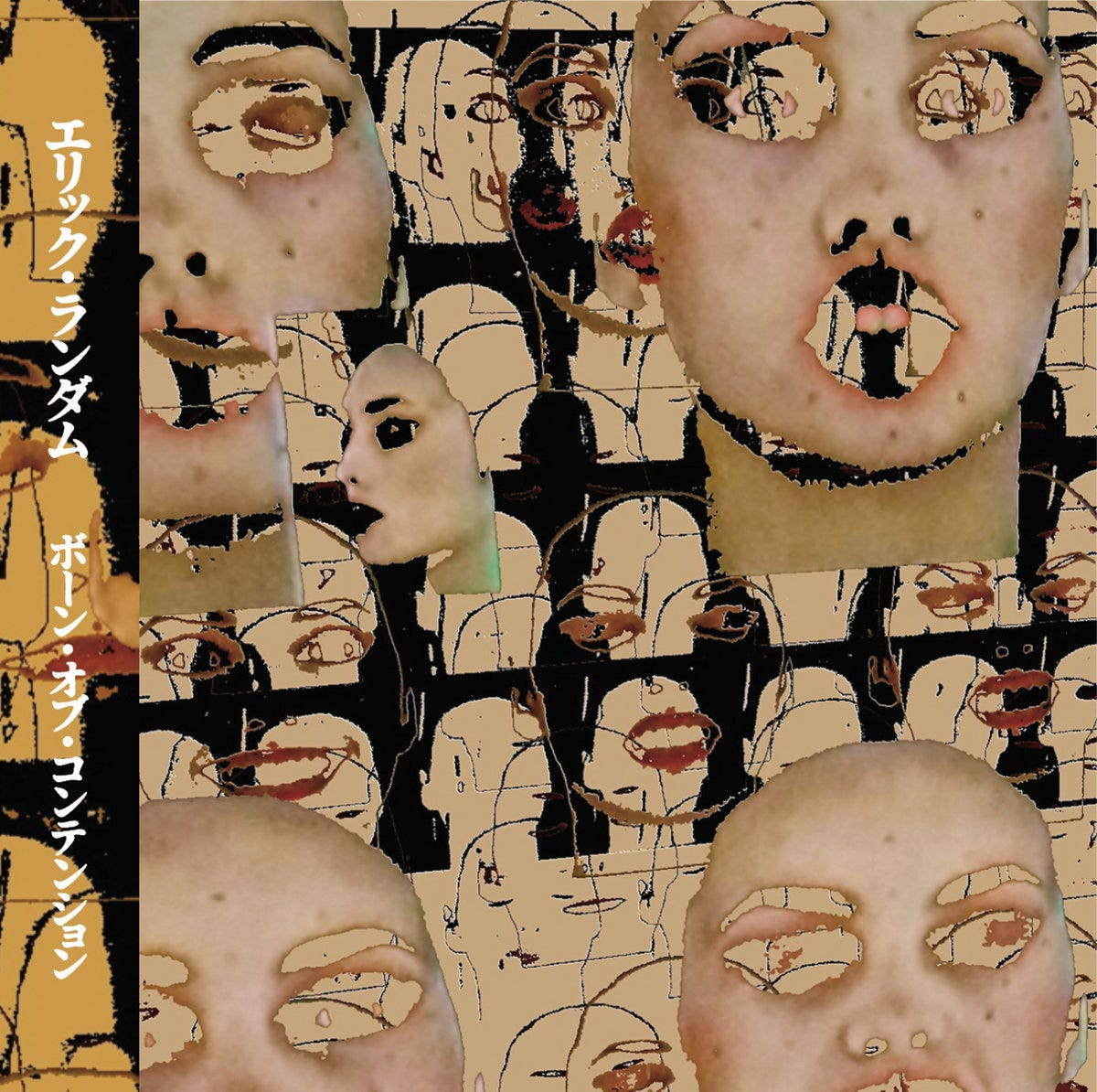
ERIC RANDOM ‘Bone of Contention’ (All Horned Animals)
One I missed, but this needs your attention. Eric Random is a name you will almost certainly know. He is currently playing the role of the late Richard H Kirk in the rebooted live version of Cabaret Voltaire who are at this moment wowing audiences in the States. Portland tonight, Denver on Sunday, LA on Tuesday, San Francisco on Friday. Lucky sods. Them and the audiences.
I love the story of how Eric first met The Cabs. It was at one of the very early original Factory nights at The Russell Club in Moss Side. He was playing with The Tiller Boys, the experimental trio featuring Pete Shelley and drummer Francis Cookson. Buzzcocks’ ‘Ever Fallen In Love’ is about Francis. Must’ve been fun being with those two.
The gig in question was Friday 20 October 1978. The line-up went The Tiller Boys, Cabaret Voltaire, Joy Division. The event has its own catalogue number, FAC 3. That’s when Eric met The Cabs. Blows my mind. To have been at those shows eh? It was the first of many bills The Cabs shared with Joy Division. Mal once told me that they’d take it in turns to headline depending on who had the furthest to travel home.
Anyway. Eric Random is an unsung hero in all of this. A total legend of the Manchester scene and inextricably linked with Cabaret Voltaire, playing on their records, recording his own output at Western Works. He has made music as Free Agents, The Bedlamites and with various collaborators, such a Nico. He was in her live band, The Faction, from the early 80s until she died in 1988. He was in Nico’s band FFS. On top of all that, Eric also happens to be an incredibly nice guy. The man radiates good vibrations.
‘Bone of Contention’, released by the lovely folk at Tokyo-based label All Horned Animals (hello Sarah and Sasha), was recorded in Manchester over a period of four years, from 2020-24 and it finds Eric in electronic mood. While he might be cranking out the Kirky guitar lines for The Cabs, this is also the more reflective end of his work. There is a soundtrack vibe to tracks like ‘Sentimental Decay’ and ‘Blood Runs Cold’, which both have that spacey/sci-fi type drift. What do they say? Bored of huge CS-80-like Vangelis chords, bored of life.
But it’s not all instrumental goodness. ‘Moving Ever Faster’ is song-based, with Eric doing a turn on vocals. Again, the synth sounds are expansive, soaring, and there’s a lovely blip of a rhythm track too. There’s a so many great sounds here, the deep growl of a bassline on ‘The Consequence’ could heat a small house for the winter, the backwards zubs-zub-zubs of ‘Satellite’, the tsk-tsk-tsk drum machine and sleek vocoder vocal on ‘Human Being’, the gentle ping-pong and swooping synths of ‘See Through’. ‘Signals Of Suspicion’ is a real highlight, the sort of thing you’d find on the B-side of an 80s synthpop hit. Love it. No streaming for this one though. Just like the old days, you want it, you buy it. There is a sampler though…
GOOD STUFF #3
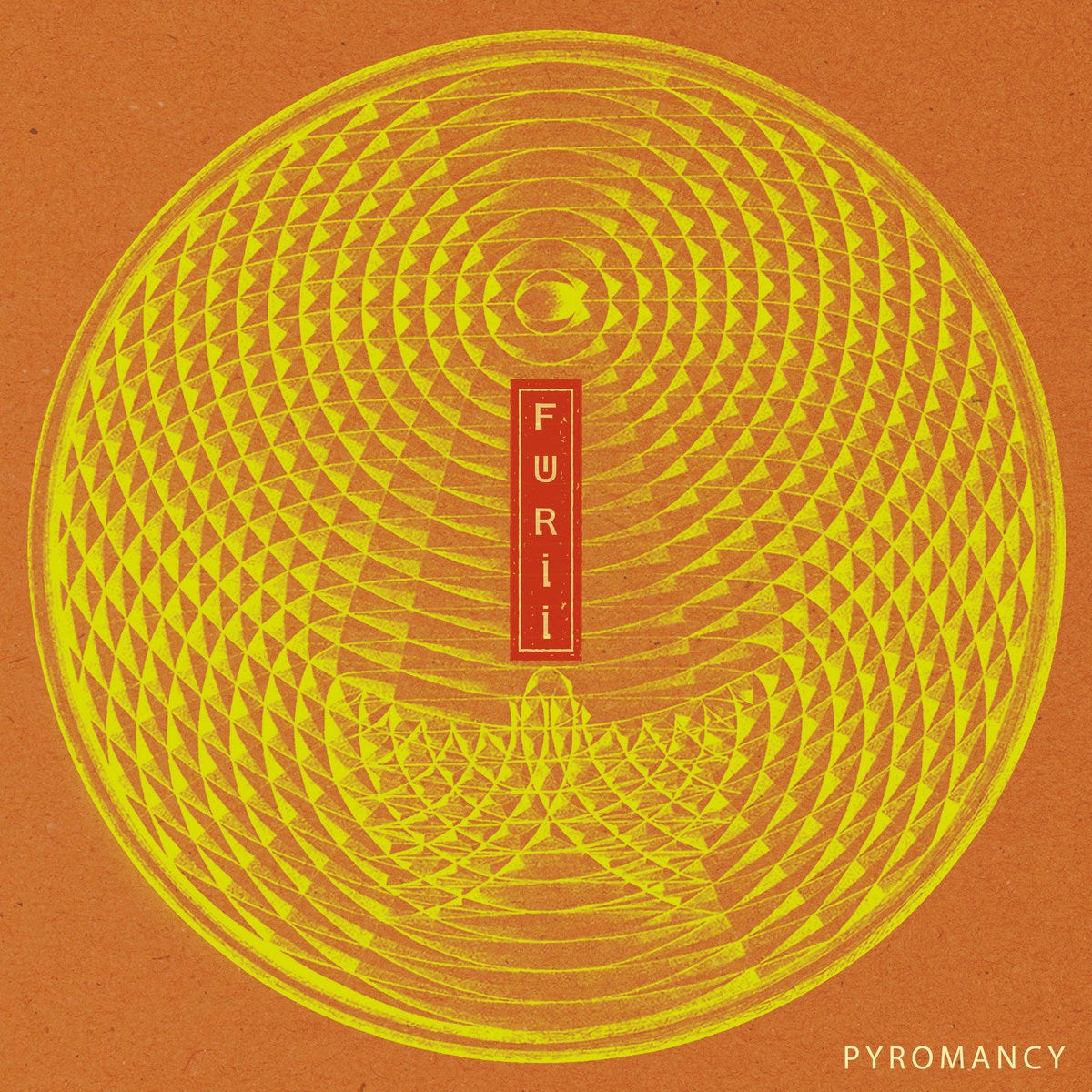
FURII ‘Pyromancy’ (Nomark)
We featured, as I’m sure you’ll recall, Furii a few weeks back as Track Of The Week. Here. Well, the Brighton-based Frenchman Adrien Rodes returns with this, his debut long-player. Rather nicely, and I used to love it when this happened, the precursive EP is standalone, none of the tracks, including our Track Of The Week feature on the album. I mean it’s only a problem when the hit everyone is buying the album for isn’t there, right?
So here we get 11 all-new tracks from Furii’s wonderful soundworld. Pyromancy? I had to look it up and it seems it’s a very different thing to pyromania, thankfully. Give a boy a box of matches and he’ll burn shit down and all of that. No, pyromancy is the art of reading the future in fire. A 14th century art of divination through fire, flames and smoke. Which I already love the sound of, you can smell the smoke twirling round this weirdly wonderful release.
There’s so much good stuff here. The thing is all the tracks are pretty short, pop song length, nothing over five minutes, one under two minutes, the rest three-minute wonders. And what wonders.
‘Bark’ is such a joy, a proper hectic swirl of rich, deep synthesis that at three minutes and 24 seconds is waaaay too short. There’s very much a 60s vibe to proceedings, that kind of ‘Randell And Hopkirk’ Ted Astley type of vibe. You can hear it in ‘Lace’, especially when serial collaborator Jo Spratley pipes up. Likewise when she turns up on ‘Floods’ which grows and grows as it spirals outwards. I love the snappy one-word titles especially ‘Wizle’ and ‘Radiolaria’ almost as much as the music they unfurl. The former, the album closer, drifts off on the breeze, like wisps, while the later is a heady musical box of tune, all plinks and plonks as a sinister drone (is that a harp?) builds in the background.
I know ‘Pyromancy’ is on Amon Tobin’s label, and that should be more than enough, but you can totally hear Adrien on Ghost Box and sharing line ups with Beautify Junkyards. The work here has a very similar wonky warmth. The Junkyards are Spanish, Adrien French, which points to some sort of European magic being at work too, feeding into this heady brew. And it is a very heady brew. ‘Peal’ is perhaps the standout here, it’s orchestral, properly ambitious, the intro is all sweeps and swoops and then, when the vocal lands, it stabs, and plucks, and a drum kit kicks in, it’s like Portishead covering ‘The Magic Roundabout’ theme tune.
This is mesmerising work.
THE ROUND UP’S ROUND UP


As usual, time is not on our side. Our side? My side! I’ve scuppered myself as I was out last night, at the spring concert at my daughter’s school. Some real talent on show, as always. In among too many dreary teen singers, there was a very cool improv jazz duo, drummer and bass player. Chuck a modular synth in there and I’d pay money to see them. There was a band who did a showstopping cover of Black Sabbath’s ‘Iron Man’, with two vocalist, they almost rock and roll mostly hindered by playing in a school hall. I saw a couple of very good female bass players, one who tackled ‘Psycho Killer’ nicely. I do hope the teacher talked to her about Tina Weymouth, people need to know where this stuff came from and the hard-won battles. And well, that’s why I ran out of time. Should’ve been here finishing the newsletter off, but, oh you know.
I’ll try fit in a few more releases before the sirens start going off and I have to sent this out. I’ve been returning to Anichy & Lyemn’s self-titled album on Swiss label Fabrique d’Instruments for a while now. It’s funny how themes run through these emails some times. Anichy & Lyemn are “shrouded in myth and working at the outer edges of modern composition” and like our vowel-heavy new best friend Euan Alexander Millar-McMeeken (see above), these two long-form pieces come with background noise, distance radio voices, squiggly white noise. The notes talk of Gavin Bryers, which is proper Billy Big Boots stuff, but there is something of his “luminous restraint” about their work. It is all rather mysterious as the notes suggest these are long-lost sessions with “an unnamed British minimalist composer”. Answers on a postcard.
London’s long-running Moshi Moshi label do seem to have gone large with Seattle-based Chinese American Bear. And no wonder. I had to do a bit of back pedalling to catch up and suggest you do to. The eponymous debut album from the duo of Anne Tong and Bryce Barsten was self-released in 2022. Interestingly, they made it available for free, not just free for listening, they actually gave it to their fans for releasing on tape, CD, vinyl, King Gizzard style. It’s here if you’re interested…
Then they land up at Moshi with an album in 2024 called ‘Wah!!!’ (“We love these songs,” they say, “they’re fun, spunky, a little rough around the edges, and not really about anything in particular. We like that”). I like that. Musically, the first two albums aren’t dissimilar. Proper ear candy, pretty lo-fi, funky guitars, groovy basslines, snappy drums, lots of quirk, piles of melody. The new one, ‘Dim Sum & Then Some’, their third, feels like a bigger step forwards. The songwriting is sharp, the production feels cleaner, bigger.
Your ears will really prick up when you hear something like ‘All The People’, sounds like Tom Tom Club to me, which is a second mention for Tina Weymouth in a dozen lines! ‘Turn Up The Radio’ is very cool, I love the simple groove, it’s one of those songs that makes you want to jiggle, while ‘Mama’ sounds almost Nile Rogers-y. They can also do something like ‘Forever Lover’, an almost singalong ballad. It’s great stuff. Glad I found them. Lots of fun, very funky.
Last week, tucked away right at the bottom of the newsletter we featured Yu Su’s ‘Foundry’ released on Sheffield’s Short Span label. Liked it a lot, and I got a few emails saying the same. People are actually reading to the very end of this email. Which is heartening. Let’s try it again shall we? So the Yu Su release came to me via long-standing PR outfit 9PR who tend to deal in high quality dance music for the most part. Anastasia Kristensen’s ‘Bestiarium Sombre’ (Intercept) also comes from 9PR and boy is it good. There’s all sorts going on in this debut album from the Copenhagen-based DJ/producer. It’s based on a quirky idea for sure. Each track personifies an animal, some real, some from her imagination. You like the idea don’t you? I’ll leave you to ponder what’s real and what’s not. The notes talk about how the record is “influenced by the free spirit of original UK genres bleep and jungle, with an added dose of dubbed-out IDM” and how “the album harks back to a time before the generic greyscale of tasteful techno set in”. It has edges that’s for sure. Really liking the squidgy tech house ‘Black-Footed Ferret’, the low-slung funk of ‘Secretary Bird’ and the swift, dark beats of ‘Sulphur Mustang’. Let me know what you think if you’ve read this far?


***ADVERTISE HERE***
email moonbuildingmag@gmail.com

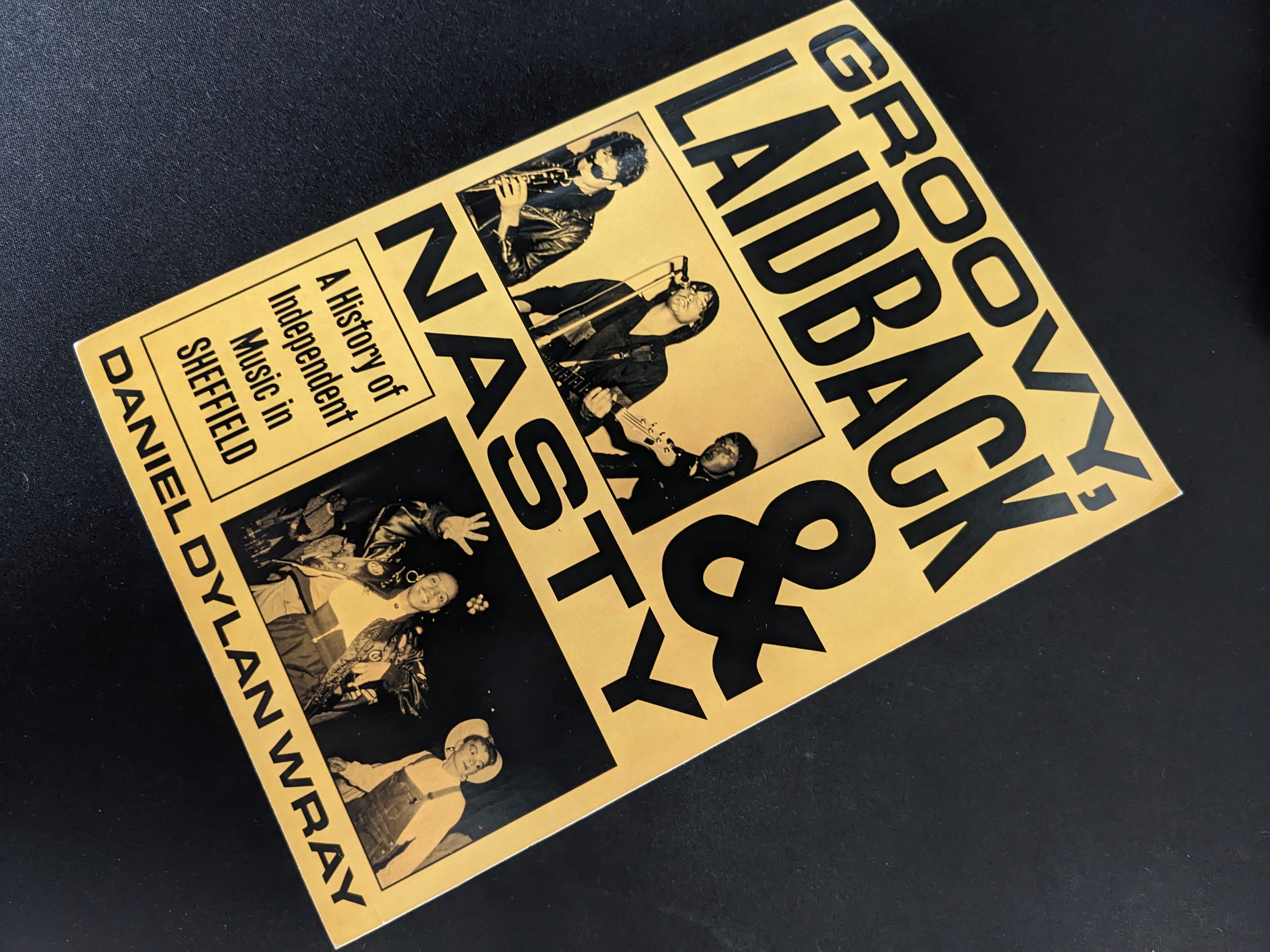
‘GROOVY, LAIDBACK & NASTY – A HISTORY OF INDEPENDENT MUSIC IN SHEFFIELD’ Daniel Dylan Wray (White Rabbit)
I’ve been looking forward to this one. There has been a lot of talk over the years of books about the Sheffield scene as whole, and while recently-ish there has been books about music coming from the city – Martyn Ware’s ‘Electronically Yours’, Jarvis Cocker’s ‘Good Pop Bad Pop’, Mark Webber’s ‘I’m With Pulp, Are You?’, Jamie Taylor’s ‘Studio Electrophonique’, Matt Anniss’ ‘Join The Future’ – there still hasn’t been an overview that attempts to piece it all together.
Daniel Dylan Wray isn’t a Sheffield native, rather he moved there in 2004 to study and never left. Which is an endorsement in itself. It is a special place that has blazed musical trails over and over again and here we get those trials laid out in very readable chapters that span the 1960s to the present day.
I’ve said it before, but increasingly books these days are breaking down into sections that are essentially extended magazine features, which is what us music hacks are built for. With dwindling homes for long-form work, I love how many journos are turning to books. I mean, string a bunch of your features together and you’re halfway to a book, right? On top of that, it’s your name on the cover, you’re the star of the show and you get to chit-chat about your work at length, which must be quite nice.
So anyway, it’s great to finally have a history of the Steel City. It’s called “a history” rather than the history, as is always the case with these kinds of things it’s all about the throughlines, the angles, the connections and the stories that the writer follows that joins the dots of their take on the story. And of course, even with the best will in the world, you can only talk to the people who want to talk to you.
And in this regard telling the Sheffield story does have a problem. Daniel says he conducted over 150 new interviews for this book and I’m sure he asked Phillip Oakey, but Phil doesn’t do interviews and accordingly there’s no new interview here. Why doesn’t he talk? I don’t think he particularly likes doing interviews and he certainly doesn’t need to do them. The Human League are a live band these days and hardly need help selling tickets. I wrote a big piece on the making of ‘Dare’ years ago with no Phil. You pretend it doesn’t matter, but it does. You can use old quotes, which Daniel has here, but it’s always a shame there’s no new input. I know Phil would be fascinating on not only his own musical path, but the broader Sheffield scene too.
It is a problem with writing books about Sheffield. If you look at Manchester or Liverpool, there’s endless tomes about bands coming out of those musical powerhouses – books on Oasis, The Stone Roses, The Mondays, Joy Division, Factory, The Smiths… with Sheffield there isn’t even a book about Cabaret Voltaire. Actually, there’s a collection of music press interviews from 1994-1994, which is great, but that’s it. The influence of that band is vast and far reaching, why there’s no book I have no idea. Oh, and there isn’t a book about Warp either, a label whose influence is etc etc. We should all be grateful that Daniel has started the ball rolling when it comes to celebrating, in book form, what this incredible city has done for us musically. Who knows where it might lead.
And so down to the nuts and bolts. In the early chapters, Daniel is clearly on research ground. Nothing wrong with that, he doesn’t look 70 years old so won’t have first-handed much of what he’s writing about. Having the context of being around at the time is where someone like local Sheffield journalist, the late Martin Lilleker, came up trumps. And indeed, Daniel rightly acknowledges Lilleker “who passionately documented so much of Sheffield’s music history and to whom this book owes a great debt”. Lilleker’s books ‘Not like A Proper Job’ and especially ‘Beats Working For A Living’ charted popular music in the city from 1955 to 1984 and are essential reading. When you’re re-treading these areas you do need to be careful as they’re passionate spaces. One wrong move, a misplaced fact, a mis-told tale, and you’re losing your audience. It’s a minefield ‘Groovy, Laidback & Nasty’ picks its way through with care.
Where Daniel wins big is when he gets out of historic territory and begins to approach a musical world he would have grown up in and around. Not all that much has been written about the Warp years, so it’s good to see him tackling the 90s, nice to see FON getting forefronted and great to see the Blech night mentioned. God, I loved those mixtapes.
You can feel the book inching towards real paydirt as it enters the 21st century, which is where Daniel’s stint as a music writer also kicked off. This sort of stuff is why Simon Reynolds is so brilliant. He doesn’t write about the olden days, he’s dealing in what he experienced, saw, appreciated at the time. It’s first-hand stuff that he can then tangle up in his own throughlines, making new connections. And it’s what Daniel does here. There’s some great stuff. I really enjoyed the tale about Stephen “Babybird” Jones who early doors was playing his two managers off against each other, egging them on to sack the other one. One eventually did sack the other, who then vowed to punch Jones in the face every time he saw him, which he managed several times apparently. It’s also smart that Daniel doesn’t go mad for Pulp, preferring to tell different stories, such as the origins of speed garage offshoot, bassline and the Niche night, or trance night Gatecrasher instead. Nice touch. You can read about Pulp extensively elsewhere.
The rise of Arctic Monkeys section is really good too. I think Sheffield electronic heads tend to forget that bands like the Monkeys and Pulp, and people like Richard Hawley are just as much a part of the story as The Cabs and The Human League, which is part of the joy of Sheffield. There’s no one dominant force, this isn’t a Liverpool/Beatles, or Manchester/Joy Division situation. Everything that has blown up from Sheffield is equally revered, the Monkeys are as important in the city as The Human League, which isn’t the case in Liverpool or Manchester.
‘Groovy, Laidback & Nasty’ is a proper first when it comes to looking at the hugely influential Sheffield music scene as a whole. Thank goodness someone has finally taken it on and done such a tidy job.
‘Groovy, Laidback & Nasty’ is out now on White Rabbit
MOONBUILDING ISSUE 6 … SOLD OUT

Holy cow. MOONBUILDING Issue 6 is completely sold out, so it isn’t available from moonbuilding.bandcamp.com Sure someone is trying to cash in via Discogs.
Let’s look at what you missed, although it is still available digitally of course. Our cover star, illustrated by the peerless Nick Taylor, is the unstoppable force that is LOULA YORKE. In our bumper interview we talk about how she got here and where she’s going. As usual, it is an in-depth piece that lifts the lid on the brilliant mind behind the excellent music.
We meet Loula at her home in Suffolk where we have a proper rummage around in her world, musically, humanly, psychologically, probably even a bit metaphysically. It is a cracking read and opens the doors on what makes this most remarkable artist tick.
As always the issue comes with an accompanying CD. This one is a Loula Yorke collection called ‘How Did We Get Here’, which is compiled by artist herself and charts her rise and rise. The resulting 11-tracker will take you on a journey through her career to this point and it is utterly, totally, absolutely, exclusive to Moonbuilding.
Elsewhere, there’s a great chat with Clay Pipe Music supremo Frances Castle as we profile her wonderful label, A’Bear gets in on the There’s A First Time For Everything act, we round up an absolute mountain of recent releases and serve up our thoughts on the best albums from the last few months, which feature Loula Yorke, Warrington-Runcorn New Town Development Plan’s Gordon Chapman-Fox, Cate Brooks, 30 Door Key and Sarno Ultra.
We talk to ‘This Is Memorial Device’ author David Keenan about ‘Volcanic Tongue’, his debut collection of music writing. He is one of the last generation of music writers who could actually call themselves journalists. He talks a lot of sense and his work is a shining example of what music writing should be. It’s an unmissable interview.
Elsewhere, we round up an absolute mountain of recent releases and point you in the right direction of some mighty fine independent magazines and books. The Orb’s Alex Paterson tells us about his ‘Top Of The Pops’ experience when he appeared on the legendary show performing ‘Blue Room’ in 1993. I say performing… There’s a new Captain Star cartoon strip from the brilliant Steven Appleby. I constantly have to pinch myself that this strip, that I first read in the NME in the early 1980s, is now in my little magazine.
Find us at moonbuilding.bandcamp.com.
Moonbuilding Weekly is a Castles In Space publication.
Copyright © 2026 Moonbuilding
Great edition - thanks for making qd49 Sulk Rooms album of the week 🙏 thanks to Rob for the kind words 🪱🩶