
Issue 111 / 5 June 2026
The essential DIY electronic music lowdown: Track Of The Week: Roland Oakes + Album Of The Week: Clock DVA + Manuela + Moolaki Club's MCPM019 mag + Leverton Fox + more...



Big weekend incoming. Kraftwerk are in London for their first proper shows in a decade (let’s not count festival appearances). I’m off to see them tonight, can’t wait. While they’ve made no new music for decades, they remain utterly vital. You always get people knocking them, it’s not proper Kraftwerk, it’s only Ralf these days and all that, but no one has a problem with Paul McCartney playing Beatles songs on his own do they? Yeah.
As you may have noticed, it is June and that means we have an all-new Moonbuilding Session for our brilliant paying subscribers. Our new set comes from the amazing Lo-Five, Liverpool’s Neil Grant, who serves up a whole album called ‘Vanish’. Neil explains that it feels like the natural follow-on from the 2023 Castles In Space album, ‘Persistence Of Love’. If you know that record, you’ll understand what a treat this release is.
Our paying subscribers are very fine people who are keeping this newsletter free for everyone. Because they are the best, we treat them nicely. You too can be the best for just £3.50 a month. Sign up now and get instant access to the new session in your welcome email. You know it makes sense. Where would your Friday’s be without Moonbuilding Weekly?
Neil Mason, editor
moonbuildingmag@gmail.com
Issue 111 Playlist: Listen
Your ad here: Advertise


***ADVERTISE HERE***
email moonbuildingmag@gmail.com

ROLAND OAKES ‘Commodore Reflex’ (Wormhole World)
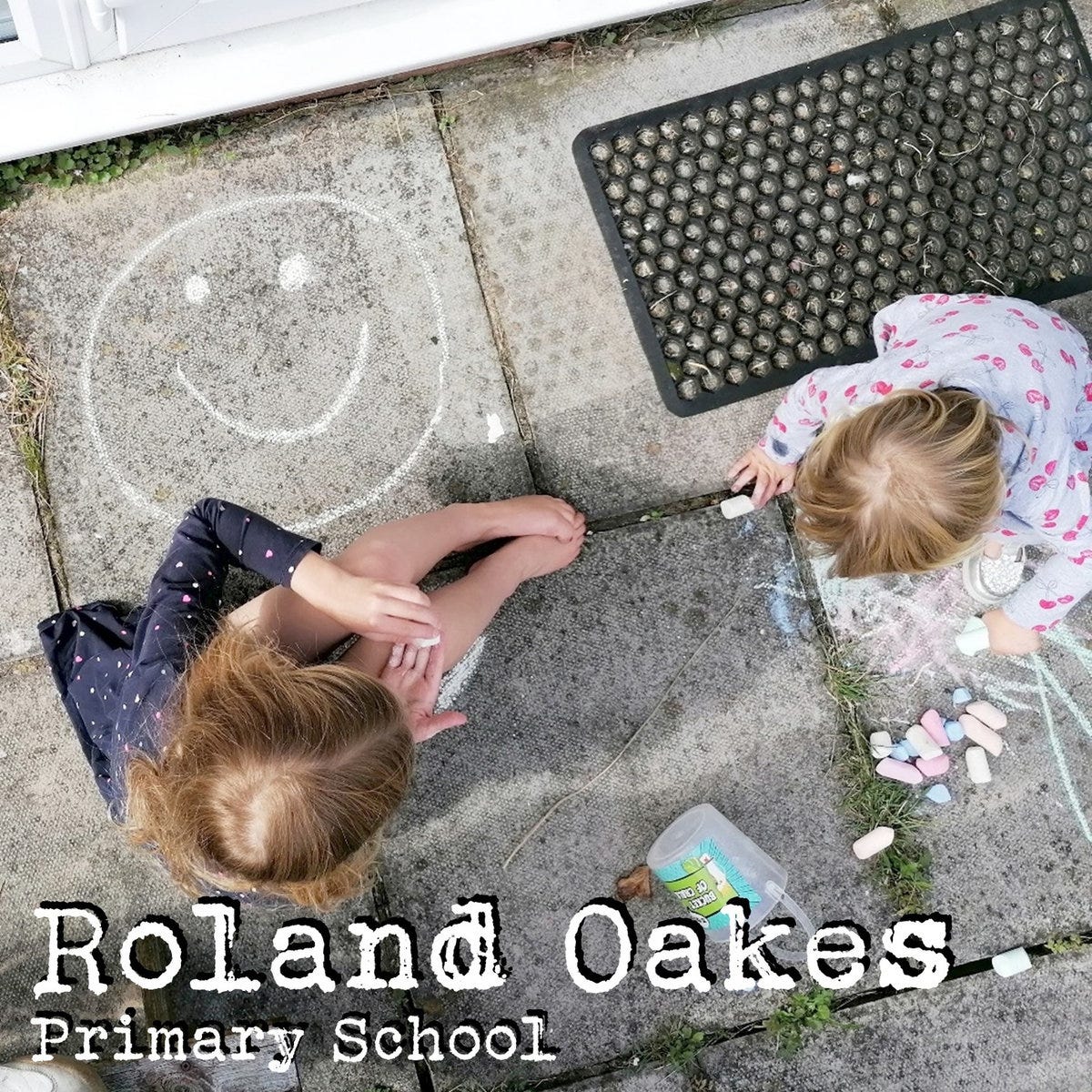
There’s a right old bun fight for Track Of The Week at the moment. I have such a looooong list, which I’m trying to work my way through. We truly live in rich musical times. Fighting its way to the top of the pile this week is Liverpool-based Roland Oakes with a cut from his forthcoming ‘Primary School’ EP, which is set for release by Wormhole World on 19 June.
The EP title refers to the fact that the six acid house tracks contained within all have time signatures that are prime numbers. Maths recap? A prime number is a whole number that can only be divided evenly by one and itself. There’s a fair few to choose from, although they do get quite large fairly quickly – 2, 3, 5, 7, 11, 13, 17, 19, 23, 29 – which makes counting time signatures fairly tricky.
There are some easier signatures on the EP, there’s the 5/4 ‘Jack To The Future’, the 2/4 ‘Wildflowers’… hang on a minute, let’s not get ahead of ourselves, did you say acid house? I did. It is. There’s some great squidging, but it’s weird. It sounds like acid house, but it’s on the wonk, not quite right, but nicely so, weirdly so. “I’ve tried to make them sound natural and danceable, “ says Roland, “even though they’re mostly not. I think I’ve succeeded, but you can be the judge of that.”
Give it a go. The EPs opening track, featured above, is ‘Commodore Reflex’, which is in 13/16 time. 13/16! You try counting out some of these time signatures, there’s one track in 11/16 time. Anyone?
The release is up for pre-order from today. Oh and there’s also a remix EP on the way later in the summer. Just wait until you hear that.

CLOCK DVA ‘Thirst’ (The Grey Area Of Mute)
Words: NEIL MASON
At the end of last year, I headed into deepest, darkest Essex to spend time with Adi Newton at his middle-of-nowhere studio for an Electronic Sound cover feature. We talked about all sorts, drank tea and ate biscuits all afternoon. Happy to report Adi is great company. We talked about the reissue of Clock DVA’s ‘Thirst’ and how it’d be out in June. Which we laughed about, because, well, it hadn’t really got light that day and it was absolutely pissing it. June seemed ages away. And yet here we are. June. Time flies eh?
The name Adi Newton is one people know, but few seem to know all that much about him. My cover story is happy to help. It aligns with “phase one” of the band, and covers their foundation in 1978 and the first three albums – 1980’s ‘White Souls In Black Suits’ debut, 1981’s ‘Thirst’ and 1983’s ‘Advantage’. Read all about it in Electronic Sound Issue 134, which incredibly isn’t sold out.
The thing about Adi is he was at the epicentre of everything influential coming out of Sheffield during those heady days and his influence continues to ripple outwards.
As a teenager, he attended Meatwhistle, the youth-focussed performing arts group that attracted the likes of Paul Bower, Martyn Ware, Glenn Gregory and Ian Craig Marsh. Adi, Martyn and Ian would form a band called The Dead Daughters there, who would morph into The Future, who were the proto Human League.
Adi was great pals with Cabaret Voltaire, spending much time at their Western Works studio, not to mention hanging out with them at various city centre drinking spots. He shared digs with Martin Fry. You suspect his influence rubbed off on Vice Versa and probably on ABC too. It was Adi who first rented one of the little mesters, the redundant workspaces in the town centre previously occupied by self-employed workers making cutlery, penknives and the like, to use as a base and rehearsal space. And it was Adi was at the helm of Gun Rubber, the “anti editor” of the famous fanzine he set up with Paul Bower. Adi is tangled up in all of it.
And yet Clock DVA aren’t as big a blip on the Sheffield radar as they should be. Their debut album, ‘White Souls In Black Suits’, recorded in a day at the band’s rehearsal space on West Street, is a masterclass in post-punk improvisation. The follow up, ‘Thirst’, is even better. Perhaps even their finest hour. However you cut it, those two releases were, as I say in the ES piece, “two of the most innovative and incredible albums of the post-punk era”.
The cover feature marked the start of Mute’s extensive Clock DVA reissue campaign, which began in February with the remastered version of ‘White Souls’ and it’s followed now by this fresh cut of ‘Thirst’, which comes with bonus tracks worth talking about, more of which shortly. Firstly, the album itself.
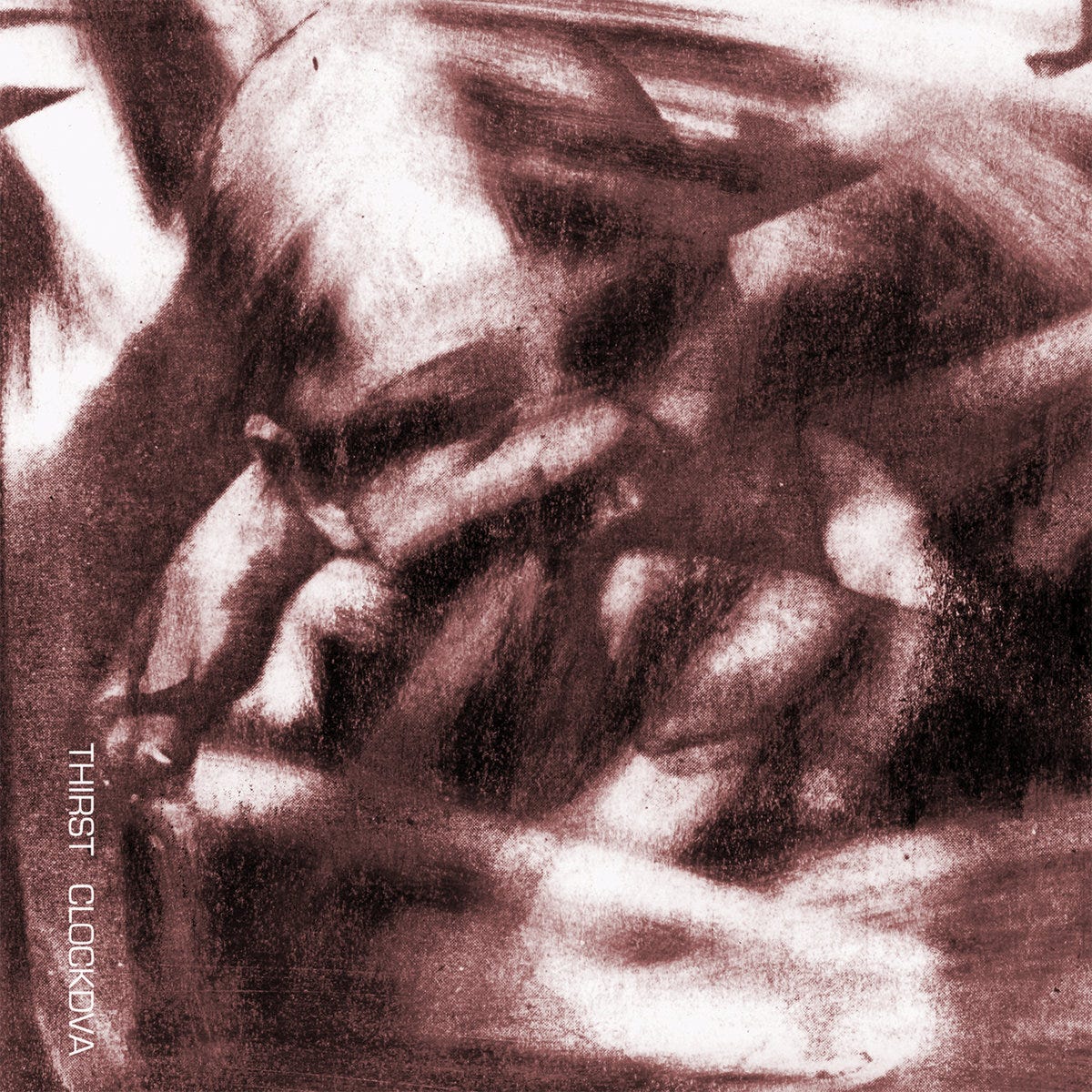
Unlike ‘White Souls’ it was recorded in an actual studio, Jacob’s in Farnham, Surrey, with a proper producer, Ken Thomas. By then, DVA were a live act at the peak of their powers and for the ‘Thirst’ sessions they came armed with songs, composed, structured, rehearsed and ready to be laid down. It’s on ‘Thirst’ that you hear just what Clock DVA were capable of. The late Dave McCullough, writing in Sounds, said it was the best album he’d heard since ‘Unknown Pleasures’. I mean, he’s not wrong. As Joy Division’s legend has grown over the years, ‘Thirst’ does seem to have got lost. No idea why. It’s a shame as it should be up with the stone-cold classics of the period. Forget the ‘Unknown Pleasures’ T-shirts, kids should have T-shirts with that fantastic Neville Brody artwork on the them.
The album opens with the seven-minute ‘Uncertain’, which starts out sounding like an audio bridge between ‘White Souls’ and ‘Thirst’. It could have been, in a more raw form, something from that startling debut. But the switch of guitar player from the abrasive style of David Hammond to the no wave chug of Paul Widger between records is plain to hear.
And the songcraft, a move on from the first album improv, is already poking out too. ‘Thirst’ wastes little time laying out its stall. The second track is ‘Sensorium’, an utter classic, that funky chug, the squally sax of Charlie Collins thrashing around like an electric eel in a bucket. Just like the first album, Charlie’s playing is all over this record, but it’s more structured, more controlled and less improvised. I especially like the reedy rasp on ‘White Cell’ and how it travels hand in hand with Judd Turner’s belting bassline. Adi’s terse growl of a voice really makes the record prickle too. It’s so distinctive and there’s such an edge to it, it’s hard to ignore.
The mistake people make with ‘Thirst’ is thinking that the standout tracks are the epic brace of ‘Sensoria’ and ‘4 Hours’. I mean they are great, but it’s hard not to listen to whole thing and just be wowed. ‘Piano Pain’ is such a huge post-punk funk trailblazer of a track. The pensive ‘Blue Tone’ is emotional, with Charlie letting rip with that sax, almost playing like it’s a jazz cut. I think a lot of bands during that period must’ve heard Clock DVA and torn up their blueprint. Why would you not want to sound like this? So many bands who followed did. Think The Higsons, ACR, Hula, 23 Skidoo, Chakk, Fire Engines and countless others. Of course, a direct continuation of the ‘Thirst’ sound came with The Box, who were Clock DVA before Adi fired the lot of them. More about that in a bit too.
I can’t tell you how many times I’ve listened to ‘Piano Pain’ and ‘Blue Tone’. They sit next to each other on the record and close the A-side. They’re so good I’ll often rewind and stick them on again once they’re done. I’ve been writing about XTC recently and talk there about how perfect the A-side of ‘Black Sea’ is. The A-side of ‘Thirst’ is right up there.
The B-side doesn’t muck around either. It’s curious how ‘Sensoria’ is the second track on the A-side while the second track on the B-side is ‘4 Hours’. It’s almost like they knew. Not all bands do. Look at ‘Dare’, the last track on the B-side? ‘Don’t You Want Me’. Bands would pour over the order of tracks, the sequencing, which is after all how they wanted you to listen to their songs.
Oh my goodness, ‘4 Hours’. It still gives me goosebumps. That sax, phew, and the drumming is magnificent, Roger Quail’s almost off-beat cymbal clatter is perfect while the breakdown under Adi’s spoken word “This could be New York” verse with the thud of bass drum and stuttering guitar chords is a treat, especially when it explodes back into the song.
Let’s talk extras. This new set comes with two single mixes of ‘4 Hours’ and ‘Sensorium’ and two brand-new 2026 versions. ‘4 Hours (DVATION 2026)’ is sleek, much more electronic than the original with such a throb to it. The sax part is recreated by Sheffield alumnus Mick Ward. Charlie Collins has been quite ill for a while and hasn’t been playing, but I spoke to him last year for my piece and he’s hoping to be playing again this year. Fingers crossed for him. ‘Sensorium (DVATION 2026)’ is the cherry on the cake. It’s a floor-pounding eight-minute almost acid house romp. The breakdown around the four-minute mark is proper cheering from the stands and chucking cups on the pitch stuff. Totally brilliant.
The remarkable thing is the first two DVA albums were recorded six months apart and released within a couple of weeks of each in December 1980 and January 1981. Even more remarkable is that despite huge critical acclaim for both the recorded and live incarnations, this version of Clock DVA was done and dusted by May 1981. There’s two tracks here, ‘The Opening’ and ‘Remain Remain’, which were intended for the next album and they were being played live, but ultimately Adi was already planning his next move… which would involve sacking the entire band. A story for another time.
Clock DVA remain a massively underrated act who were utterly crucial to the music that came spiralling out of Sheffield. This your chance to be in the ground floor of a major reappraisal of some absolutely bloody brilliant work.

Got something you need to tell us about? email moonbuildingmag@gmail.com
Words: Neil Mason
GOOD STUFF #1
MANUELA ‘Ultraviolet’ (Lost Map)
Based on the Hebridean Isle Of Eigg and run out of a caravan, there is some strong magic at work in the world of Johnny “Pictish Trail” Lynch’s Lost Map label. Just listen to some of the releases will you. They live in worlds of their own. Which is a good thing. A very good thing.
The label was established in 2013 and, say the notes, was “formed with a pioneering spirit to reassess how we discover and explore music amid the disorientating digital geography of the 21st century”. Which is exactly how we feel about music discovery here at Moonbuilding. A port in the blustery digital storm. The label is also “unshackled by style or genre”, which we also applaud.
Indeed, the label spans such a range, but there’s a thread of outthereness that runs through it all. Touchpoints include the future-facing folk of Isa Gordon’s ‘8Men’ and the skew-wiff electropop of Free Love, but this record is a whole other level. Neat categories do not apply to ‘Ultraviolet’.
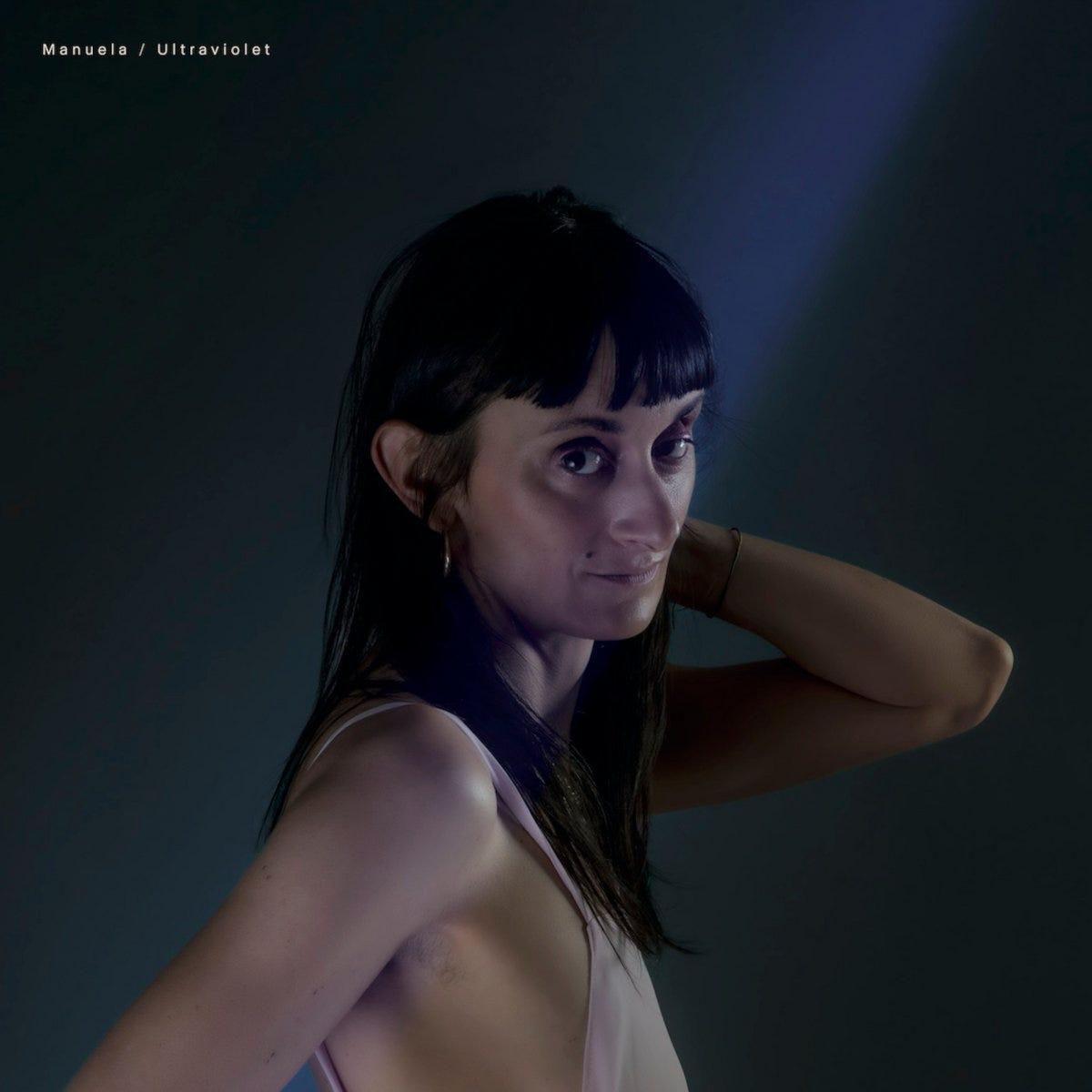
The images of Manuela are quite something. The main press shot is of her on horseback in a sun-dappled woodland grove looking like some wood nymph. The music of the London/Munich-based project of Manuela Gernedel is just as nymphy.
‘Ultraviolet is her second long-player and follows the self-titled debut on Lost Map from 2017. Why the long wait? Relocating to Germany, Covid, her work as a lecturer in art, but more importantly, “both my kids have become excellent judokas,” she says, “and so I have spent a lot of time watching judo competitions”. As far as excuses go for the delay it is an excellent one.
The story of how we arrived at ‘Ultraviolet’ is interesting too. It’s co-written with Nick McCarthy. The pair of have been writing songs since they met at a party in the late 90s, in Bavaria, Germany, where they both grew up. They moved to Glasgow when Manuela was offered a place to study painting at the city’s famous art school. While there Nick formed a band. You might have heard of them. Franz Ferdinand. Which explains much.
The album was produced by Nick along with Belarussian bassist, singer and pianist Polina Lapkovskaya, whose name I don’t know. But on the strength of this outing I will be looking up because they’ve created something strikingly beautiful.
Manuela’s sound is described as off-the-wall DIY pop, which seems like an undersell. The opening refrain of the first track, ‘Regrets’, brings to mind ‘Dancing In The Streets’. Not that it sounds like it, but the spirit of it, the way the lines are delivered, it has the same lyrical rhythm as the Martha Reeves classic. The track doesn’t take long to go from almost a whisper to full-blown and soaked in strings. You think, well this is going to be good and the second track ‘Hyena’ curveballs you with an air of Ian Dury about it. I know, I know. Sounds wild, but you’ll see what I mean when you listen. I don’t want to be that writer who is saying it sounds like this and that, because ‘Ultraviolet’ really does have a sound all of its own. But it also has these slivers of influence, these kinds of puffs of smoke that latch onto something deep in your musical psyche.
What really hits you is Manuela’s incredible voice. It’s safe to say it’s unusual. On ‘Lullux’ she comes on like Nico, not like her, but again the spirit is there. And you can feel the emotion on the title track, which I think is about a pet, a cat maybe. “Demon demon Ultraviolet demon angel”. Sounds like my cat anyway.
The PR hook here is that the album features Laetitia Sadier, which when you have such an extraordinary voice as the main attraction I’m not sure you need. But fret not, Laetitia features as backing vocalist on the wonderful ‘Coniine’, which is a super soaraway power ballad of a song that has the most satisfying dead-end stop.
The productions here are huge, like Mercury Rev or Flaming Lips large. If I was putting together Moonbuilding types who make music like this I’d be looking at Euan Alexander Millar-McMeeken and Furii, both of whose work we’ve covered recently. ‘Ultraviolet’ is quirky for sure, but there’s real musical depth here too. Loving this.
GOOD STUFF #2
VARIOUS ARTISTS ‘MCPM019’ (Moolaki Club Audio Interface)
In a world where I currently can’t seem to scape up enough time to make a 48-page magazine, thank heavens for people like Moolaki Club’s Jez Thelwell who is knocking it out the park with his Wirral-based label’s pretty regular MCPM magazine and accompanying compilation. How regular? It might well be a whenever he gets round to it, like Moonbuilding, and Jez just needs less sleep than me, but it looks like he’s keeping a quarterly schedule, which is no mean feat.
For £10, you get the mag and a compilation and you can even pick your format for the music – cassette, CD or download. Cassette every time, right? The issues are themed. The November 2025 issue was meet the people who “platform and empower experimental artists” and included interviews with Deb Grant, Electronic Sound reviews ed Claire Francis and me! Never had my name on the cover of a magazine before, so thanks again Jez. MCPM018, which came out in Feb, charted the history of experimental electronica from The Wirral and Liverpool.
I enjoy all the issues and the various topics on display, but this new one is especially good. It tackles moving “homegrown sounds to live nights” and it’s a how-to guide for music makers who want to take their sounds into the live arena. There’s some cracking insight to be had and it all starts with cover star Polypores. Here Stephen starts out by saying his work is “a musical interpretation of the inside of my head” and off we go from there. It’s a great read, as always with a Polypores interview.
There’s a really good piece with Circuits Living’s Mayassah Dib who as well as making music herself also makes it her business to document underground experimental electronica across Merseyside. There’s pieces with artists like Smaz who is preparing to take first steps into live shows and Arc Of An Eye who has recently done so and live music-based chats with Bags Sounds, Swansither and Wooden Tape. On top of all this, there’s reviews of the latest releases as well as music hardware and the lowdown on the accompanying compilation, which of course is excellent too.
These collections are drawn from artists who feature in the mag. It’s funny how you can pull together a magazine and musical selection just sits so nicely. I’m often surprised at how good the Moonbuilding Weekly playlists are. They are effectively random, I don’t plan the releases dates, but they often work really well. Same goes for Jez’s collections. The highlight here is obviously a new Polypores track ‘A Thinking Thing’, but ‘Miles Smiled’ from Preston’s Guerrilla Biscuits isn’t far behind. And the 20+ minute ‘A Propos De Nice Soundtrack’, the soundtrack to a 1930 silent film by frequent Moolakii Club collaborator Rjania is really lovely.
Issues of MCPM don’t last long so you do need to move fast if you want one. The print run is short and the mag is part of the label’s subscription club so members quite rightly get first dibs. Yesterday there we 12 copies left. Chop chop!
Oh and the name, MCPM, I’ve looked at it for ages and still don’t know what it stands for? Moolaki Club Print Magazine? Answers on a postcard.
moolakiiclubaudiointerface.bandcamp.com
GOOD STUFF #3
LEVERTON FOX ‘Eternal Gong Bath of the Sunbed Mind’ (Not Applicable)
I love the notes that accompany this, the ninth long-player from London-based Leverton Fox. “One thinks of the radical lightness of being of Can’s Holger Czukay, Ligeti in his musique concrète phase, or Stockhausen-esque in the field of its hyperactivity but with added tonality”. That is some Billy Big Boots name dropping right there. Czukay! Ligeti! Stockhaunsen! But if you’re going to be a bear, be a grizzly bear, right?
Leverton Fox are the wonky improv trio of Alex Bonney (electronics/trumpet), Tim Giles (electronics/drums) and Isambard Khroustaliov (electronics). Those of you who regularly fish in the Moonbuilding pond (quite deep, lots of words), will know we write with some regularity about Isambard, or Sam Britton, who also works as Icarus and as part of Fiium Shaark. He’s an interesting chap. I met him ages ago when his audio production company Coda To Coda provided the generative soundtrack to an exhibition about robots at the Science Museum. It was a fascinating chat as Sam introduced me to his sound world. I’ve kept an eye on his ever since and am something of a fan.
The brilliantly titled ‘Eternal Gong Bath Of The Sunbed Mind’ is one of the Fox’s more accessible recordings. The tracks here do feel more composed than improvised even thought they’re not. There’s melodies creeping into their world and it all comes with some incredible sounds.
With Clock DVA being Album Of The Week, which features the heavily treated sax work of Charlie Collins, you can’t help wonder if those ripples of influence have touched Alex’s trumpet work here. On ‘Speculative Aerodynamic Problems Of A Human-Headed Winged Lion’ that trumpet is almost Cosey Fanni Tutti-like.
A track like ‘Sleeper Train’ is right on the brink of being a linear song, “as close as Leverton Fox get to figurative” say the notes. I wouldn’t go as far as saying it was their pop song moment, but you know, it kind of is. There’s a tune there for sure and beats. It does have that railroad rhythm, not quite Bo Diddly, but you can feel the carriages rocking in a Cabaret Voltaire style.
A lot of the record is actually quite figurative. I really like ‘Serenade To A Blobfish (Subaqueous Sound System)’, which you can almost imagine hearing underwater, in a dark corner, like the fish in the title. It ripples and fizzes with menace and the ending, where everything breaks down as if plugs are being pulled is great. There’s a lovely melody that bubbles out of ‘Sounding Balloons At The Kármán Line’, it only happens once. Blink and you miss it. It doesn’t happen again. It’s like a radio being tuned in and then back out again really quickly.
The collective talk about The Residents and how their ‘Not Available’ album was only released when they’d forgotten they’d made it. Same goes here, sort of. It’s a session that clocks in at a very listenable 23 minutes that had totally slipped their minds and as such it allowed them to “recognise its merits from an ‘outside’ perspective”. The notes say that “the players remark that at certain points they couldn’t remember who was playing what”, which is great. That’s proper open gates of subconsciousness stuff.
‘Eternal Gong Bath of the Sunbed Mind’ must’ve been a nice surprise when they rediscovered it, it’s right up there with the Fox’s best work.


***ADVERTISE HERE***
email moonbuildingmag@gmail.com
THE ROUND UP’s ROUND UP


At the beginning of this week I was thinking it looked like one of those quiet ones release-wise. Very nice I thought, I can sit back a little a take in the view. Not a bit of it. As the week has gone on more and more music has been showing itself. First out of the traps is the milestone 50th release from Alex Gold’s quiet details. It’s ‘While The Universe Sleeps’ by Variant, Detroit’s Stephen Hitchell, who Alex heaps the praise on saying he is “indivisible from any conversation of the most important artists of our time”. You may know his dub-wise echospace [detroit] label that has released work by the likes of DeepChord, Model 500 and BVDub or as an artist in his own right releasing on countless labels. The list on Discogs runs to 58 pages. There is also a lot of music here. A lot. Over two hours, which is quite the anniversary gift. The two opening tracks, ‘While The Universe Sleeps’ and ‘Astralsailing’ clock up pretty much an hour between them. There’s six tracks here with only ‘Beyond The Stars’ dipping under double figures at a little shy of eight minutes. There’s all sorts going on in his work. There’s the influence of growing up in Detroit where he was up to his ears in the evolution of techno, his fascination with the depths of space that finds him drawing on the NASA sound archive, the sub-bass of reggae and it’s all rolled up in what Alex describes as “a truly masterful deep-space voyage, submerged in cathartic waves of interstellar bliss”. I especially like that second track, ‘Astralsailing’, which comes at you in washes of sound for what seems like forever.
We do seem to be going down ambient alley in this round up. Ian Boddy’s DiN label continues to pump swathes of mighty fine music in to the world. Here he sees Alex’s two-hour release (above) and raises him, bringing to the table a new series called ‘DiN Reimagined’. “This first volume includes five x 30-minute all-ambient reworkings of some of the oldest of the DiN titles,” Ian tells me. “These aren’t remixes as such, but a total reimagining of these albums using a multitude of creative techniques as well as accessing some of the original stems where possible.” So we have ‘The Secret Box’, which is drawn from Ian’s ‘Box Of Secrets’ LP, the very first DiN release from 1999, there’s ‘Hidden Rituals’, a rework of ‘Distant Rituals’, the second DiN release, which was a collaboration with Markus Reuter. Robert Rich and Ian’s ‘Outpost’, DiN10 from 2001, is the source of ‘Lost Frontier’. And then there’s two tracks where he remixes other artists, or reimagines them. So dbchaos’ ‘Art Of Surrender’ comes from their 2003 album ‘Art Of Sacrifice’, while ARC get the treatment on ‘Smoulder’, a rethinking of the 2003 DiN release, ‘Blaze’. Clever stuff from Ian, but when isn’t it? I’m looking forward to having the time to sit down and listen again to those early albums and then to these new versions once I have a spare day or two.
OK, so between those last two releases that’s over five hours of listening. Should keep you all quiet for a bit. There’s a few more releases I need to cover off before I go. The brilliantly named Church Andrews and the normally named Matt Davies return with ‘Tilt’ (Odda), which is another collection of their “skewed microtonal and discordant compositions for percussion and digital synth”. Church is Kirk Barley, a name you will probably know, and he’s on the synths, while Matt is on percussion. The use of words like “discordant” do seem at odds with the results. It sounds great, a track like ‘Shepherd’, with its sleek beats and warm, spiralling synths is the sort of thing Thom Yorke thinks he makes when flying solo. Really like the synth chit-chat of ‘Yokai’ too. Look and learn. That’s also a lovely piece of artwork form Oliver Pitt.
Another collaboration comes from two of our great pals over the pond. Marine Eyes has teamed up with Past Inside The Present label boss zakè for a second instalment of the collaboration that brought us 2021’s wonderful ‘Unfailing Love’. It’s a continuation of that release. “‘Unfailing Love’ explored sadness, resilience and a path toward deeper compassion and empathy,” says zakè, “and while those themes continue here with greater clarity, we also wanted to show that even after hardship, there is a precious, persistent beauty worth holding onto.” It really is lovely work, one of those records that feels like a big sigh. I’ve had on rotation at Moonbuilding HQ, I love having this sort of thing on as the office is getting going in the morning. Especially good when the windows are open. Head for ‘Day’s End’ if you want a quick sampler of the loveliness on display.
Last one for today comes from Cologne-based Theodore Best who serves up ‘The Lore Of Falling Bodies’, a debut album of music and poetry that should appeal. Theo sent me a very good email about it all, the line “My mum, if that counts, said it’s fascinating” made me laugh. Mum’s know best don’t they? In his notes Theo talks about the lore of falling bodies, which is about how we understand gravity and motion. He uses the example of astronaut David Scott who conduced Galileo’s dropping stuff at the same time experiment on the moon in 1971 with a hammer and a feather. Dunno how he knew, but… click here…
‘The Lore Of Falling Bodies’ is pretty sophisticated piece of work. Theo has a great voice, very distinctive. A track like ‘Where We Made The Fire’ sounds like Kevin Roland fronting The Bad Seeds. The record could be the soundtrack to a film, in fact it almost sounds like a it is a film in its own right. The spoken word tracks, like ‘Charon Ushers In The Cinephiles’ are especially rich. You provide the pictures. You will almost certainly put this on and be drawn into its enticing sound world. Like Theo’s mum says, fascinating.
MOONBUILDING ISSUE 6 … SOLD OUT

Holy cow. MOONBUILDING Issue 6 is completely sold out, so it isn’t available from moonbuilding.bandcamp.com Sure someone is trying to cash in via Discogs.
Let’s look at what you missed, although it is still available digitally of course. Our cover star, illustrated by the peerless Nick Taylor, is the unstoppable force that is LOULA YORKE. In our bumper interview we talk about how she got here and where she’s going. As usual, it is an in-depth piece that lifts the lid on the brilliant mind behind the excellent music.
We meet Loula at her home in Suffolk where we have a proper rummage around in her world, musically, humanly, psychologically, probably even a bit metaphysically. It is a cracking read and opens the doors on what makes this most remarkable artist tick.
As always the issue comes with an accompanying CD. This one is a Loula Yorke collection called ‘How Did We Get Here’, which is compiled by artist herself and charts her rise and rise. The resulting 11-tracker will take you on a journey through her career to this point and it is utterly, totally, absolutely, exclusive to Moonbuilding.
Elsewhere, there’s a great chat with Clay Pipe Music supremo Frances Castle as we profile her wonderful label, A’Bear gets in on the There’s A First Time For Everything act, we round up an absolute mountain of recent releases and serve up our thoughts on the best albums from the last few months, which feature Loula Yorke, Warrington-Runcorn New Town Development Plan’s Gordon Chapman-Fox, Cate Brooks, 30 Door Key and Sarno Ultra.
We talk to ‘This Is Memorial Device’ author David Keenan about ‘Volcanic Tongue’, his debut collection of music writing. He is one of the last generation of music writers who could actually call themselves journalists. He talks a lot of sense and his work is a shining example of what music writing should be. It’s an unmissable interview.
Elsewhere, we round up an absolute mountain of recent releases and point you in the right direction of some mighty fine independent magazines and books. The Orb’s Alex Paterson tells us about his ‘Top Of The Pops’ experience when he appeared on the legendary show performing ‘Blue Room’ in 1993. I say performing… There’s a new Captain Star cartoon strip from the brilliant Steven Appleby. I constantly have to pinch myself that this strip, that I first read in the NME in the early 1980s, is now in my little magazine.
Find us at moonbuilding.bandcamp.com.
Moonbuilding Weekly is a Castles In Space publication.
Copyright © 2026 Moonbuilding
windows open ambient! thanks for the share of Still Beauty!
thanks for including qd50 variant 🙏❤️