
Issue 113 / 19 June 2026
The essential DIY electronic music lowdown: Track Of The Week: Abracadabra + Album Of The Week: Woodleigh Research Facility + Book Of The Week: Simon Reynolds' 'Still In A Dream' + more more more...



This issue has been brought to you in conjunction with my third heavy cold in as many months. I must stop licking door handles or perhaps just stop going out in public. As a result I’ve been running at greatly reduced speed so apologies if some of this week’s newsletter is a bit gibberish.
Just a reminder that the Moonbuilding June session for our brilliant paying subscribers comes from the Liverpool’s Lo-Five, who serves up a whole album called ‘Vanish’. Sign up now for a paid subscription, which is just £3.50, and you’ll get instant access to the session in your welcome email. You know it makes sense.
Ben Willmott is on duty for our Album Of The Week review this week. He serves up what he described to me as his “usual mix of analysis and war stories”, which I’m always grateful for. Makes for fine reading I think you’ll agree.
Happy reading.
Neil Mason, editor
moonbuildingmag@gmail.com
Issue 113 Playlist: Listen
Your ad here: Advertise


***ADVERTISE HERE***
email moonbuildingmag@gmail.com

ABRACADABRA ‘Face Card’ (Melodic)
When this track landed in my inbox last week you could probably hear the cheer from several streets away. We’re big fans of Oakland duo Abracadabra at Moonbuilding. Their 2023 debut album ‘Shapes & Colours’ was a joy. I wrote about it somewhere. I’d tell you what I said, but for the life of me I can’t find it. Anyway, within moments of pressing play, you get such a Tom Tom Club/no wave vibe, which is one of my absolute favourite vibes. Do check out the album if you have a moment, time very well spent if you ask me. Listen here.
So anyway, the dynamic duo are back and in some style it has to be said. ‘Face Card’ is the first track from their new ‘Peel Away’ EP and right from the start the drum beat is like an old friend. In fact it actually is an old friend. It’s lifted from Tom Tom Club’s ‘Lorelei’ and just to reinforce it you get the train toot from the song too. And then, to totally blow minds, you get that rich, warm synth stab from ‘Wordy Rappinghood’. Oh my word, it is sooooo good.
What I really love is rather than back away from Tom Tom Club comparisons they’ve gone the other way, not only embracing them, but totally celebrating them. Talk about pop eating itself. If there’s a better track this year, yeah, there won’t be. This is brilliant. The ‘Peel Away’ EP is released by Melodic on 7 August.

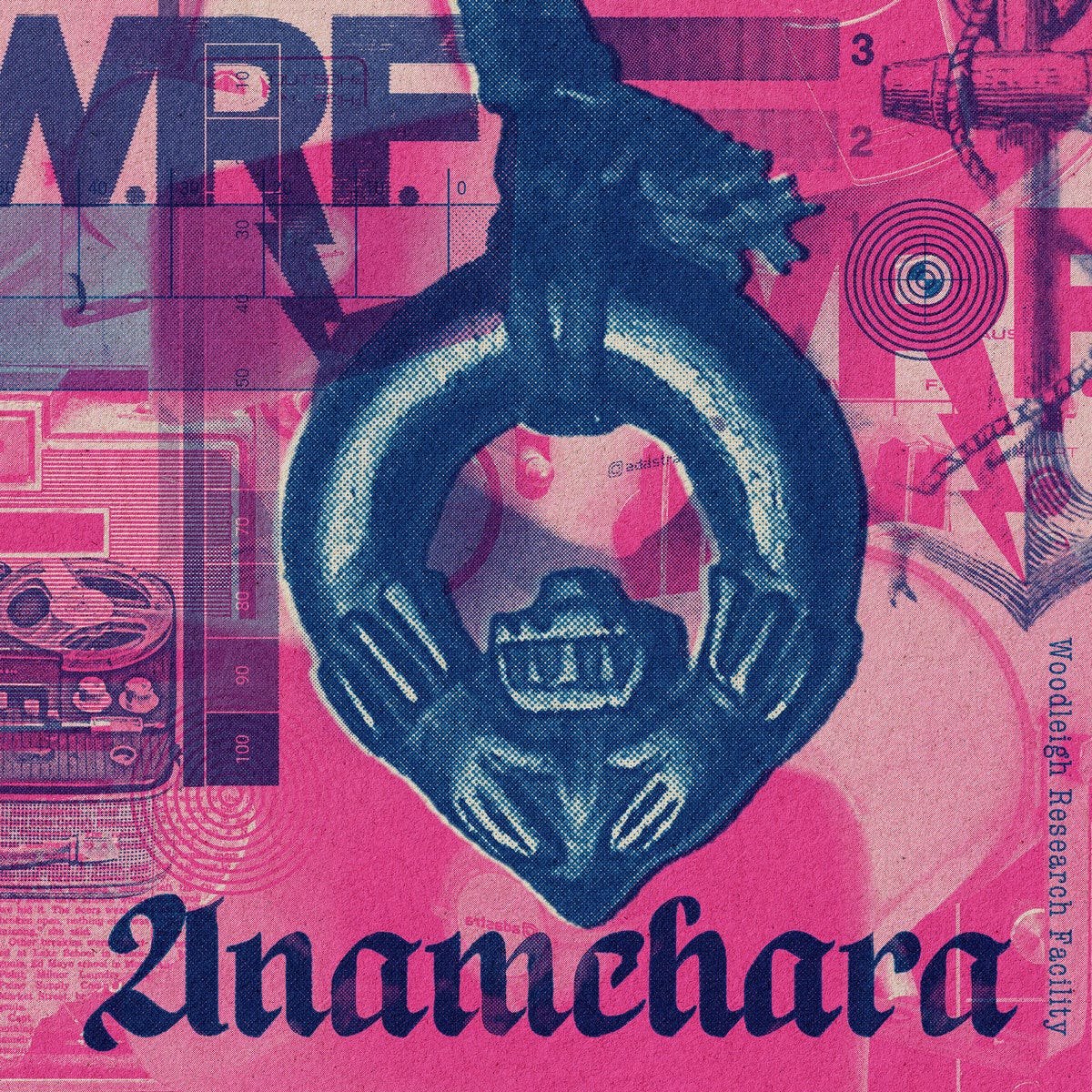
WOODLEIGH RESEARCH FACILITY ‘Anamchara’ (Circuitry Electronic)
Words: BEN WILLMOTT
Before we get onto the matter in hand, a quick warning from history. The last time I saw Andrew Weatherall in the flesh, I was on the way to a visit a certain dance music magazine in central London. Let’s leave the name of the publication behind a veil, but needless to say it was one of the many that went big on the multi-page tributes when the sad news hit of his sudden death on the very eve of the Covid pandemic and lockdown in the spring of 2020.
“I’ve just seen Andrew Weatherall,” I gushed, as I arrived, thinking they’d be impressed. Instead, I was greeted with snorts of derision from various editorial staff. “Was he riding a Penny Farthing?” one quipped, to even more gales of laughter.
Well, obviously he hadn’t been doing that. Although we have to admit that his get up that day would have been well suited to a Victorian bike ride, namely a full tweed three piece suit, and a moustache that owed more than a little to Sir Edward Elgar’s appearance on the old £20 note.
We merely mention this only to point out that history often gets radically rewritten when artists die and become unable to confound the expectations other people have of them. Which is something Weatherall liked to do on a pretty regular basis. Many of his incarnations – the experimental Rotters Golf Club era and the 50s rockabilly DJ being two of no doubt many more examples – were quietly ignored or, in the case of ‘Victorian gent Weatherall’, actively ridiculed, by those who would soon after declare his unimpeachable genius. Be careful with your idols, especially those that like to reinvent rather than repeat themselves, as they will not around forever.
In the meantime, we have ‘Anamchara’ – it means “soul friend” in Gaelic – which is a further excavation from Nina Walsh’s colossal Woodleigh Research Facility archive. WRF was formed in 2015 when Nina Walsh and Weatherall rejoined creative forces, having run the parallel and intertwined Sabres Of Paradise and (Walsh’s) Sabrettes labels during a particularly purple patch in their careers during the 1990s.
Anyone who had visited the pair in the Sabres/Sabrettes office at the time, would never forget its location, above the rather dubious Sunset Strip in Dean Street, Soho, an establishment which lasted until 2024 when Westminster Council removed its license for repeated breaching of the “no-touch” rules. Oh dear. In their office on the second floor, anyone would have quickly picked up on an atmosphere of co-conspiratorial mischief, the pair sniggering and larking about like a couple of naughty schoolkids planning a kids’ revolt, one that quite possibly involved prolific use of some rather pungent stink bombs.
Reconvening in her Facility 4 Studio, located somewhere between the twin urban gems that are Streatham and Mitcham, some 20 years later, one suspects the mood picked up very much where it left off when Weatherall first departed London for the wilds of the West Yorkshire countryside towards the end of the 90s. This double album sees a debut outing on vinyl for nine tracks that were recorded by the pair between 2016-19 and first surfaced on Bandcamp in digital form in 2023.
You’ll hear a variety of different Weatheralls within the nine tracks, but none should be too much of a surprise. The album’s subtly phasing opener ‘We Two’, for instance, described in the press release as a “drug chug” affair, is definitely the work of “Outer Space Weatherall”, as are ‘Hidden Watchers’ and the gracefully gliding ‘Heat To Meat Ratio’, all totally in tune with his and Sean Johnston’s mission to up intensity by slowing house tempos down at their regular A Love From Outer Space nights.
‘Crack-Ed’, meanwhile, while reportedly inspired by the atmosphere of violence happening not far from the studio door, reaches all the way back to the dark and long progressive house days of the Sabres label’s very first early 90s releases. Its prodding, single-note bassline is its pulsating heartbeat, earthed by sturdy beats and panoramic dub effects, the unexpected twists coming from handclaps and electronic drums.
Walsh reports in the accompanying notes that Weatherall saw the glowing and shiny ‘Borderland’ as a successor to ‘Smokebelch’. It has that definitively classic feel about it, while leaning more, we’d suggest, on the day-glo but vaguely melancholic synth melodies of the Yellow Magic Orchestra than the Balearic bliss of its predecessor. But “Smokebelch Weatherall” is also very much at play on the album’s epic closer ‘Alma’. Those who remember In The Nursey’s gothic take on ‘Smokebelch’ fondly will feel at home here, as its eerie charms slowly unfolding with a carefully managed mixture of unnerving sweetness and downlight creepy overtones. Expect to hear it soundtracking some nightmarish horror flick sometime soon.
Other shout outs of appreciation go to the unashamedly acid-fuelled ‘Yacidik’ and the sonically gnarly but rhythmically nimble ‘Shlap’, not unlike Yello simultaneously covering Donna Summer’s ‘I Feel Love’ and early 90s David Holmes techno anthem ‘Total Toxic Overload’.
But there’s very little to quibble with among the tracklist here. Whoever your chosen Weatherall is, there’s something for you here. The variety and breadth of influences makes it more than the sum of its parts, but it all sounds like a couple of old pals having a blast in a studio with very little expectation beyond having a bloody good laugh. Our advice would be you brush down your tweeds, wax your moustache, get on your Penny Farthing and peddle as fast as you can. Like all of us, ultimately, they won’t last forever.
circuitryrecordings.bandcamp.com
Ben Willmott is the editor of Juno Daily
Got something you need to tell us about? email moonbuildingmag@gmail.com
Words: Neil Mason
GOOD STUFF #1
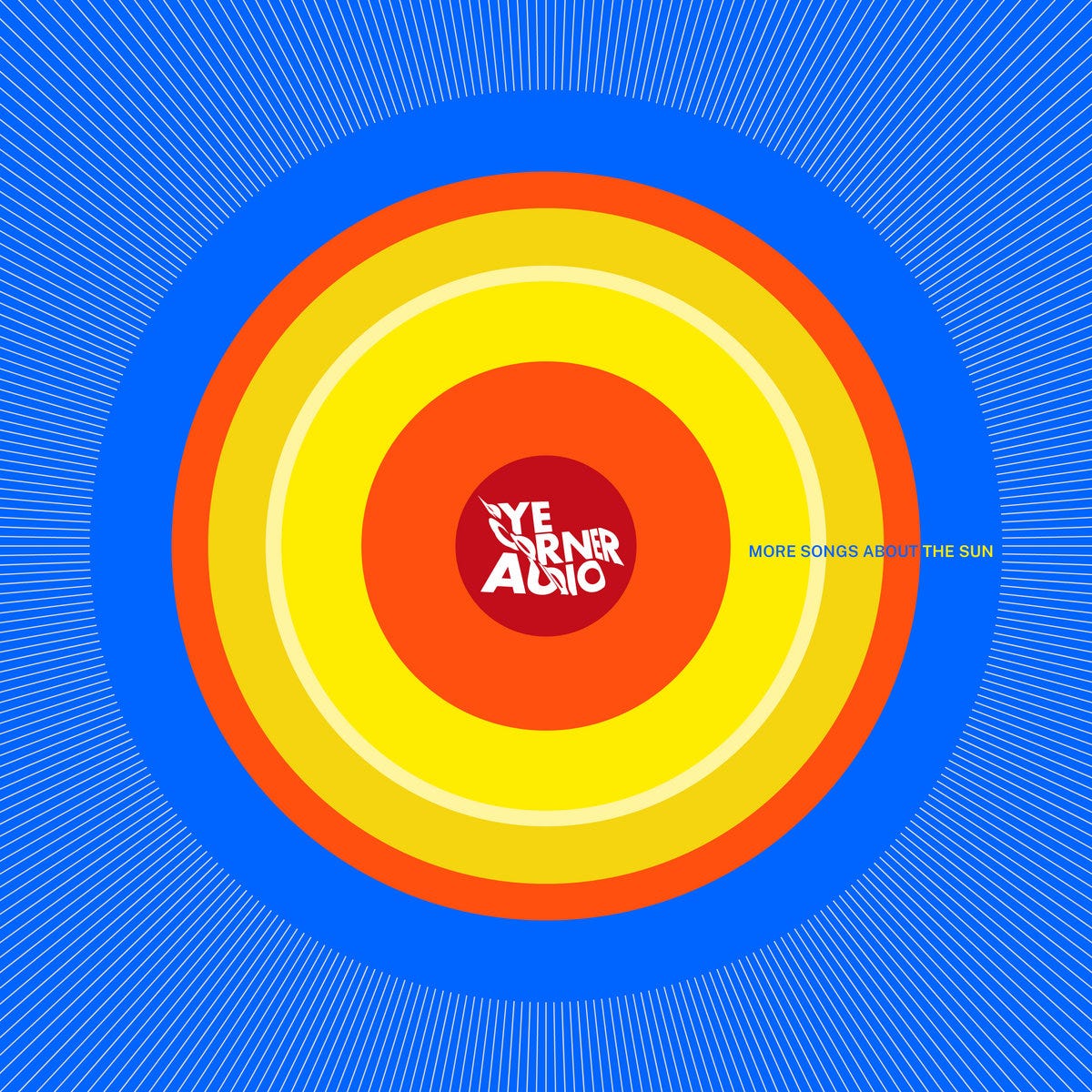
PYE CORNER AUDIO ‘More Songs About The Sun’ (Sonic Cathedral)
Albums from Pye Corner Audio have a habit of sneaking up on you. Not like in a jumping out and giving you a fright way, more in a I wasn’t expecting that kind of way. Martin Jenkins is proper trailblazer, a man without who much of this would all still be fields. His ‘Black Mills Tapes’ releases and early Ghost Box work drew up a blueprint for a lot of what followed.
Does he get the credit he deserves? Probably not. But those who know, they know. And fortunately that includes knocking-it-out-of-the-park labels like Ghost Box and Sonic Cathedral.
So ‘More Songs About The Sun’ is Martin Jenkins’ second full length for Sonic Cathedral and it’s a kind of squeal to 2022’s ‘Let’s Emerge’. It picks up from ‘Warmth Of The Sun’, the final track on the last album. Featuring Ride/Oasis’ Andy Bell (who guests on four tracks), the opener here, ‘Euphoria’, is really lovely. It feels so bright and warm. Shimmery it is. “I wanted the whole record to be awash with distortion and saturation,” says Martin, “but not in a blown-out guitar amp kind of way. Almost every element has been subject to some form of saturation.”
It’s funny how that idea ends up sounding like the sun. That saturation feels like it’s awash with light. It’s like Danny Boyle’s film ‘Sunshine’, the brightness of it, the way it fizzes with the heat of the sun. I really like how that film sounds, even though the actual soundtrack, by Underworld and John Murphy, is pretty dark, perhaps unsurprisingly. Something like the anticipation of ‘Greet The Dawn’ or ‘Inverted Dreams’ here could have come straight out of that film.
Anyway, ‘More Songs About The Sun’ has that heat haze of days so bright you can’t not wear sunglasses. It feels totally sunny, which is even reflected (excuse the pun) in the bold, bright artwork by Marc Jones.
Single ‘Cycle’ is something of a showstopper. Musically it’s properly dazzling. “An immediate, insistent indie-dance banger seemingly beamed in from an episode of ‘Snub TV’ in 1991” say the notes. It’s immediately recognisable as PCA and, well, it has Martin singing on it too, which along with Andy Bell’s guitar give it a Ride goes trip hop sort of edge.
‘The Breath Of Now’ features spoken word from Ian Rankin, which is something to write home about. Our world does seem to be rippling outwards, which is great to see. There’s an Ulrich Schnauss vibe to the more shimmery (sorry, I keep saying that, but it is) shoegaze-y tracks like ‘The Race Is Run’, ‘Rays Of Sunshine’ and ‘Eight Thousand Years’. Thankfully I feel vindicated for my overuse of the word shimmery as there is a track called ‘My Shimmer’.
Flipping heck, can Pye Corner Audio still wow after 16 years of doing this? Yes he bloody well can. A brilliant album, in all senses of the word.
GOOD STUFF #2
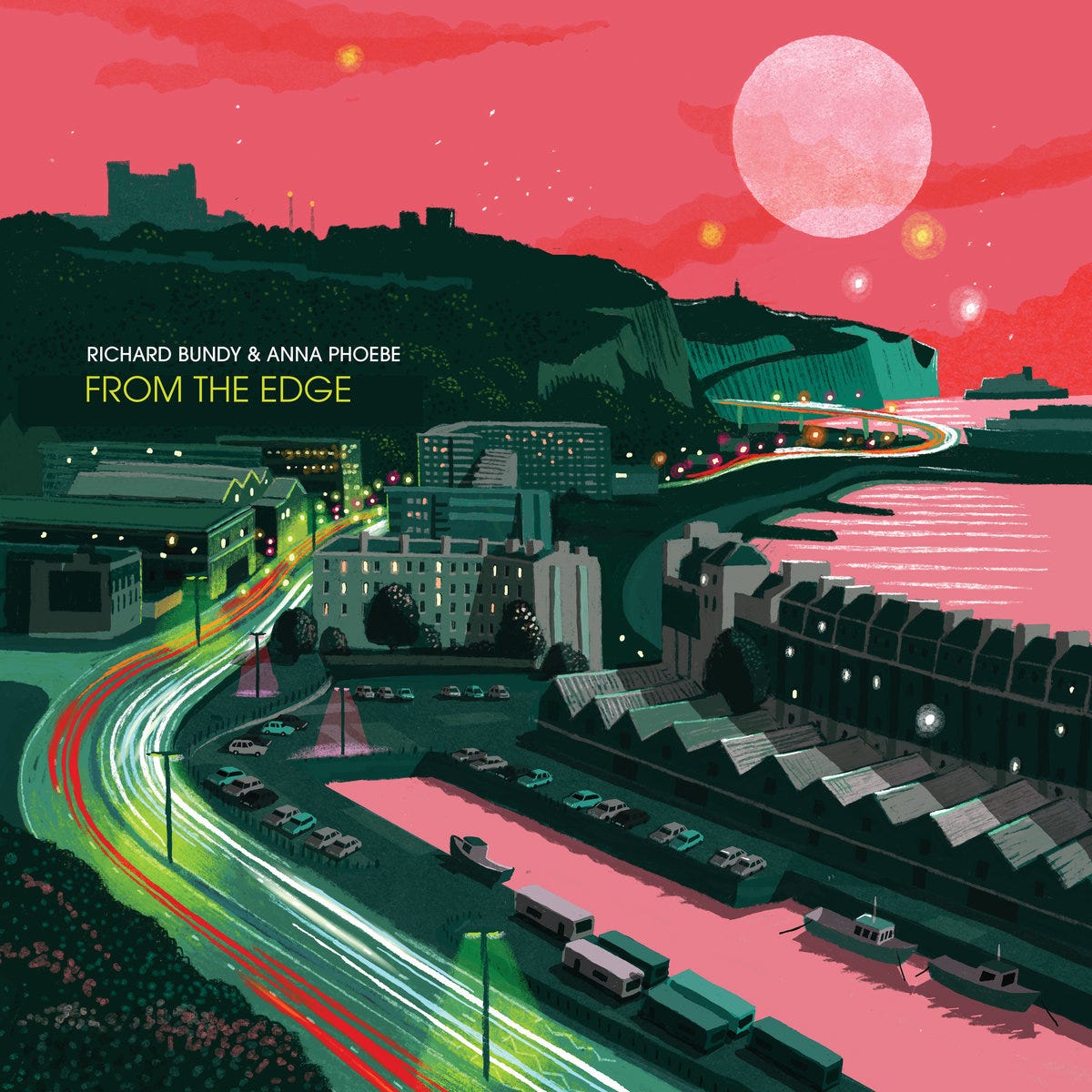
RICHARD BUNDY & ANNA PHOEBE ‘From The Edge’ (Clay Pipe)
Said it before, will say it again. While Frances Castle’s Clay Pipe might not be prolific, what she does release absolutely needs to be heard because you can almost guarantee it’s going to be excellent. And that especially applies when she serves up new names like Kent-based composers Richard Bundy and Anna Phoebe.
It’s tough out there. People aren’t buying nearly as much physical music as they used to so it’s bold of Frances to keep backing work she believes in like this. You can see the appeal of this, it’s about place, which is central the Clay Pipe mission.
On this release that place is Dover. These long-form pieces sit at the heart the artists’ ‘Dover Unlocked’ project, a body of work that the accompanying notes say “reimagines and quietly subverts the accepted narrative of this UK coastal border town”. It is, the notes go on to say “the unlocking of a town through time” and they do this by using music to open up “hidden, overlooked historic spaces and let them be heard again”.
The projects is rooted in performing within spaces like the Grand Shaft, a Napoleonic-era spiral staircase that descends 140 feet through the iconic chalk cliffs, St Edmund’s Chapel, the Maison Dieu, and Fort Burgoyne, built in the 1860s to guard the high ground north of Dover Castle.
So what you’re thinking does all that sound like? The release is split into two 20-minute pieces, the A-side ‘The Immersion’ and B-side ‘Unspiralling The Rock’, which are then further split down into movements, but fully intended to be listened to as one piece.
As well as Richard Bundy on piano, keys and synths, and Anna Phoebe on violin, viola and synths, there’s a huge cast of musicians featured here. There’s strings, brass, a choir, drums, bass, guitar, there’s even a DJ on turntables. There’s sampled voices that provide a narrative that reveals itself the more you listen and there’s location sound, field recordings, where, in a track like ‘Sound Of The A20’, as the notes say, “the outside world seeps into the recordings, becoming an unseen performer”.
There is a lot going on here. A lot. It will require repeated listens to get to the bottom of. I find that it’s really working for me in the dead of night. It has that kind of sound.
There’s an almost ‘Tubular Bells’ feel to ‘The Identity’ as it builds and builds, repeating patterns over and over. ‘Ebb And Flo’ sits Anna’s haunting violin front and centre and is an incredibly powerful piece of music, made all the more interesting by the electronic pings and fizzes that sit underneath it.
That opening side seems to be building to the Portishead-y ‘Secrets And Space’ where a full band, with scratch DJ kicks in. Boy does it kick in. The B-side plays a similar trick, building and building until the whole thing explodes two tracks form the end with ‘The Threshold’, which has some wild synth work. I don’t know if it’s just me, but that second side gave me flashes of ‘War Of The Worlds’ in places.
It is, it has to be said, quite a listen. The other thing that leaps out is this isn’t your standard Clay Pipe affair. It’s properly noisy for a start. Not all of it, but when it goes it really goes. I totally see what drew Frances to it though and more power to her elbow for once again having the courage of her convictions. She is never wrong. This is brilliant stuff.
THE ROUND UP’s ROUND UP


A few other releases that I need to mention this week before I collapse in a heap and sleep for a weekend. We start in Minsk, Belarus, with The Bathroom Producers’ ‘Romantic Collection’ (People Can Listen), which is rather good. It’s a debut album two years in the making from “synth wizard” Alexander Kononov, the “diva vocals” of Vera Kriulets who along with a raft of rather talented musician pals have crafted a “delicate avant-pop landscape”. I really like the beautifully mellow ‘Saint Fox’. It has a kind of 90s trip hop feel almost. And yet not. You want to put your finger on who they sound like, but it proves elusive. I mean they’re not unique, but they do have a striking original sound. Back on ‘Saint Fox’ there’s a wonderful distant sax solo pops up, big chorused guitars, bright xylophone type tinkles. And it’s all held together by Vera’s captivating voice. Is it Nena she sounds like? It’s almost breathy, sometimes spoken, frail even on ‘Sweetest Meltdown’. Musically this is accomplished stuff. I really like ‘Love Song’, the male/female singing at the same vocal is a real delight. It sort of remind me of Icelanders Múm, it has that same kind of deliciously accomplished quirk to it. There’s a track called ‘Let Me’ which is great. It has such an ease about it, almost jazzy, but again not. And have they nicked the vocal melody from ‘Waterfalls’ in ‘Japan (My Love)’? And sung it in Japanese? There’s some proper quality here, both in the songwriting and the execution. You suspect they could probably pull this off live too. The all-round complete package really.
The Worthing Friendly Society’s self titled debut on Brighton’s Patchworks label, is described as an ambient album “inspired by the shifting moods of the Sussex coastline”. When I saw this was an ambient album I didn’t expect this. It’s actually quite abrasive. “Created almost entirely on a single synthesiser,” say the notes, “the album weaves delicate piano, white noise, crackle and dirt-encrusted delays into immersive sonic landscapes”. They do! The opening track ‘Afternoons’ is properly noisy, like you’re under gentle attack. ‘Rosebank’ is the same. A delicate piano line tip toes away while electrical squalls flood in around it. They talk about “echoing ambient/noise classics like Grouper’s ‘Way Their Crept’, Kevin Drumm’s ‘Imperial Distortion’ and Robert Turman’s ‘Flux’, the record embraces both serenity and abrasion”. It does! Even the name resonates. Friendly societies date back to the 17th century. “They are owned and run by their members… often local, small-scale associations among workers or tradespeople pooling resources to help each other… created to provide financial and social support to its members, typically in times of need such as sickness or unemployment”. We could certainly do with a bit more that these days, right?
Stray Wool’s ‘The Sorrow’ (Evergreen Music) is, say the notes, “a response to depression and self-isolation”. Stray Wool is a guy called Pedro, a software developer living on the south-east coast of England. He seems like an incredibly thoughtful chap, he sites the 12K label’s founding principles, which he tries to keep present in his day to day life. We could all do a lot worse. “My work,” he says, “stems from a love of imperfections, repetition, and stillness… I tend to use warm electronic sounds, field recordings, and tape hiss”. You know what you’re going to get here, right? It’s charming work. From the shiver of ‘News’ to the uplifting melodic ‘Mox’, it’s so gentle in places it’s almost not there, so insistent in others it asks to be heard. Very nice indeed.
David A Jaycock is one of those artists whose work I always look forward to hearing. ‘Children Of The Cold War: Phase 7’ (Sub Exotic) is, the notes explain, “a concept record that reflects on events that have had a calculable effect on a generation”. We’re talking early 80s and entering the red-hot days of the cold war between Russia and America. It’s a world vividly summed up for the mass market by Frankie Goes To Hollywood’s ‘Two Tribes’ video. Sounds crazy now, but we really did think about what we’d do in the event of nuclear attack. We were prepared for it. David recalls having discussions, aged eight or nine, about what they would do when if they heard the four-minute warning siren. “We would raid the sweet shop,” he says. “The absurdity of this vivid memory encapsulates the concept of the record. It would take at least four minutes to get to the shop!”. The whole thing feels pretty 80s, which isn’t perhaps a surprise as the instruments used are mainly from the period, a DX7 and 808 featuring prominently. Thematically, it concerns itself with the everyday lifes of those who be most effected by a nuclear war with little of the power to do anything to stop it. The almost anguished ‘Shopping On A Saturday Afternoon In Manchester’ and ‘Secret Bunkers Under Civic Centres’ underline the point. Do check out the Bandcamp page as there’s even a bibliography for further reading on the subject. Very thorough.


***ADVERTISE HERE***
email moonbuildingmag@gmail.com

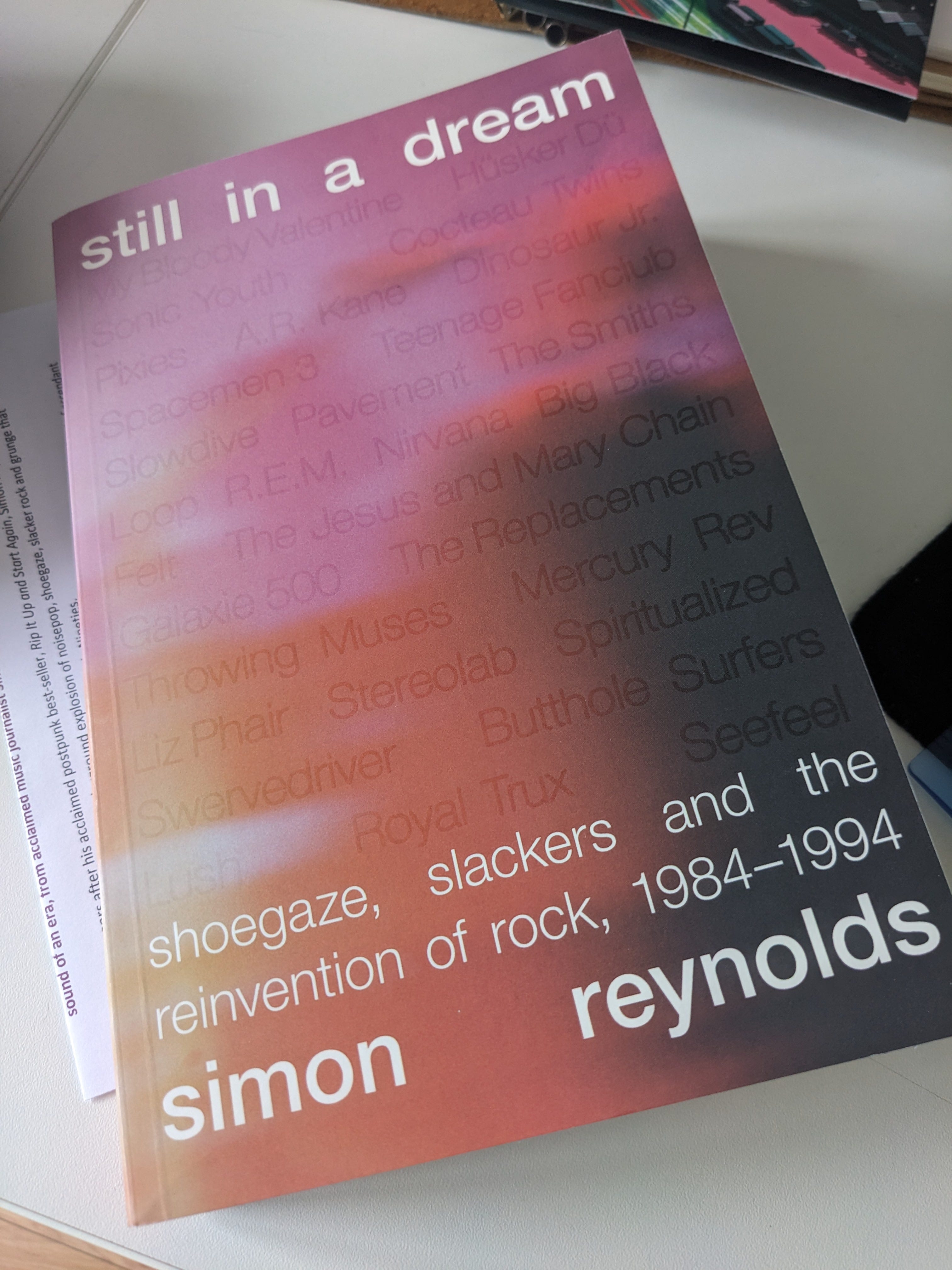
‘STILL IN A DREAM – SHOEGAZE, SLACKERS AND THE REINVENTION OF ROCK, 1984-1994’ Simon Reynolds (White Rabbit)
If you want to know what it was like being a music journalist in the white heat of the weekly music press world, there’s a chapter in Simon Reynolds latest masterwork that absolutely nails it. It’s called ‘Intermission: Living The Inkie Dream’ and I don’t think I’ve ever seen anyone articulate how it felt to be working for the weekly music papers quite so brilliantly.
The whole chapter is great, but the headline is that while there are “some serious treats” attached to the job, you get to go to loads of shows, meet musicians, travel the world, “most of the excitement of being a music journalist is internal”.
“The main action,” he writes, “was happening when I was on my own, in whatever drab little room I worked and slept in. Happening in my head, happening on the pages that trundled out of my typewriter, and then – a thrill I never got over – happening in the printed, mass-circulated pages of Melody Maker every week”.
Simon talks about the glory being “in the actual adventure of writing every week”. As he says “the true glamour is the buzz of seeing your words laid out in in paper”. It really was.
And so to the book itself. The thing about being a music journalist is you don’t get to choose your period. Not all potters get to make Ming vases, not all music hacks get to write about Hendrix. So you kind of end up where you end up. Simon arrived at Melody Maker by default in 1985. He was an NME diehard, grew up reading it, decided early on that his career lay in writing for it. When he arrived in London in autumn 1985, he duly signed on – de rigour in those days – and set to work submitting sample reviews to the NME. “After several attempts at phoning the reviews editor,” Simon writes. “I finally got through only to receive an earful. I replaced the phone in its perch and promptly mailed a letter to Melody Maker.”
Which really was NME’s loss. Would he had thrived had he gone to NME? Good question. I’m not sure. He would have been a very different writer there. Would have had to be. The Maker was the underdog of the two publications and that was part of the kick of working there. You were the oiky little brother and as such you had more leeway and could take more chances. And Simon took those chances with both hands.
What he does so well, and it’s evident in all of this books, is place himself in the story. There’s been a few music-based books of late that are little more than glorified research jobs. I’d much rather read work where the author is at the centre of things, where the story is based in first-hand experience, and that is very much the case with ‘Still In A Dream’.
What makes Simon’s books special is what he recognised in ‘Energy Flash’ as “the partisan zeal burning through it” and that’s here by the barrow-load. As the blurb says, ‘Still In A Dream’ is “a propulsive and personal account from a journalist who covered this music in real time from the frontlines”. Add to that the very first line where he says, “It was the most exciting time of my life” and you know you’re in for a treat.
So ‘Still In A Dream’ is the tale of the what happened after post-punk. It starts with what Simon describes as “that mid eighties trough I called the Bad Music Era”. A world where “post-punk dinosaurs” roamed, an update of the “rock dinosaurs” of the punk era, coined by a young Maker upstart called David Stubbs.
The book is split into sections, with alike artists grouped together in chronological order. It starts with Cocteau Twins and ends at Oasis. Yup. Only Simon Reynolds could draw lines like that. That last chapter is especially good as he walks a walk of post-rock versus Britpop, travelling from the likes of Seefeel, Disco Inferno and Pram to Pulp, Denim, World Of Twist, Saint Etienne, Stone Roses and Oasis.
He tells the bands’ stories, of where they came from, actually and metaphysically, of how they fitted into the grand scheme and all the while, now with the added benefit of the distance time affords you, there he is, weaving in his own experience of them. He has, after all, interviewed the lot of ‘em at one point or another.
What I find especially interesting is you will almost certainly recognise your own entry point into this story. I was especially wowed by that first string of American bands – Pixies, Throwing Muses, The Breeders, along with the likes of Husker Du and Dinosaur Jr. I enjoyed the tale of how 4AD forgot to book a hotel for a trip to Boston for Pixies first Melody Maker cover so Simon and photographer Tom Sheenan were put up on Kim Deal’s sofa bed. He describes Tom as “a fine companion for an overseas jaunt, but not necessarily someone you’d want to spoon with”. I did many jobs with Tom and I would concur.
There’s also a lovely story about how Simon met his partner. She arrived in London from New York on a study year with a very early Throwing Muses interview in her bag hoping that would get her a foot in the door at The Maker. But, as they tended to be, they were already ahead of the curve and that first feature had already been assigned, sadly not to Simon, that would’ve been good. “But she was invited down to the office to pick up some records to review and that’s how I met Joy Press, from exotic New York City”. His blossoming romance with Joy and a growing love affair with New York runs as a steady theme throughout the book. There is something about NYC and music journalists. I loved the place. So did Simon, so much so he eventually moved there. His girlfriend being there obviously helped.
This whole book is like flicking through my record collection of the time. The dreampop chapter, especially the stuff on the brilliant AR Kane, resonates. Simon tackles the M/A/R/R/S ‘Pump Up The Volume’ story, of which not very much is ever said. I’ve tried to tell that tale several times and hit a wall every time with no at all willing to talk about what went on.
The story goes that Colourbox’s Martyn Young hijacked the session and demanded a greater split of royalties. Indeed, AR Kane’s Rudi Tambala claims “germinal authorship of the distinctive bassline”, with Simon adding that “the only really identifiable AR Kane element on the finished record is a brief flash of astral guitar noise”. That said, the AR Kane duo did rather well financially out of the situation even after agreeing “to a less equitable split of the royalties”. It may go some way to explaining why Colourbox didn’t ever lift a finger again.
I also love the story in the dreampop section about how 23 Envelope’s Vaughan Oliver shaved the heads of everyone, boys and girls, in the 4AD office. “It gave 4AD something of a cultic aura,” writes Simon. “Everyone wore black,” recalls Rudi. “Cool as fuck, they even smelled cool.”
As you move through the book you can see the whole thing just snowballing. While I wasn’t much bothered by grunge (it was noisy enough, but I was much more interested in the sort of racket being made by people like My Bloody Valentine), the chapter on it is fascinating, with Simon tackling the grunge paradox – how these bands, the likes of Nirvana, Peral Jam and Soundgarden, relied on MTV for their success, but at the same riled against it.
Meanwhile, my favourites, My Bloody Valentine, blew the doors off. They really were music press darlings. Simon covers them in depth across two chapters. In the Daydream Daze chapter alongside Sonic Youth and alongside Ride, Slowdive, Lush, Swervedriver and Stereolab, who he calls shoegaze and its discontents. I could go on. All this and so much more is here. This is the music that sits at the formative frontline for people like me, the next generation of music writers who followed the likes of Simon over the top. It’s essential reading.
The fascinating thing about Simon Reynolds is that as he gets older and adds more books to his canon, it becomes increasingly fascinating to see where his attention will turn next. Where ever it is you know it’s going to be good. After all, you don’t get to be the best music journalist working today for no reason.
MOONBUILDING ISSUE 6 … SOLD OUT

Holy cow. MOONBUILDING Issue 6 is completely sold out, so it isn’t available from moonbuilding.bandcamp.com Sure someone is trying to cash in via Discogs.
Let’s look at what you missed, although it is still available digitally of course. Our cover star, illustrated by the peerless Nick Taylor, is the unstoppable force that is LOULA YORKE. In our bumper interview we talk about how she got here and where she’s going. As usual, it is an in-depth piece that lifts the lid on the brilliant mind behind the excellent music.
We meet Loula at her home in Suffolk where we have a proper rummage around in her world, musically, humanly, psychologically, probably even a bit metaphysically. It is a cracking read and opens the doors on what makes this most remarkable artist tick.
As always the issue comes with an accompanying CD. This one is a Loula Yorke collection called ‘How Did We Get Here’, which is compiled by artist herself and charts her rise and rise. The resulting 11-tracker will take you on a journey through her career to this point and it is utterly, totally, absolutely, exclusive to Moonbuilding.
Elsewhere, there’s a great chat with Clay Pipe Music supremo Frances Castle as we profile her wonderful label, A’Bear gets in on the There’s A First Time For Everything act, we round up an absolute mountain of recent releases and serve up our thoughts on the best albums from the last few months, which feature Loula Yorke, Warrington-Runcorn New Town Development Plan’s Gordon Chapman-Fox, Cate Brooks, 30 Door Key and Sarno Ultra.
We talk to ‘This Is Memorial Device’ author David Keenan about ‘Volcanic Tongue’, his debut collection of music writing. He is one of the last generation of music writers who could actually call themselves journalists. He talks a lot of sense and his work is a shining example of what music writing should be. It’s an unmissable interview.
Elsewhere, we round up an absolute mountain of recent releases and point you in the right direction of some mighty fine independent magazines and books. The Orb’s Alex Paterson tells us about his ‘Top Of The Pops’ experience when he appeared on the legendary show performing ‘Blue Room’ in 1993. I say performing… There’s a new Captain Star cartoon strip from the brilliant Steven Appleby. I constantly have to pinch myself that this strip, that I first read in the NME in the early 1980s, is now in my little magazine.
Find us at moonbuilding.bandcamp.com.
Moonbuilding Weekly is a Castles In Space publication.
Copyright © 2026 Moonbuilding