
Issue 74 / 8 August 2025
Your essential DIY electronic music lowdown: Track Of The Week = Lorelle Meets The Obsolete + Album Of The Week = Loula Yorke + Field Lines Cartographer + A Year In The Country book + much more...


The new issue of Moonbuilding, the print version of all this, has been out for two whole weeks and it hasn’t sold out yet. Incredible. This situation can’t go on… grab your copy now before it’s too late at moonbuilding.bandcamp.com
There has been an insane amount of music released in the last few weeks. I’m trying to catch up with it all, but what I find is I either run out of time, as 10am on Friday approaches, or space, as the word count tips past a self-imposed happy half-hour read. I’m wondering if the solution is to write shorter in order to cover more. The joy of all this though, I think, is I say what I need to say, no word counts, no editing to fit a page, no editing full stop. Maybe I shouldn’t worry so much, eh?
Enjoy this week’s communication. There is some blistering good music awaiting. Happy reading.
Neil Mason, editor
moonbuildingmag@gmail.com
Issue 74 Playlist: Listen
Your ad here: Advertise
Support Moonbuilding: Donate


***ADVERTISE HERE***
email moonbuildingmag@gmail.com

LORELLE MEETS OBSOLUTE ‘Regresar / Recordar (Jagz Kooner Remix)’ (Sonic Cathedral)
At the risk of becoming the Jagz Kooner Weekly, he features here for a second week with another prominent release. Last week it was the Sabres Of Paradise reissues, this week it’s an absolute belter of a remix. Which, of course, Jagz is no stranger to.
Sabres started out as a remix team starring Jagz, Gary Burns and one Andrew Weatherall, who was, of course, much in demand after what he did with ‘Screamadelica’. But he was a team player, liked a gang around him. So Jagz and Gary became his gang. The list of their remix work is almighty – Chemical Brothers (when they were still The Dust Brothers), Bjork, The Orb, Red Snapper, One Dove, New Order, Leftfield, Stereo MCs… the trio started out when they met one night in a club, Weatherall knew Jagz’s early outings and suggested they work together. He said he’d call and he did, the next day. He was remixing Jah Wobble’s ‘Visions Of You’ and would Jagz and Gary like to help out? They would, they did. The rest you know. Sabres came into being after they remixed Psychic TV’s ‘United’, which was billed as a Sabres Of Paradise mix rather than an Andrew Weatherall remix, which they were up to that point.
So anyway… he’s done a remix of Lorelle Meets The Obsolute’s ‘Regresar / Recorder’, the first track from the Mexican duo’s new album, ‘Corporal’, which is released by Sonic Cathedral on 10 October. I’ve had an early listen to the album and it’s a piece of work, more about which at the time, but as their people say it sees them “turbo-charge their psychedelic post-punk with a new electronic engine”.
This first track is a prime example. Links above to listen to the original and remix back-to-back, which you should do. The original is great, a proper album opener, dead-eye Teutonic drums, shimmery synth backdrop, wild sequencer swirls, echo-y vocal. The whole thing blossoms over six minutes, just like the accompanying video. The remix is absolutely scorching, it really locks down that groove and turns it into an acid-squelching funk-fuelled bin rattler that just keeps dialing everything up a notch. And then another. And another.
Can’t wait to see what Jagz is up to next week…
obsoletelorelle.bandcamp.com / soniccathedral.bandcamp.com

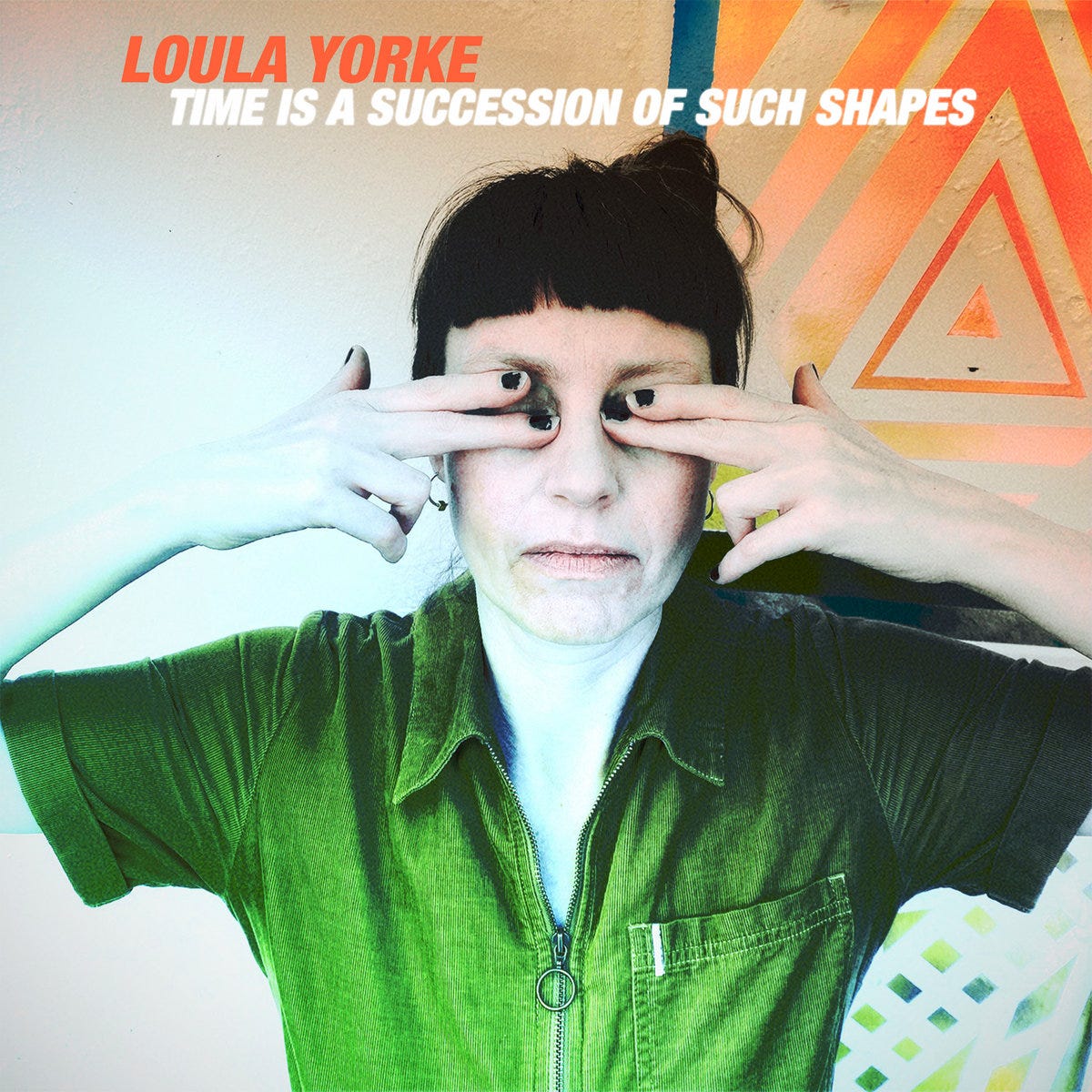
LOULA YORKE ‘Time is a Succession of Such Shapes’ (Truxalis)
Have I mentioned there’s a new issue of Moonbuilding? Just in case you somehow missed the memo, Moonbuilding Issue 6 is out now and available from our Bandcamp page here.
In the issue there is a lengthy lead review of this very album. The easy thing to do would be to reprint that here and tell you that in the mag there are a bunch of other reviews as well as a bumper release round-up should you like that sort of thing. You know. But you should know by now that I’m not like that. You’re going to get a whole new review, because that’s what just what I do round here.
So ‘Time is a Succession of Such Shapes’ is the culmination of Loula Yorke’s year-long mixtape project. As a frontrunner to this release there was also an anniversary mixtape, long sold out, called ‘The Book Of Commonplace’, which was an hour-long “best of” collection drawn from the tapes. Sold out? Damn it. But fret not because Loula has repressed it and bundled it with this one for double CD release, which is something of a must-have. Not that it wasn’t just on its own.
Loula talks about ‘Time is a Succession of Such Shapes’ as “collating, expanding and reworking the finest pieces from my year of sonic journaling”. It’s a collection of the music that was recorded for and appeared in some form or other on the mixtapes. Here it’s served up clean, no field recordings, just the music, and what music.
There are several tracks that appear in more than one version, ‘Kenning’ has three, which we’ll get to in a minute. Knowing Loula, I suspect every track here has multiple versions from which she’s cherry picked the ones that worked best for this 16-tracker. The title track appears twice and ‘Time Is A Succession Of Such Shapes I’ in particular is a spectacular piece of work, the record’s centrepiece. It has flecks of Berlin School about it, the sort of heft you’d expect from Tangerine Dream. It has this deeply melodic thrum, a sequencer working overtime as squibs and squiggles make patterns over the top. I love the ending, as if it’s been unplugged and is grinding to a halt. ‘Time Is A Succession Of Such Shapes II’ is a whole other bowl of goldfish. It comes from the same place as the first version, but this one appears to have been ambiented out. It hasn’t of course, but it starts with a delicate, resonant bass growl that pulses like breathing and over the top comes the increasingly hectic bright twinkles that build to the point of collapse.
I’d recommend listening to the three-part ‘Kenning’ back-to-back. The seven-minute ‘Kenning I’ is based around a gentle, deep rhythmic throb that morphs and twists out of shape. The bright swishes and swoops of ‘Kenning II’ sit atop a distant thud, like there’s a rave in the next field, while ‘Kenning III’, the album closer, begins with the sound of something ending, like fireworks fizzling out, or machines being unplugged and then, from nowhere, the whole thing cranks back to life, the beat kicks in, the melodies solidify. Very satisfying.
Loula told me when we were talking for the Moonbuilding story that she felt like she had to make her mixtapes forever. I like that between her saying that and me writing up our interview she changed her mind and drew a line under the project. I love too how she’s marked the end of it all with these releases. The thing is, it has inspired the next stage, which is how all good art should work. Out of one thing comes another. There is a new project taking shape, I suspect as I type, that Loula will be revealing in the autumn. Minds like this, making work like this, is something special. Loula is one of kind, cherish this incredible work.
Got a release you need to tell us about? email moonbuildingmag@gmail.com

GOOD STUFF #1
FIELD LINES CARTOGRAPHER ‘Resplendent In The Light Of The Universe’ (DiN)
I don’t know, Bandcamp Friday was last week when my inbox turned into one long ticker for new releases, and if anything there are more releases this week than last. I’ve also got a list of albums I missed out on when I had a month off. It is quite a long list. I’m going to see how many I can get through here because there are some very good outings that I’d hate you to miss. What I don’t cover now I’ll get to next week.
I’m starting here with the second full-length on DiN for Mark Burford’s Field Lines Cartographer that came out while I was away. I love that the label’s Ian Boddy has embraced the new school of modular synthesists so heartily. He could have pulled up the drawbridge and we would have been perfectly happy with the modular adventures of Ian and friends. That he’s embraced new work, through not only the Tone Science collections, but on the main label with full releases from the likes of Polypores and FLC, with more new school artists to come, is to be commended.
There is something very comforting about the work of FLC. And yet, at the same time, you do need to stay alert, aware, because this music can turn on you. Mark’s thing is the cosmos, the vastness of it all, the mystery, “the splendour of the luminous universe” as he would have it. This record is, as the title suggests, about light. “Always strive for the light” is Mark’s dedication.
Two tracks in and, unusually, we’re already at warp speed with ‘Elastic Erratic’, which has the feel of early Aphex about it. Deep bass rumble, electrical pings firing into all corners. I say it’s unusual, because the joy of a FLC album is that it builds and builds. Here you feel like you could be at the peak already. Two tracks in. Where on earth is this going next? Already I’m a little on edge. See, you have to watch Mark Burford.
I’ve got my eye on the 11-minute ‘Oxygen Rich Waters’, which sits as track five of eight. The opener of the B-side if this were vinyl. What does that have in store? It does not disappoint, but it’s the following track, ‘Various Rotations’, that fair stops you in your tracks. There’s a rhythm there, not drums, but a rhythm. Like a guitar string hammering on, it’s quick and tense, it’s light on its toes, as if it can’t wait around. Which it doesn’t. The track builds, the rhythm beds in, but then it begins to melt away, to fade, and then it disappears leaving the track glistening.
From there you feel like you are only bathing in the light, ‘The Light Of A Billion Stars’ glows like Danny Boyle’s, ‘Sunshine’ when the shields come down, only not as disastrous. And closer ‘Gentle Flows’ is glorious. It’s so sleek and bright and warm.
In the notes, Ian talks again about how Mark brings the Berlin School influence, but “it’s never a slavish pastiche of this idiom, but rather his own musical voice finding form in this particular style”. Which is true. Mark makes his own sound, and what a sound. Interestingly, I note that this release is DiN93. Seven releases away from the big 100. I wonder what Ian has up his sleeve for that?
GOOD STUFF #2
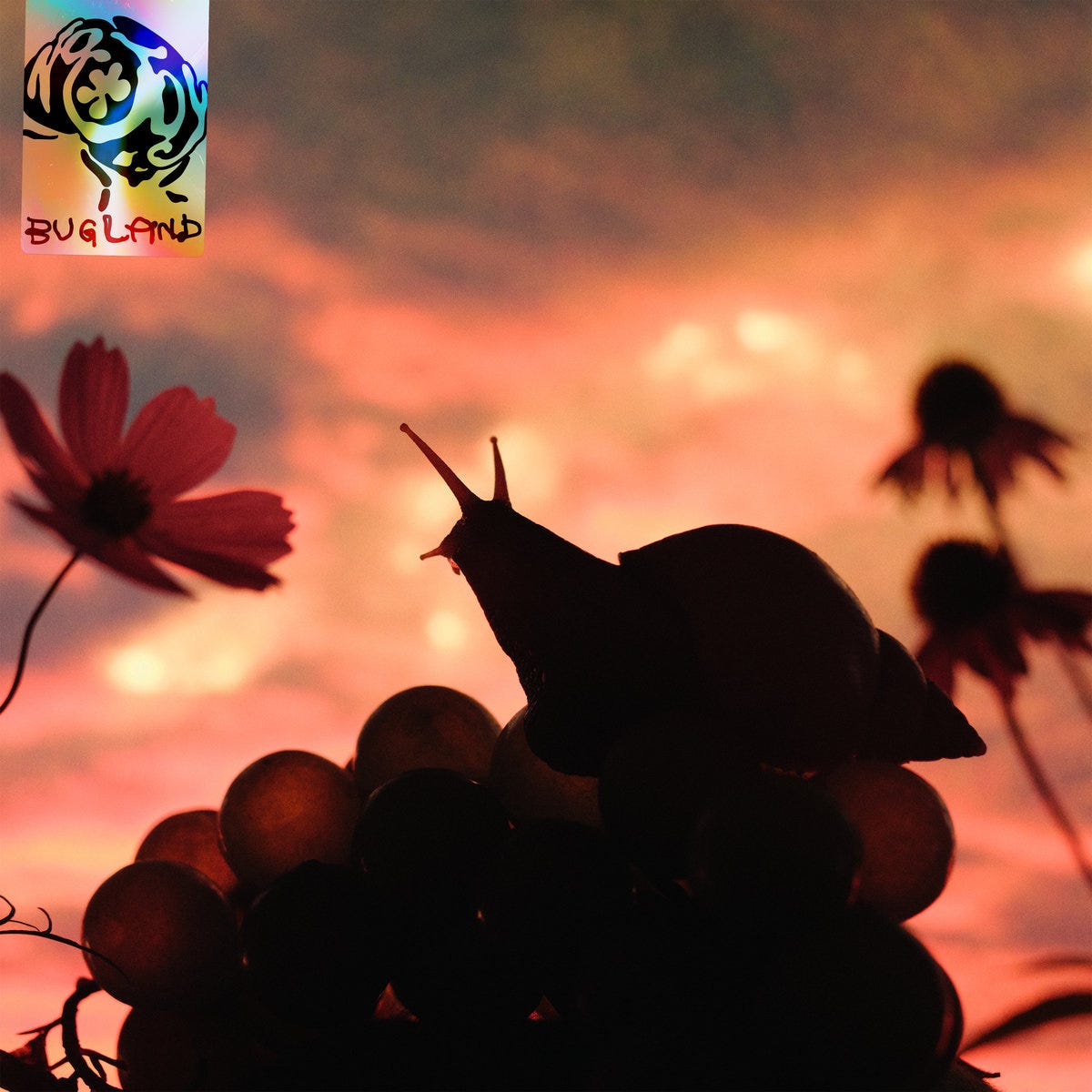
NO JOY ‘Bugland’ (Sonic Cathedral / Hand Drawn Dracula)
A record that is actually out today is this one. Sonic Cathedral seem to have stepped up activity of late. In July (while I was off sunning myself, etc), they released Dot Allison’s ‘Subsconsciously’, the very excellent Lomond Campbell remix of her entire ‘Consciousology’ LP. I did an interview with Lomond for Electronic Sound about the album and other projects. It’s here, but behind their paywall. Give it a couple of weeks and it should be free. Once the issue is off the shelves I can publish the interview myself, which I might start doing. The Brief Encounter pieces are 1,000-word edits of much longer interviews.
Anyway. This is the first new material from Canada’s No Joy since the 2020-released ‘Motherhood’, which saw the duo become the solo project of Jasamine White-Gluz after parting ways with co-founder Laura Lloyd. It is also her debut outing on Sonic Cathedral, which seems like the natural home. Is it shoegaze? I mean it is, Jasamine’s voice is described as “ethereal”, her guitar sounds on previous releases chime, and soundwise it comes multi-layered. Boy does it come with layers. The notes talk about how ‘Bugland’ can “descend into fine-tuned chaos, then out of that chaos with ease”.
A good example is ‘Bather In The Bloodcells’, a cracker of a track, a proper pots and pans rubdown, like Lush XL, and a delightful almost Big Audio Dynamite-like breakdown in the middle. The whole record does feel quite BAD in the way it throws so many ideas into the pot and packs the outcome with sounds. But it doesn’t feel like a dense record, there’s a lightness of touch here, a deft understanding of melody and how to keep things upbeat with it sounding sugary. And it’s way more of an electronic project since the whole thing has gone solo. There’s guitars here, for sure, but there’s synths too, by the truckload.
BAD aren’t the only big-name comparison either. In the notes there’s talk of opener ‘Garbage Dream House’ being “Zooropian” – an expression I love – “without any of U2’s ego”. You can hear Bono’s voice hovering, maybe singing about misty mornings, 4am, or something, but you don’t need that, because Jasamine owns this record. The synth run and breakdown in ‘I Hate That I Forgot What You Look Like’ is great, you can hear that blowing off the doors and lifting roofs live. And then there’s the near eight-minute closer, ‘Jelly Meadow Bright’, that could build you a whole housing estate if you gave it the bricks. It sounds like you’re playing it at the same time as something like Slayer. And then comes a sax solo. This is excellent stuff, but what did you expect from this meeting of No Joy and Sonic Cathedral?
GOOD STUFF #3
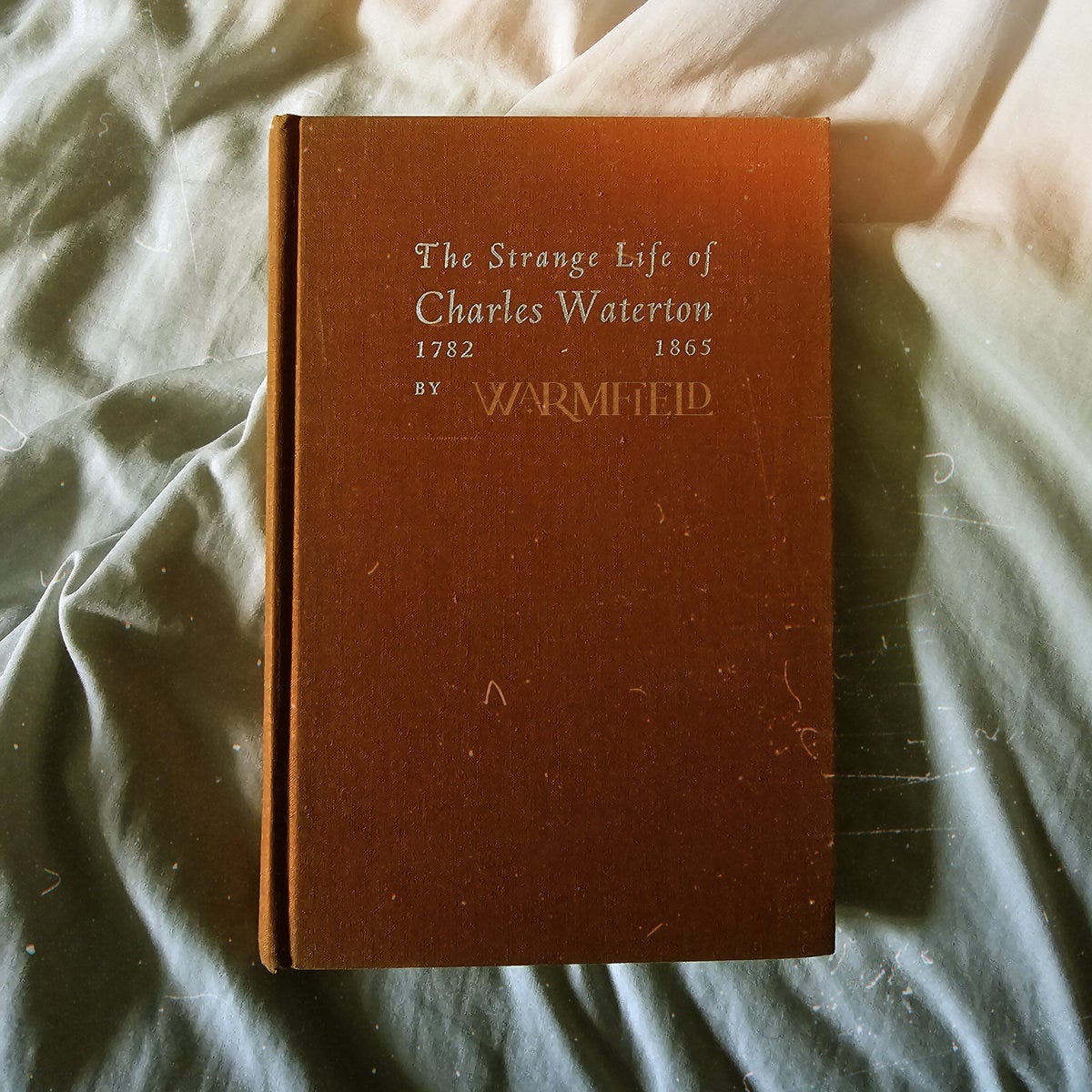
WARMFIELD ‘The Strange Life of Charles Waterton (1782-1865)’ (DIE DAS DER)
Paul Broome’s Warmfield project continues its West Yorkshire odyssey with a look at Charles Waterton, an English naturalist, explorer, and pioneering conservationist who was “best known for creating the world’s first nature reserve at his family estate, Walton Hall, in West Yorkshire”. He is, I have to admit, someone I know nothing about so reading around him was an education.
He led four expeditions to South America between 1812 and 1824 and his observations were published in 1925 in a book called ‘Wanderings In South America’, which is a great title. That book went on to inspire the likes of Charles Darwin, Alfred Russell Wallace and David Attenborough, so Waterton was not insignificant. And rather kind. Where many would kill birds to study them, Waterton preferred to built hides and climb trees to watch his subjects rather than killing them, although he was also a skilled taxidermist.
Here Paul uses countryside field recordings and a manipulated tape recording of piece about Waterton that was broadcast on ‘Nationwide’ in 1974 (like ‘The One Show’ but in the olden days). The film says he died from pneumonia following an accidental dip in a lake, but it seems he died, aged 82, from the injuries he incurred falling out of a tree, which is a much better way to go for a naturalist, right?
Sounding more like cryptic crossword clues, the track titles here are very good. ‘The Advantages Of Going Barefoot In The Tropical Forest’ is probably the winner, although ‘Experiments With Rattlesnakes In Leeds’ gives it a run for its money. The music is of the usual Warmfield high quality. Paul just creates such listenable work. I’ve had this on a fair bit this week, it lives very nicely in the room as the Moonbuilding office is coming to life first thing (ie I’m drinking tea and wondering whrere to start). The melodic thrum and low rumble of ‘Ratcatcher For The School’ is great, while the handclappy almost-rave of ‘Mr Waterton On The Cayman While Living’ is perhaps my favourite at the moment. Mr Warmfield doesn’t disappoint does he? He doesn’t.
GOOD STUFF #4
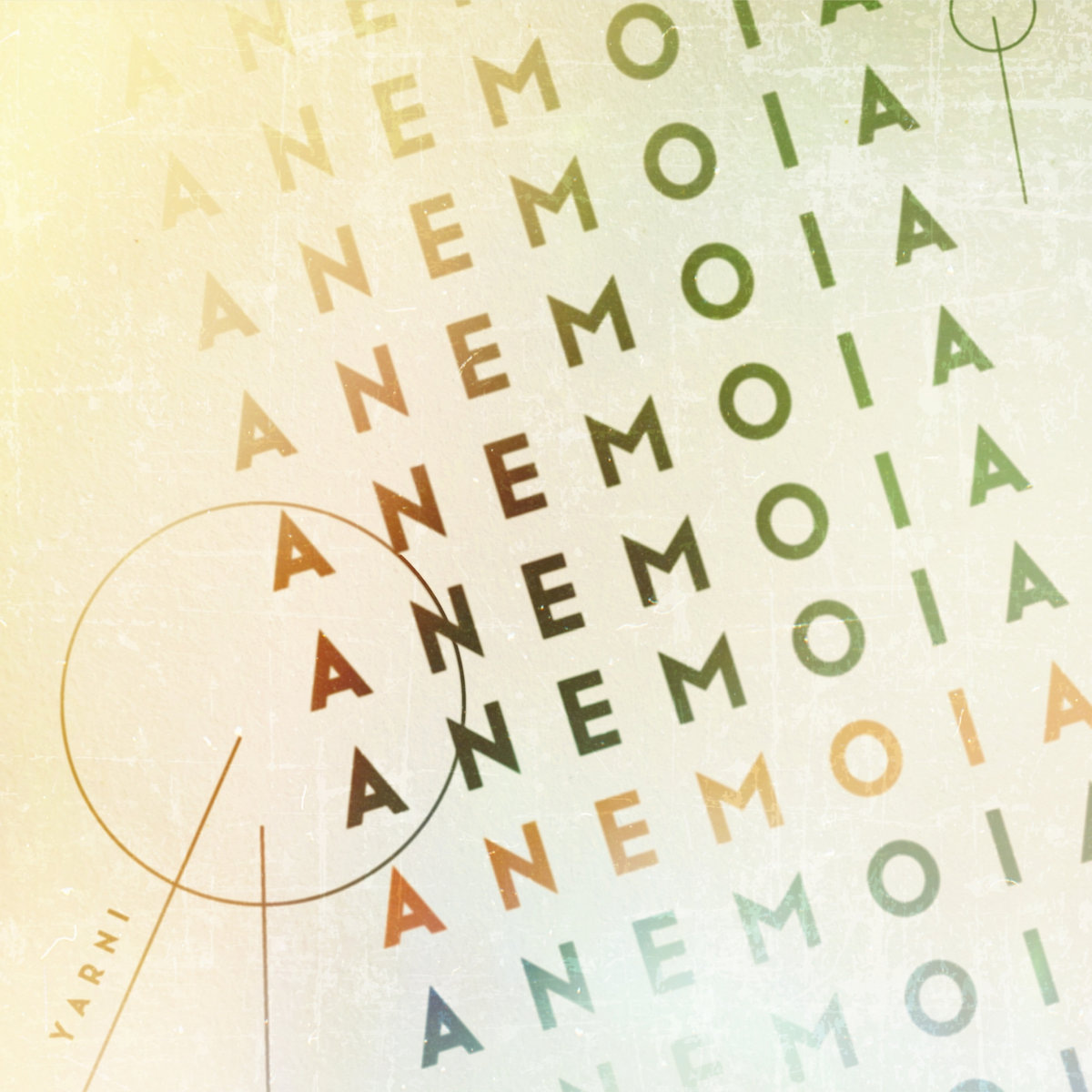
YARNI ‘Anemoia’ (Klassified)
I was rather pleased when Yarni got in touch. It’s not the sort of thing we’d usually feature, not because I don’t like it, I do, very much so, but because it’ll take me down a whole other musical wormhole and there just aren’t enough days in the week.
I’m something of a fan of Craig Charles’ ‘Funk And Soul Show’ on a Saturday night on 6 Music, and I fully expect to hear him playing this. He always has my ears pricking up when he plays tracks from Bandcamp. But if you were drawing Venn diagrams, the work of Sheffield’s Ben Harris would sit between the Moonbuilding and Craig Charles worlds. Which is very much OK with me. I’m not sure he has had airtime off Craig Charles, yet, he should have, but he has had props from a raft of 6 Music types, Gilles Peterson, Huey Morgan, Lauren Laverne and Deb Grant. My old pals at Electronic Sound gave his ‘Boro’ LP from 2021 a glowing review… I would have commissioned that. See, this stuff is going in even when I don’t know it. That review, by the excellent Ben Willmott, says Yarni falls between disco, jazz and deep house with a style that is “dreamy and gently groovy”. Ben W is a rarely wrong.
I think the key to understanding where Yarni is coming from is his inclusion in the DJ sets of the late, great Andrew Weatherall. In the liner notes for ‘Anemoia’, the talk is about how Weatherall’s ethos of digging deeper in everything he did resonated with Yarni. So when you find out Ben is influenced by everything from The Clash and 70s soul, to Soviet propaganda art and Bauhaus, you’re not going to be surprised by his heady musical brew.
‘Anemoia’ draws its inspiration from the 1970s golden age of funk, jazz, soul and disco and here’s the really interesting bit… “The project’s name refers to the Greek concept of nostalgia for an era one has never experienced,” says Ben in his notes. Which is hauntology by any other name. Working with a raft of vocalists, it’s rich, potent stuff. The Sheffield connection gives the whole thing an almost 21st century ‘Music Of Quality And Distinction’ vibe. Just needs a few covers now! I really love the brass-led duo of ‘Silent City ft James Atashroo’ and the Massive Attack-y jazz of ‘Spell Over Me’, both of which you can imagine snaking out from a smoky venue anywhere from New York to New Orleans. There is some very high quality musicianship at work here, this very, very classy stuff. Too classy for you lot that’s for sure.
GOOD STUFF #5
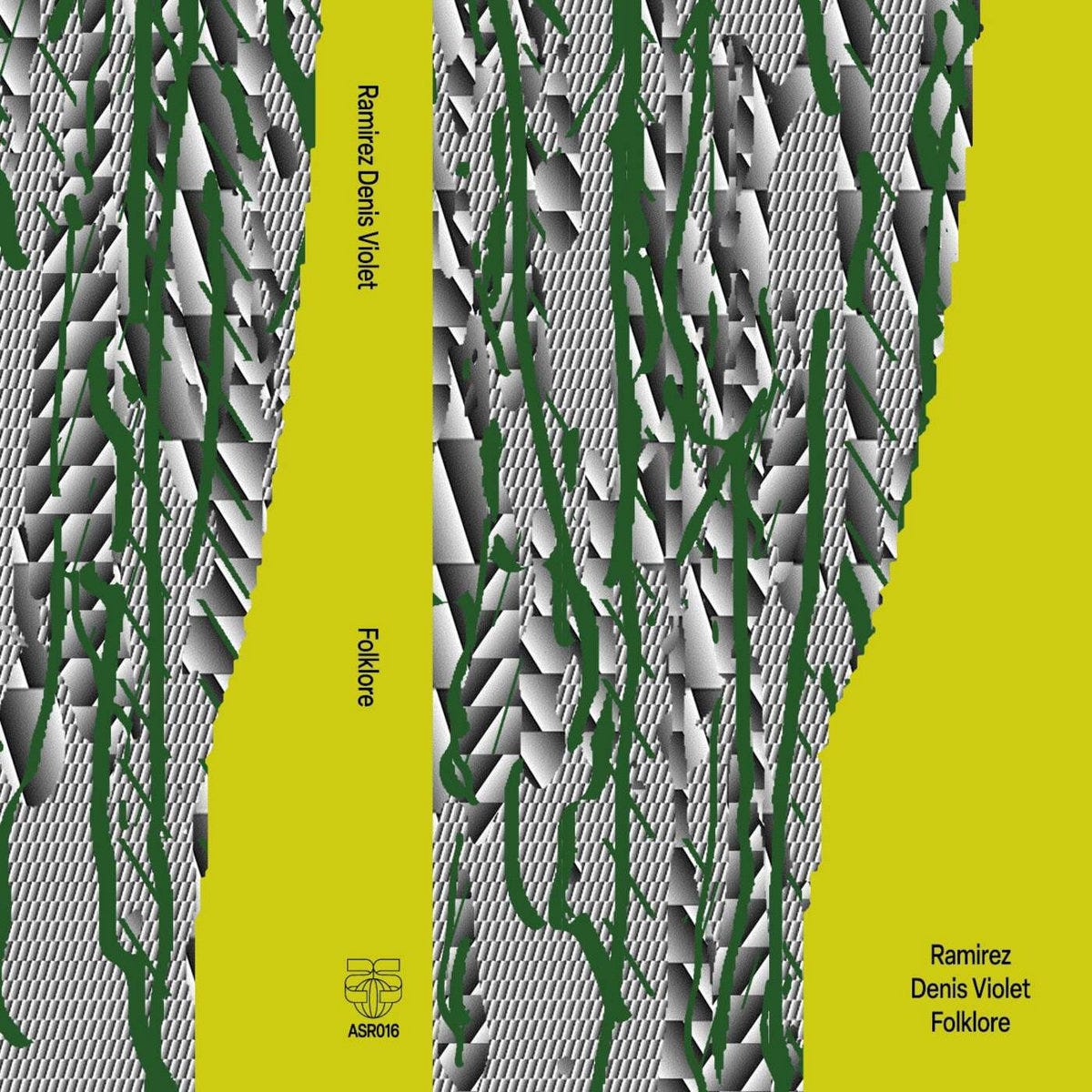
RAMIREZ ‘Folklore’ (Astra Solaria)
The excellent human that is Bernard Grancher was in touch over the weekend to get me up to speed on the latest slew of releases from his Astra Solaria label. Sure we’ll cover them all, but this week it’s the turn of Ramirez’s ‘Folklore’, which is a real dazzler. His name makes me think of BAD for the second time this week and ‘The Good, The Bad And The Ugly’ sample from ‘Medicine Show’ about “Juan Maria Ramirez” hanging by the neck until dead (“Known as The Rat” mutters Clint Eastwood during the sentencing).
Anyway… This is the work of Denis Violet, who lives in Limousin, cow country in south-west France. And it’s brilliant. Denis really likes a wig out, which is very alright in my book. “This French electronic artist lives deep in the heart of the country,” Bernard tells me, “but seems at one with both the cosmos and nature. The result is a somewhat old-school album that invokes the ghosts of Tangerine Dream and Klaus Schulze, inviting us to spend the night chasing shooting stars.” It does. It really does.
The opening title track is nearly 14 minutes long. Two minutes in and I was downing tools to give it my full attention. The sound is full and warm, hot almost, steaming arpeggios swirl around with astral keys swooping and sweeping their way over the top. It doesn’t let up either. There’s nothing among these six tracks that is anything less than seven minutes. So there you are, still reeling from the opener and off he goes again with ‘Gestures’, a mere 11 minutes of wild oscillation, that once again demands your undivided attention.
There’s 40 cassette copies of this. It’s not sold out. You want one. You need one. Do check out his Bandcamp page, he’s been at this a while, there is music to galore to catch up with. Another thought occurs – I think this is what Jean-Michel Jarre sounds like in his own head.
THE ROUND UP’S ROUND UP


The Cambridgeshire-based synthesist Willie Gibson is a name you should be used to seeing round these parts. His releases are adventures in modular synthesis and are well worth hitching a ride on. His releases are often themed and based in literature. ‘Saint-Ex’ from 2019 was his homage to the pioneering aviator and author Antoine de Saint Exupéry, while 2023’s ‘The Halls Of Piranesi’ provides an imaginary score for the Susanna Clarke book, which most of you will be familiar with. Here though it’s not a work of literature that’s inspired him, but a quote. “Patience And Shuffle The Cards”, says Willie, comes from the diaries of Sir Walter Scott, although he discovered later that the phrase originates in ‘Don Quixote’, so inadvertently he’s been inspired by literature again. It’s an expression of luck, of seeing what happens when the die is cast, when the pack is shuffled. So here with ‘Patience And Shuffle The Cards’ (Gare Du Nord) we have a collection of tracks that emerge from his “further exploration of synths and sequencers”. His sound feels retro, nicely so. Minimal too, there’s plenty of room, think Philip Glass, a comparison I’m sure he won’t object to. The opening track, ‘Black Water – Whitewater’ and its differing lengths of cascading sequences is inspired by a mountain stream, while ‘Fenlandia’ takes its lead from the landscape around Huntingdon where he is based, and ‘Big Skies’, which comes in two parts, will be familiar to anyone who knows the East Anglian landscape. Cracking stuff.
Matteo Paganini and Michael Künstle recorded ‘Dimensions’ with a 92-piece orchestra. I don’t know how many pieces an orchestra would usually have, but 92 sounds like a lot of people making noise. The interesting thing about this Zurich-based duo is they treated this potentially large orchestra (apparently a symphony orchestra can be 80-100+ musicians) like a “vast, living synthesiser” writing parts for each instrument individually and “using acoustic performance to create analogue versions of delay effects, LFOs, white noise, and more”. I have no idea what that means, but I like stuff like this. It’s like early doors Go-Go Penguin who would write dance music in the box and translate it to acoustic instruments. This feels very classy, much more Max Richter than Pete Tong with his god forsaken Ibiza Classics thing. ‘Dimensions’ forms a “musical travel diary”, with each track “a sonic portrait of a place, a memory, or a moment suspended in time”. A companion book of photography and diary entries only adds to the experience. They’re an interesting pair, this is their first release together, but they’re no strangers to working as a unit on film and TV scores. See their website below for more. Oh, Venezuela holds the world record for the largest orchestra in the world with 12,000 musicians playing Tchaikovsky's 'Marche Slave' in November 2021. It beat the previous record, set by a 8,097-strong Russian orchestra in 2019, by a distance.
handcrafted-music.com
Another one I missed while I was away is “Italian deep sound master” Sonologyst’s ‘Planetarium’ (Cold Spring). It’s an exploration of the solar system using data from NASA probes. The notes say that “raw data from radio waves, electromagnetic fields, and plasma fluctuations, utilising data sonification files provided by NASA, are transformed into a haunting soundscape, unveiling the ambient music of planets, solar winds, and the cosmic beyond”. This is the entire opposite end to the where we started this week with the work of Field Lines Cartographer. This is dark and very heavy. If you could stir this you’d need to use both hands. So these sounds – many non-audible signals like radio waves, electromagnetic waves and plasma wave fluctuations (look, don’t ask, I’m just the messenger) – are captured by craft like Voyager (currently 15 billion miles from Earth in the region beyond our solar system), Cassini (crashed on Saturn in 2017) and Juno (currently orbiting Jupiter) and converted into sounds we can hear by a process called data sonification. Don’t ask me what Sonologyst does to all this, but the results are here for you to enjoy. Incredible stuff. The reading about it all is almost as spooky as actually listening. I’ve freaked myself out again thinking about Voyager. Oh, and ‘TAU Mission To Oort Cloud’ sounds like The Clangers are trying to get in touch. There is also an entire disc of the raw unprocessed sounds, which, you know, should be treated with caution.


***ADVERTISE HERE***
email moonbuildingmag@gmail.com

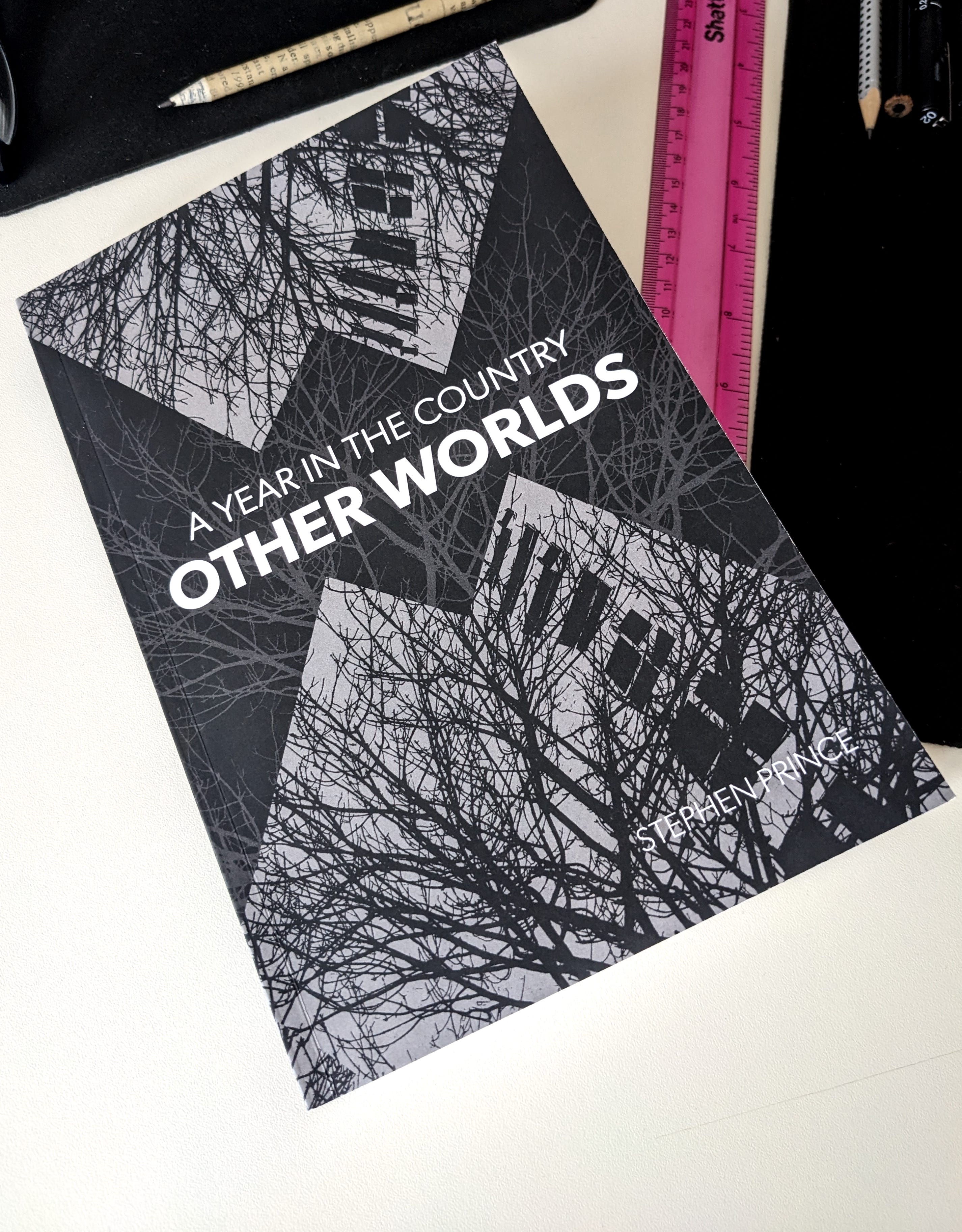
‘A YEAR IN THE COUNTRY: OTHER WORLDS’ by Stephen Prince (A Year In The Country)
It has a snappy sub-title does this, Stephen Prince’s seventh book in his series of A Year In The Country non-fiction titles. So it’s full title is ‘A Year In The Country: Other Worlds. Searching For Far Off Lands Via Witchcraft Battles, Spectral Streets, Faded Visions Of The Future And The Secrets Of The Stones’, all of which we’ll get to shortly.
First up, a recap. A Year In The Country began in 2014, which is around the exact time that I started noticing myriad indie DIY labels springing up. It was of course initially a label that not only released brilliant themed compilations, everything from abandoned cold war installations (‘The Quietened Bunker’) to space exploration (‘The Quietened Cosmologists’) and lost TV and radio broadcasts (‘The Furthest Signal’), but it also introduced me to a raft of electronic artists many of which I’m still writing about today, the likes of Howlround, Polypores, Field Lines Cartographer, Pulselovers and many more. His last collection of music was 2020’s ‘The Quietened Dream Palace’ because Stephen was getting into writing books. And he took to those with the same zest and zeal he tackled the compilations.
The books tread similar ground to the comps, as the titles tend to suggest – ‘Cathode Ray And Celluloid Hinterlands’, ‘Lost Transmissions’ and ‘Wyrd Explorations’. In them he explores “the wyrd, eerie and re-enchanted landscape, folk horror, the further reaches of folk music and culture, urban wyrd and the parallel worlds of hauntology”. Which is quite the remit, but Stephen is as good as it gets when it comes to writing on these subjects and this latest offering goes a little off-piste.
I always find myself being sucked into titles like this before I’ve even got out of the contents pages. I want to get stuck into most of this from the chapter titles and brief descriptions alone. Stephen really goes in deep and his breadth of knowledge is impressive. And that goes doubly so here as he wanders “furthest from the central cultural cores of A Year In The Country” to explore subjects that would seem outside of his realm at times, but are no less interesting.
For example, there’s a section on Guy Ritchie that talks about “bubble worlds” and films like ‘The Driver’ before moving towards the 1985 black comedy action/romance/thriller ‘Into The Night’ that starred Jeff Goldblum and Michelle Pfeiffer… whose work is further discussed in a later chapter. I mean, that is a chapter. Elsewhere he cover’s Kate Bush’s ‘Breathing’ video, there’s stuff on ‘Stand By Me’, Suzanne Ciani and there’s a great piece called “Time Capsule Snapshots Of Faded History”, that moves from The Modernist magazine to Brutalist architecture to The Likely Lads to Get Carter. Some heady leaps being made, which make for great reading. Heck, there’s even a chapter on Bergerac. It does also include more standard fair, like Hammer House, stone circles, witchcraft and the like so no one will feel left out.
I’ve said this a fair bit, but books in our world seem to be increasingly about writers and journalist offering up themed collections of essays or features rather than being definitive tomes. I often use Ben Murphy’s ‘Ears To The Ground’ as a prime example. It’s a book about the use of field recording in electronic music and is essentially a collection of lengthier versions of the sort of feature articles he’d turn in for a magazine. Works brilliantly, as do Stephen’s books. Indeed, Stephen points out that this book is indeed a collection that can be read from start to finish or dipped in and out of as you please. I’d recommend reading the lot, in any order because put simply there isn’t anyone who does this stuff like Stephen Prince, he is a writer on this subject of the highest order.
MOONBUILDING ISSUE 6 … OUT NOW

Holy cow. MOONBUILDING Issue 6 has arrived. This new issue is out now and available from moonbuilding.bandcamp.com
Our cover star, illustrated by the peerless Nick Taylor, is the unstoppable force that is LOULA YORKE. In our bumper interview we talk about how she got here and where she’s going. As usual, it is an in-depth piece that lifts the lid on the brilliant mind behind the excellent music.
We met Loula at her home in Suffolk where we have a proper rummage around in her world, musically, humanly, psychologically, probably even a bit metaphysically. It is a cracking read and really opens the doors on what makes this most remarkable artist tick.
As always the issue comes with an accompanying CD. This one is a Loula Yorke collection called ‘How Did We Get Here’, which is compiled by artist herself and charts her rise and rise. The resulting 11-tracker will take you on a journey through her career to this point and it is utterly, totally, absolutely, exclusive to Moonbuilding.
Elsewhere, there’s a great chat with Clay Pipe Music supremo Frances Castle as we profile her wonderful label, A’Bear gets in on the There’s A First Time For Everything act, we round up an absolute mountain of recent releases and serve up our thoughts on the best albums from the last few months, which feature Loula Yorke, Warrington-Runcorn New Town Development Plan’s Gordon Chapman-Fox, Cate Brooks, 30 Door Key and Sarno Ultra.
We talk to ‘This Is Memorial Device’ author David Keenan about ‘Volcanic Tongue’, his debut collection of music writing. He is one of the last generation of music writers who could actually call themselves as journalists. He talks a lot of sense and his work is a shining example of what music writing should be. It’s an unmissable interview.
Elsewhere, we round up an absolute mountain of recent releases and point you in the right direction of some mighty fine independent magazines and books. The Orb’s Alex Paterson tells us about his ‘Top Of The Pops’ experience when he appeared on the legendary show performing ‘Blue Room’ in 1993. I say performing… There’s a new Captain Star cartoon strip from the brilliant Steven Appleby. I constantly have to pinch myself that this strip, that I first read in the NME in the early 1980s, is now in our little magazine.
The shop doors are open at moonbuilding.bandcamp.com for your pre-ordering pleasure. This issue has a short print run and will sell out fast. Do not hang about.
Moonbuilding Weekly is a Castles In Space publication.
Copyright © 2025 Moonbuilding
Absolutely love the Loula Yorke track - she just gets better and better!